
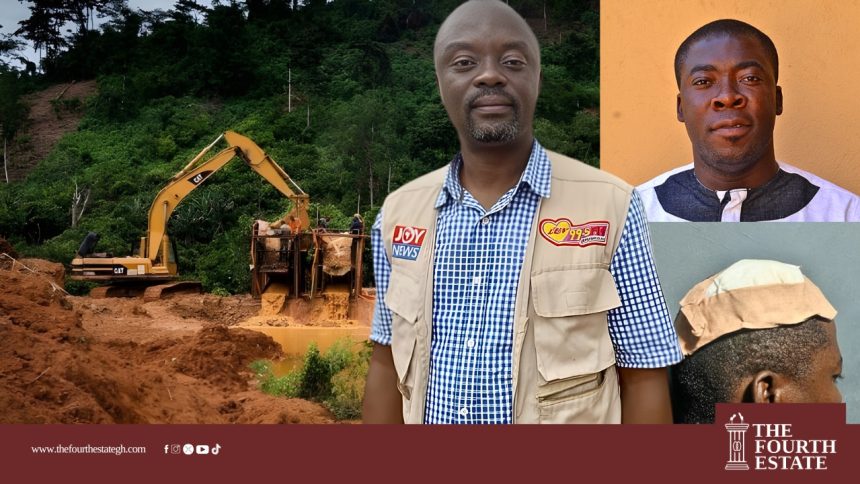
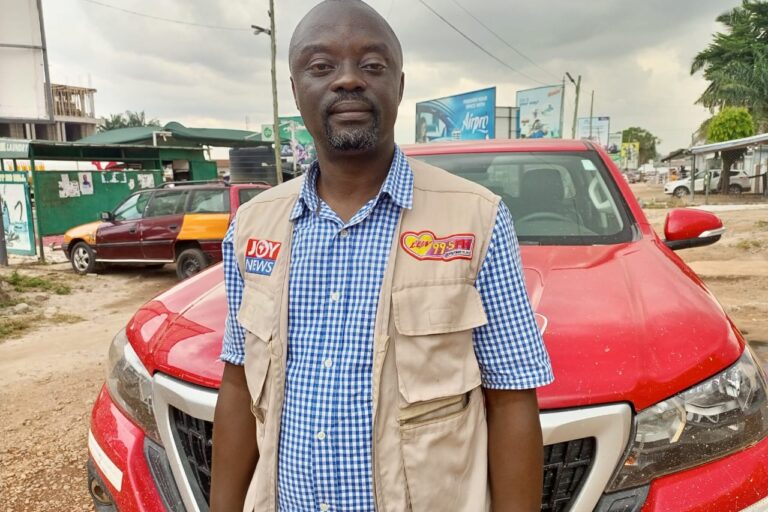
Nicholas Suantah was part of the media crew beaten during a brutal 2024 attack on journalists investigating illegal gold mining in the Ashanti Region.
The camera technician was documenting the work of Erastus Asare Donkor, whose persistent exposés have made him one of the most hunted reporters in the country’s battle against galamsey.
“Galamsey reporting is not an assignment I want to try again,” said Suantah, who has filmed some of Ghana’s most dangerous environmental investigations. “At first, it was mildly risky that you could engage miners. But today, it’s deadly.”
For many Ghanaian environmental journalists, this danger has become routine. Some have been forced into exile. Others have woken up in hospital wards, bruised and battered. Many live under constant death threats as they investigate what is widely described as Ghana’s environmental cancer: illegal mining.
President John Dramani Mahama admits the contradiction. At the 29th Media Awards of the Ghana Journalists Association in Kumasi, he described the fight as deeply fraught.
“The fight against illegal mining is complex and challenging,” he said. “Journalists who persist in exposing environmental crime are at great personal risk.” Mahama said, as he praised the “bravery and patriotism” of environmental reporters.
Yet even as official praise grows louder, intimidation in the field grows sharper.
Forest ambushes and forced exile
In 2021, at the Apamprama Forest Reserve, Erastus Asare Donkor and his crew encountered more than 35 armed military personnel protecting Chinese illegal miners. The standoff nearly turned fatal.
“There was anger, verbal exchanges, and heated arguments,” Donkor recalled in an interview. “If any of them had pulled the trigger, we would have died there.”
Three years later, the danger became physical. At Asumenya in the Ashanti Region, 10 heavily built men wielding pump-action guns abducted and assaulted Donkor and two other staff members of the Multimedia Group.
Their attempt to document destruction in the Asenayo Forest Reserve ended in violence.
“It really broke my spirit,” he says. “After the beatings, I looked at my crew and asked, what is in [it] for us in all this?”
Threats followed – through phone calls, text messages, social media and physical attacks – forcing him into exile for safety.
“It has occurred to me so many times to quit, especially encountering threats from the country’s duty bearers who are supposed to know better,” he says.
Other journalists, including Ohmeng Tawiah, also of the Multimedia Group, and Kwesi Adjei Anim of Citi Fm have all suffered similar fates.
Yet while journalists retreat for survival, illegal mining surges. Water bodies have turned milky brown from chemical pollution. Arable lands are degraded. Lives have been lost.
A 2025 investigation by The Forth Estate using GPS data from the Mineral Commission’s and satellite imagery revealed that 70 percent of mining sites in the Western, Central, Western North and Ashanti regions are illegal.
In parliament on 19 February 2025, Lands and Natural Resources Minister Emmanuel Armah Buah warned:
“Out of the 288 forest reserves, 44 are under serious attack, with over nine have been completely taken over by thugs with impunity.”
And from the highest traditional authority in the Ashanti Kingdom, Otumfuo Osei Tutu II issued a grim rebuke:
“Galamsey has become a mafia which will engulf all of us. I am shocked why we can’t take up this matter seriously and make a firm decision – unless we are all complicit.”
The attempted silence
As the destruction accelerates, so do attacks on journalists. At least five reporters at Multimedia’s Luv FM newsroom in Kumasi have suffered violent encounters linked to illegal mining in the past year.
Donkor estimates that only a fraction of journalists now dare to pursue galamsey investigations.
“I am not able to go to the field alone without security agencies,” he says. “Of ten Ghanaian journalists, only one may be willing to work because of the dangers.”
In November 2025, some journalists were injured in an accident near Obuasi “after being chased viciously by illegal miners on an official assignment with the Environmental Protection Agency,” according to the President of the Ghana Journalists Association, Albert Dwumfour.
Among the injured were three staff of the Multimedia Group and two journalists from Channel One/Citi FM and TV3. One required surgery for a fractured thigh.
“The situation dampened our spirit, considering journalists’ efforts to help fight against galamsey,” says Northern Bureau Chief of Channel One Hafiz Tijani.
Deep inside the dug-out forests of Amansie Central, environmental reporter Nana Boakye Dankwah Yiadom now moves with ritualised caution.
“It has always been hectic to access galamsey sites. You have to come or disguise as one of them [illegal miners]. Which can get scary if your cover is blown,” the Luv FM journalist told The Fourth Estate. “I send security messages home at every point of my journey as a trace.”
For press freedom advocate and chairperson of the Ghana Center for Democratic Development (CDD-Ghana), Professor Audrey Gadzekpo, a fearful press is not good for the war against illegal mining.
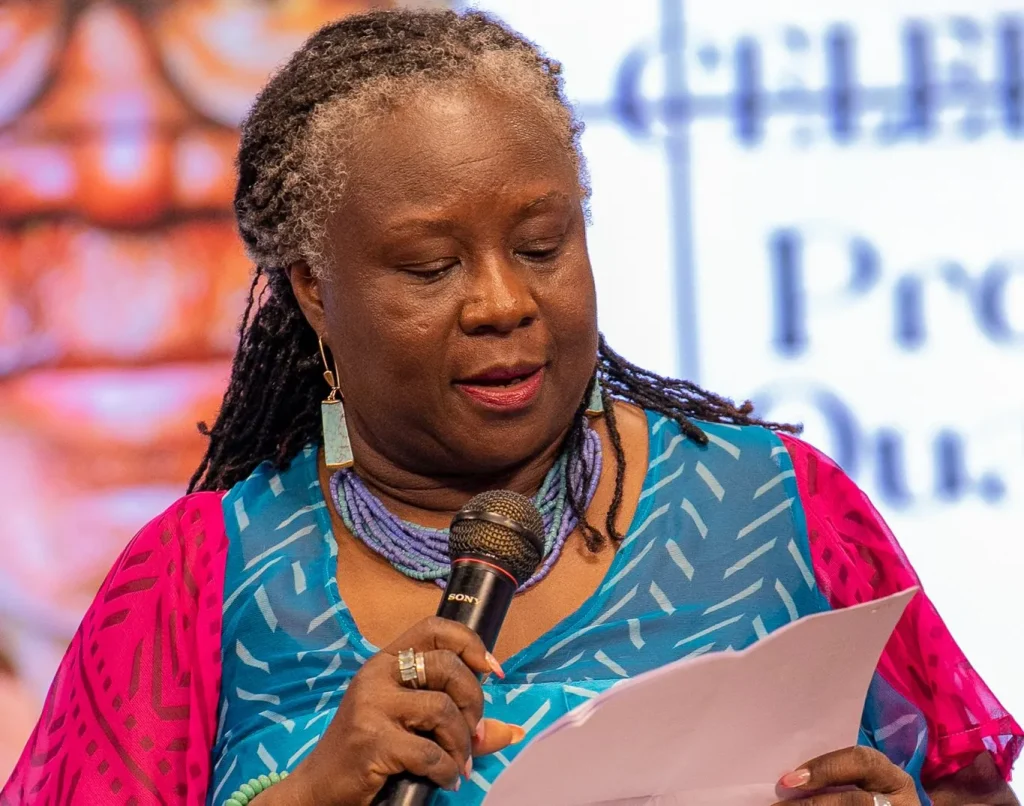
“The fear of retaliation will leave journalist lenient or to limit their investigation to weaklings instead of powerful people who are the chief perpetrators to avoid controversies,” she told The Fourth Estate.
“The effect is that public awareness of the problem is reduced, accountability is weakened, allowing illegal mining to thrive. When journalists are attacked, it should be tagged as a terrible crime due to the implication for the larger public interest. If you silence journalists, you have silenced voices and jeopardized the democratic system protected by the constitution.”
The author, Clinton Yeboah, is a 2025 Fellow of the Next Generation Investigative Journalism Fellowship – Cohort 7 at the Media Foundation for West Africa.