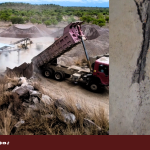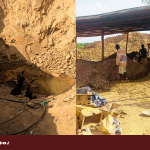

At the edge of Datuko in the Talensi District of the Upper East Region, a sun-scorched pit lies open – unfenced and slowly caving in.
Dry branches and faded leaves have been scattered across it – a desperate attempt by residents to prevent children and livestock from falling in.
From a distance, it appears abandoned. Yet, official records tell a very different story.
Documents from the Ministry of Local Government, the Talensi District Assembly, and the World Bank-funded Gulf of Guinea Northern Regions Social Cohesion (SOCO) Project describe the site as a completed four-chamber fishpond system, supported by a mechanised borehole and a 3,500-litre water tank.
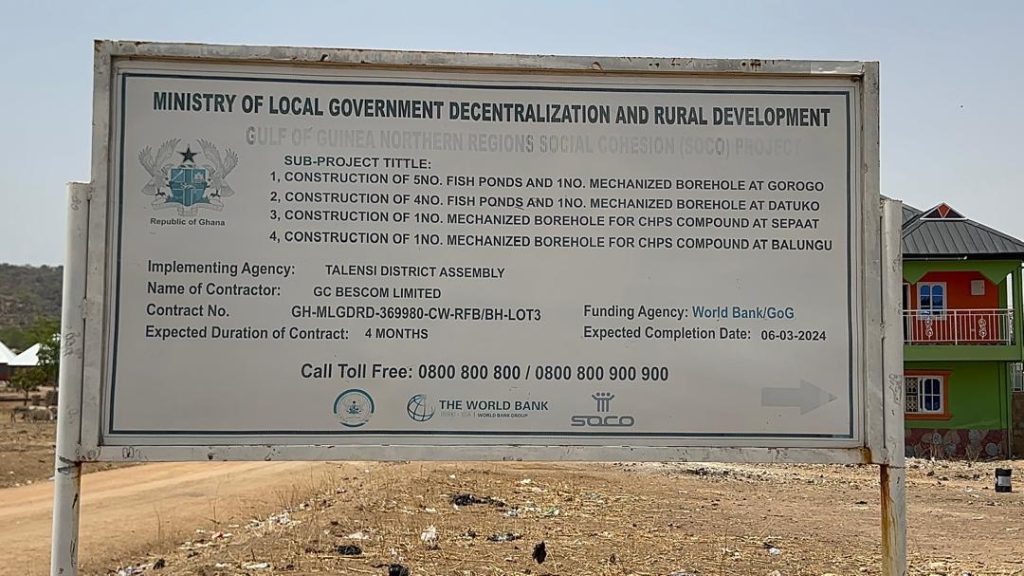
But when The Fourth Estate visited the site, there was no fishpond. No borehole. No tank. No water. Only a hole in the earth.
A project removed from Datuko
The SOCO intervention in Datuko was designed to support livelihoods for about 6,500 residents, many of them unemployed youth, through fish farming and improved water access.
Residents say that never happened.
“This is what they came and drilled in 2023,” said former Assembly Member for Datuko, Elijah Tii, pointing to the pit. “If they say they have handed it over, you can see it yourself. There is nothing here.”
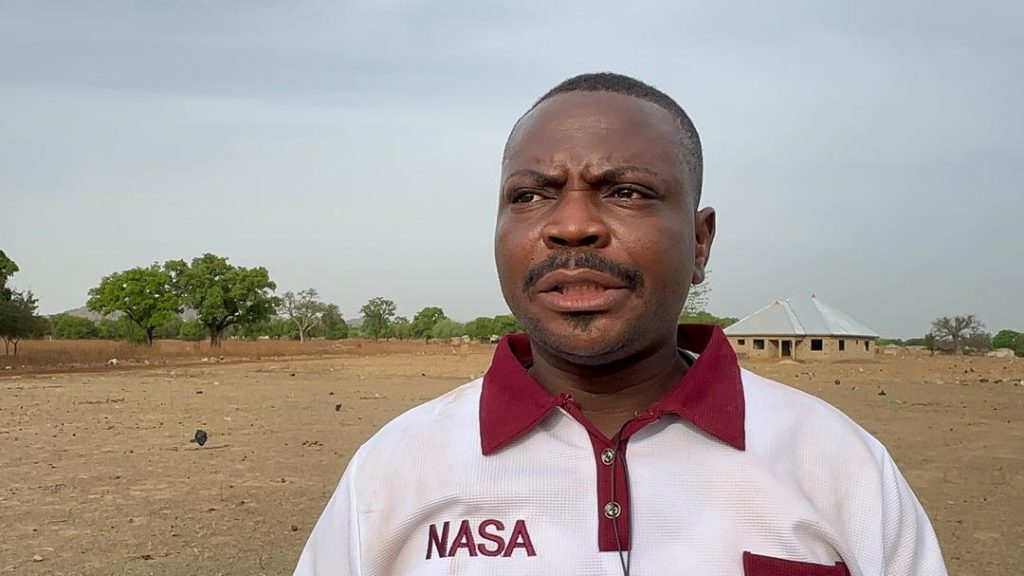
According to residents, the project did not go beyond an initial drilling attempt.
“They came, they drilled, but they didn’t get water. Then they packed their tools and left,” said 70-year-old fish farmer Milleya Anthony.
Daniel Sampana, a 33-year-old fish farmer, says the project could have transformed the livelihoods of many young people in the community.
“It is disappointing,” he told The Fourth Estate.
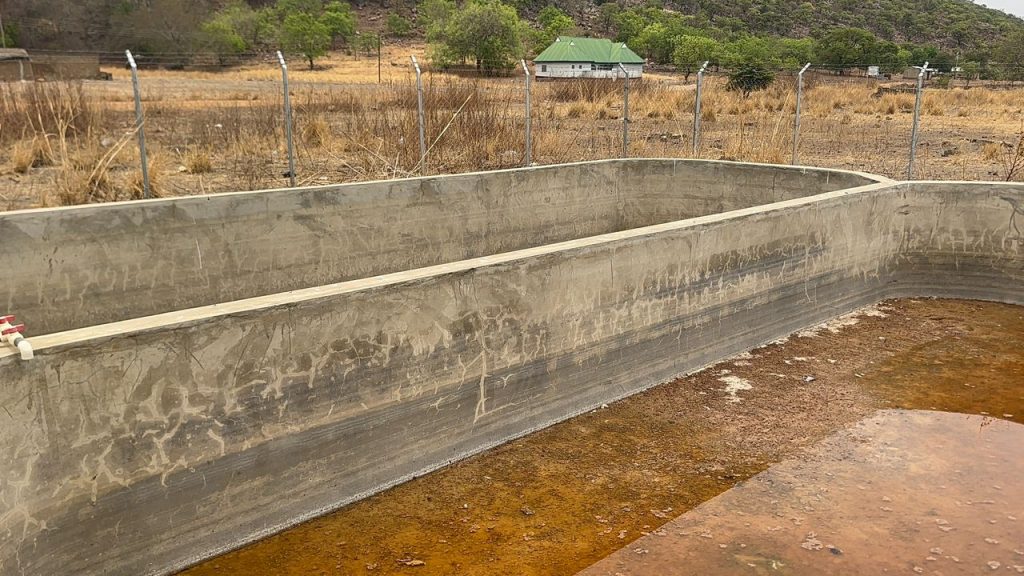
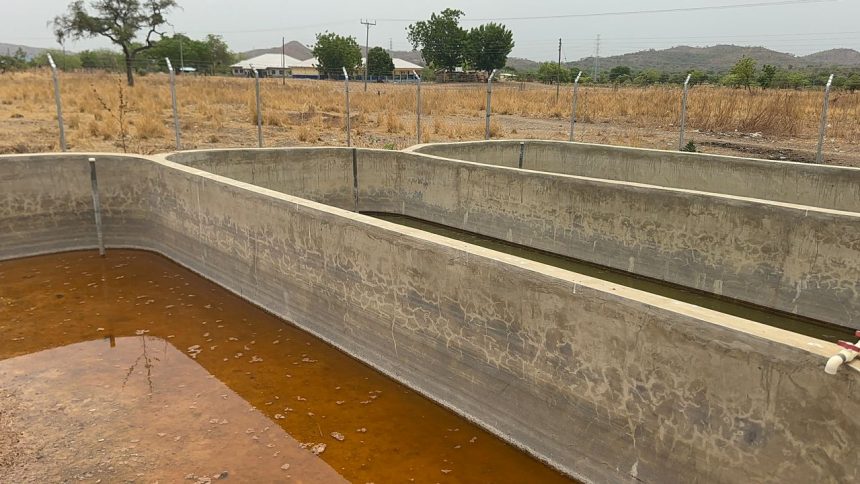
Investigations by The Fourth Estate have revealed that the project did not simply stall in Datuko. It was relocated. The fishpond and borehole originally allocated to Datuko were instead constructed in Santeng, another community in the district that was not listed as a beneficiary.
Some residents of Santeng now say their most pressing need was not a fish pond.
“We were not consulted. We would have suggested [something] for dry season farming or something that our women can use to process their shea nuts,” says Kwasi John, a resident of Santeng.
Community members say the fishpond has never been stocked and remains unused.
“They promised us fish and livelihoods. Now the place is just there,” a community youth leader who led the assembly team to the community, Tindaan Kingsley Lanteal, said.
The result is a striking pattern. In Datuko, the project disappeared entirely. In Santeng, the relocated fishpond exists, but delivers little practical benefit.
In a written response to The Fourth Estate’s enquiries, the Ministry of Local Government, Chieftaincy and Religious Affairs acknowledged that the Datuko site encountered “a hydrological challenge” after drilling attempts reportedly failed even at a depth of 100 metres.
The Ministry said the contractor subsequently notified the Talensi District Assembly and that Santeng was selected as an alternative site because it fell within the same beneficiary cluster, had “a proven viable borehole yield” and already hosted organised livelihood groups interested in fish farming.
The Talensi District Planning Officer, Diana Asabia, claimed that the traditional leaders of Datuko were informed about the relocation of the project.
“We went with the engineer and informed the chief. We agreed to look for another site,” she told The Fourth Estate.
But Datuko’s chief, Naab Nubil Pelig Ku Sua Yebig, disputed the claim.
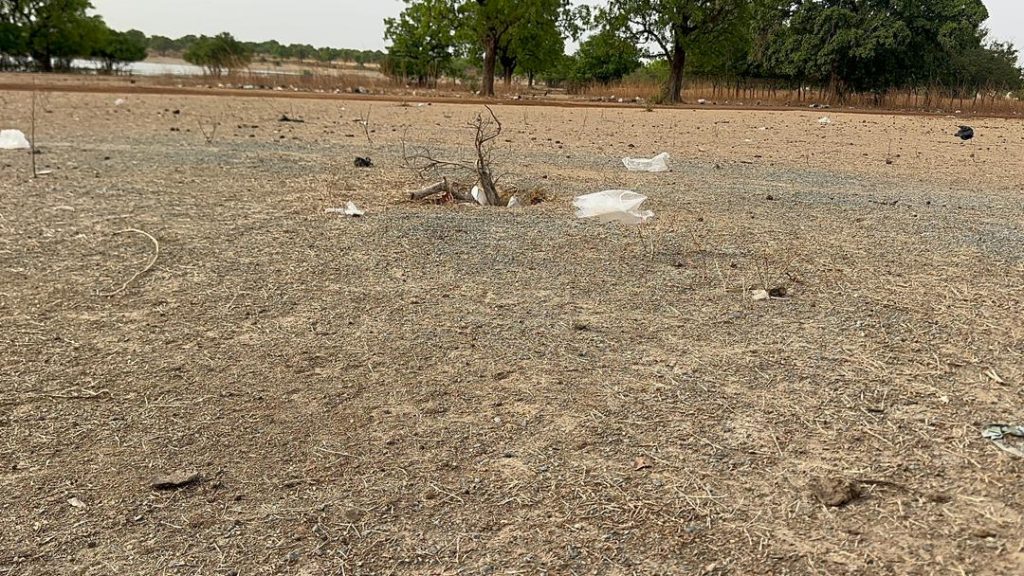
“It is a wicked lie,” he said. “Nobody consulted me, my elders, or the Assembly Member about any relocation.”
An RTI response from the Talensi District Assembly indicates that GHS425,000 was allocated for fishpond and borehole infrastructure in Datuko and neighbouring Gorogo.
However, the Assembly did not provide a breakdown showing how much was spent specifically on Datuko or how costs were redistributed after the relocation.
Repeated requests by The Fourth Estate for contract agreements and payment records were unsuccessful, with officials citing confidentiality concerns.
Under SOCO’s Community-Driven Development principles, projects are expected to remain within approved beneficiary communities unless formal procedures are followed.
The Upper East Regional SOCO Coordinator, Samuel Larbi Agyarko, stressed that requirement. “Once a community is approved, it must receive the project because money has been allocated to it,” he said.
Yet checks by The Fourth Estate found no publicly available documentation showing formal approval for the relocation. The Talensi District Director of Agriculture, Mathew Sulemana, described the decision as informal.
“They told me Datuko had no water and asked for another community. I mentioned Santeng. That is all,” he said.
The Ministry stated in its response that the project was completed in Santeng in June 2024, and confirmed The Fourth Estate’s findings that the relocation “was not accompanied by the required administrative communication and documentation at the district level”, creating confusion over the project’s status.
The Ministry also said it was working with the Talensi District Assembly to “re-engage both communities to ensure transparency” while updating official project records to reflect the actual beneficiary community.
Meanwhile, the explanation that Datuko lacked viable groundwater is also being challenged by experts.
Richard Abaare, an independent hydrologist based in the Upper East Region, said no community in the region could simply be classified as entirely water-deficient without proper geophysical assessments.
“Some areas may experience seasonal shortages, but it is difficult to conclude that a community has no groundwater at all,” he said.
According to Mr Abaare, contractors sometimes avoid detailed geophysical studies because of the additional cost involved.
“I have realised that most contractors in the region are moving away from geophysical studies because it comes as an extra cost,” he said. “They use their own means to start drilling and that is not good.”
Field visits by The Fourth Estate identified a functioning hand-pump borehole near the abandoned project site and another mechanised borehole at a nearby health facility.
“These findings challenge the claim that there is no water here,” said former assembly member Elijah Tii.
In Datuko, residents say they have been denied a project meant for them. In Santeng, residents say they have received a project they did not need and does not work.
Between them lies a serious problem of misallocation, weak oversight, and a breakdown in accountability – leaving both communities without the livelihoods they were promised.
The author, Moses Abaah Apiah, is a 2026 Fellow of the Next Generation Investigative Journalism Fellowship – Cohort 8 at the Media Foundation for West Africa