
On Volta Lake, giant machines sit on the water hauling ancient tree trunks from beneath the surface—officially to save lives. But there have been rising concerns about who truly benefits from the operation.
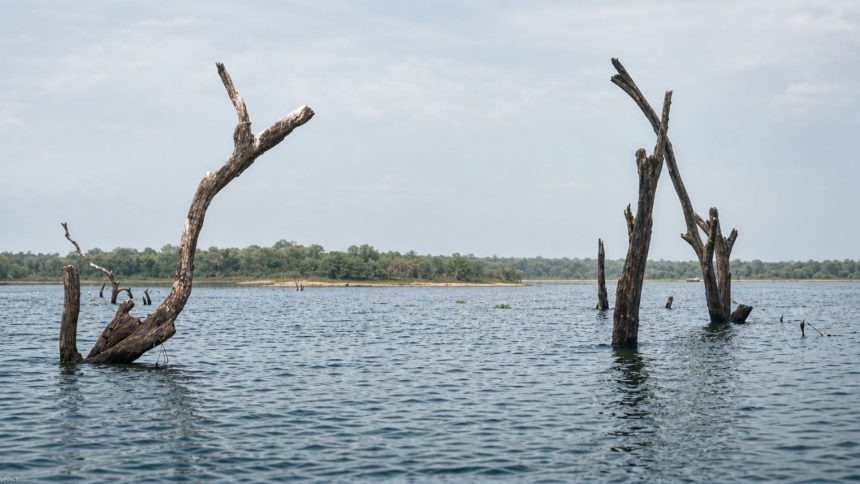
In the fishing town of Kete Krachi, the operation looks industrial, relentless, and highly organised. A towering machine stretches its mechanical arm into the depths of the lake, dragging up thick water-soaked logs buried underwater for decades.
Officially, the project is framed as a public safety intervention.
Known in policy documents as the ‘Volta River Salvage Project’, the operation was introduced to remove submerged tree stumps blamed for deadly boat accidents on the lake, one of the world’s largest man-made reservoirs.
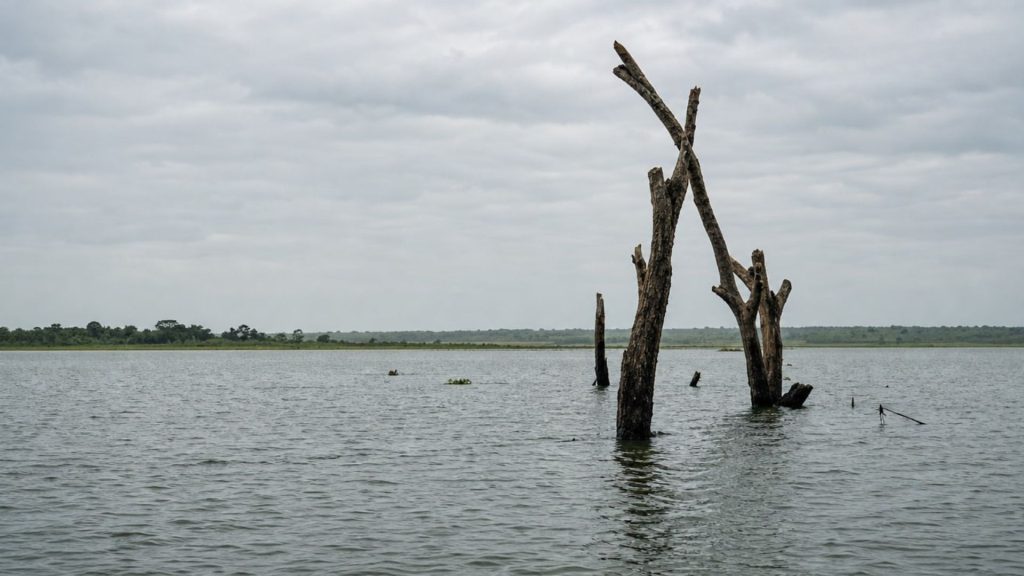
However, among fishermen, boat operators, and environmental researchers on the lake, a different narrative is taking shape. It raises uncomfortable questions about whether the operation is driven less by navigation safety than by the lucrative value of submerged hardwood timber.
Under a framework approved by Ghana’s Parliament in November 2010, CSR Developments Ghana Limited received a 25-year concession to extract timber across roughly 350,000 hectares of the lake. The concession was later transferred to Kete Krachi Timber Recovery Limited, a company under Dedeso Holdings backed by private financing from Serengeti Capital.
Beneath the lake lies a vast submerged forest created after the construction of the Akosombo Dam, which flooded hundreds of communities and large expanses of vegetation in the 1960s. Over time, the timber has become commercially valuable, attracting both domestic and international interest.
In 2019, BBC News reported that Kete Krachi Timber Recovery Limited proposed supplying up to $50m worth of recovered hardwood from the Volta Lake for the reconstruction of Notre-Dame Cathedral in Paris after the devastating fire there.
Meanwhile, the project’s official justification rests on safety. Between 2019 and 2023, according to the 2024 Performance Audit Report on Inland Waterways Safety, the Ghana Maritime Authority spent approximately GH₵87.6m removing 21,763 submerged stumps from five transport corridors on the lake.
Yet despite the scale of the operation, accidents linked to submerged stumps have continued.
In December 2022, a transport vessel travelling from Bosom River to Kpando Torkor struck a submerged stump at Vitasekope, causing the boat to split apart.
Similar incidents were recorded along the Gbafri-Anyinaman–Yeji corridor in 2020 and 2021. No deaths were recorded, but vessels and goods were destroyed.
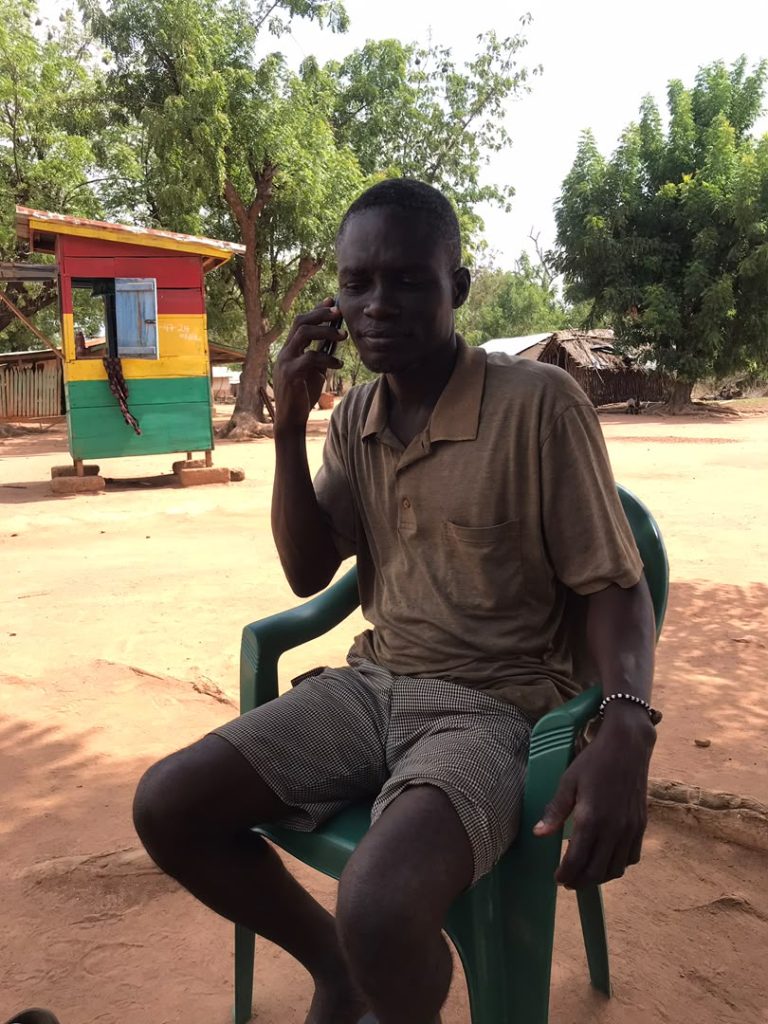
Boat operators and local residents now question whether the project is even targeting the lake’s most dangerous routes.
In Agordeke, veteran boat operator Akoli Gashie said the areas where stumps are being removed are not within the waterways most heavily used by transport operators.
“They are doing it all wrong,” he told The Fourth Estate.
Instead, boat operators identify the stretch between Tamadza, Kidzakaboli, and Dambai as one of the lake’s most hazardous corridors. Yet they say large concentrations of submerged stumps on the corridor remain untouched.
Even the Auditor-General’s report acknowledged that submerged trees continue to threaten lives and goods along major transport routes despite years of salvage activity. That disconnect has deepened suspicion about the motives of the company tasked with the removal of the timber stumps from Volta Lake.
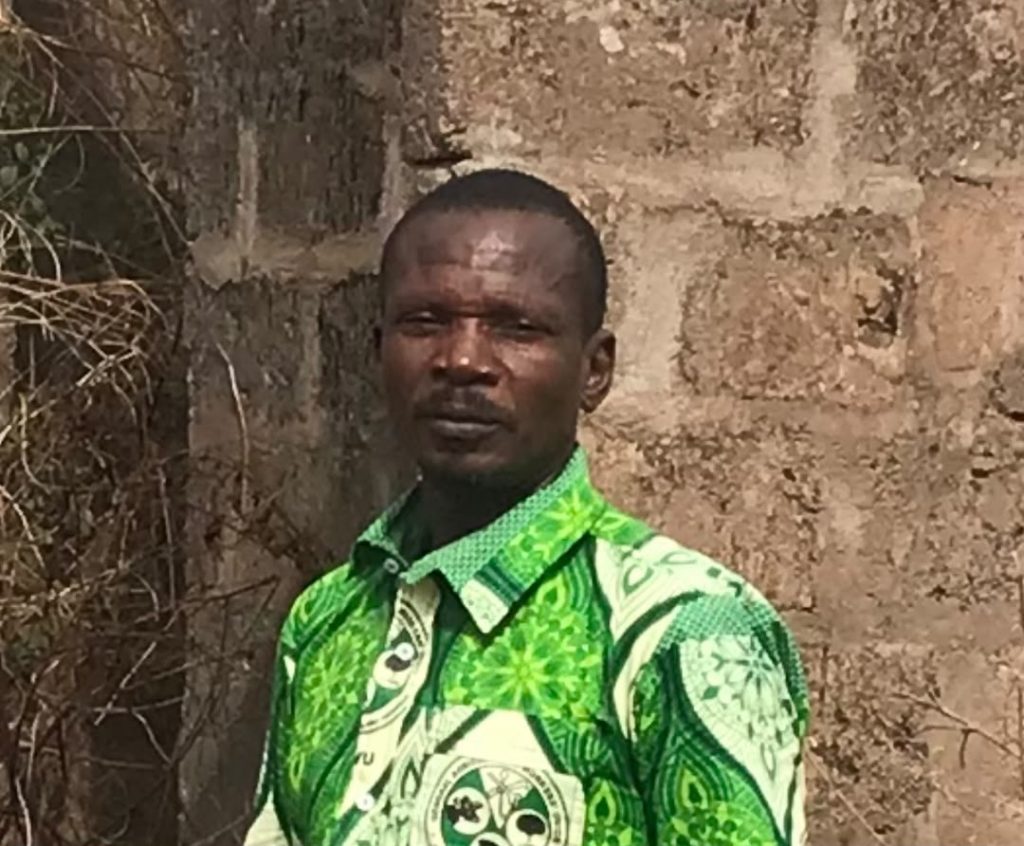
“They identify the valuable trees, take those, and leave the rest,” says Daniel Nyamekor, the national general secretary of the Inland Canoe Fishermen and Fish Mongers Association. “On what basis are they selecting what to remove?”
Repeated requests by The Fourth Estate for clarification from the Ghana Maritime Authority on corridor selection, audit findings, and stakeholder engagement were unanswered.
Dr Eric Tamatey Lawer, a political ecologist and human geographer, told The Fourth Estate that the salvage operation mirrors older patterns of extraction and exclusion that followed the construction of the Akosombo Dam, which displaced more than 80,000 people and submerged over 700 communities.
“The state and timber salvage companies will always rely on public good narratives to legitimise extraction,” he said. “From the beginning, it was framed as safety, but at its core, it is a value extraction project disguised as public infrastructure maintenance.”
Concerns over exclusion have also surfaced as local actors say they have been left out of decision-making around the project.
Ben Ahu, General Secretary of the National Boat Operators Union, questioned why those most familiar with the lake were excluded from planning decisions.
“How can you improve safety without involving the boat operators who navigate these waters daily?” he asked. “If not us, where else do you get the information needed to remove stumps for our safety?”
Experts say such concerns point to a broader collapse in stakeholder engagement rather than opposition to the stump removal operations.
“If a project affects lives, people must be consulted,” says Prof Oteng-Yeboah, a biodiversity expert. “There appears to have been insufficient communication.”
Ecologist Dr Lawer proposes that local communities that were historically affected by the creation of the Akosombo dam should be included in the economic benefits and key decisions surrounding the project.
“If timber resources are to be extracted from that lake, then there should be a kind of benefit-sharing framework with the local people who were once displaced,” he says, adding that “the state has missed a very unique opportunity to right the wrongs of yesterday.”
Meanwhile, the machines continue to move across the lake.
Thousands of stumps have already been removed. Millions of cedis have been spent. Yet dangerous transport corridors remain uncleared, boat accidents continue, and communities say they are paying for the environmental and economic costs.
The author, Nana Ntiako Dacosta, is a 2026 Fellow of the Next Generation Investigative Journalism Fellowship – Cohort 8 at the Media Foundation for West Africa.