
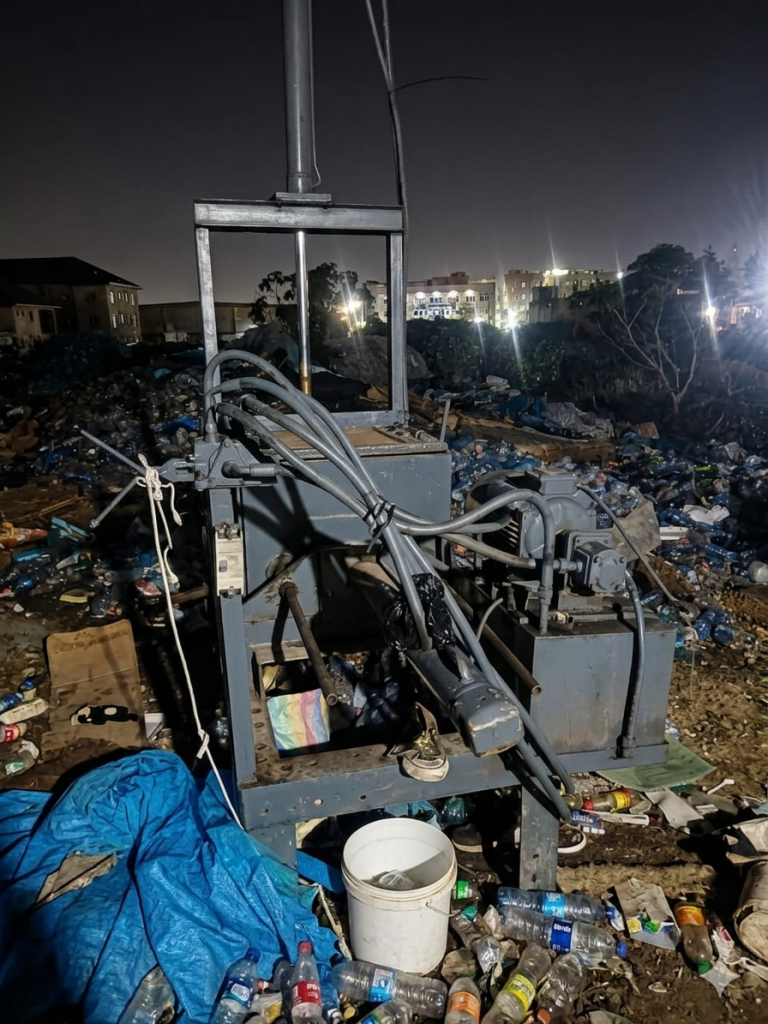
At a waste transfer station in Kasoa, just outside Accra, Daniel Holasi Frimpong stood beside a silent baling press machine covered in dust and scraps of plastic. For eight months, it has not worked.
The machine once compressed heaps of discarded plastic into bundles for recycling. Now it sits idle because operating costs have become too high and money has dried up. Yet the plastic bags keep coming.
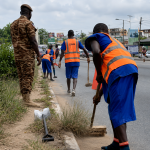
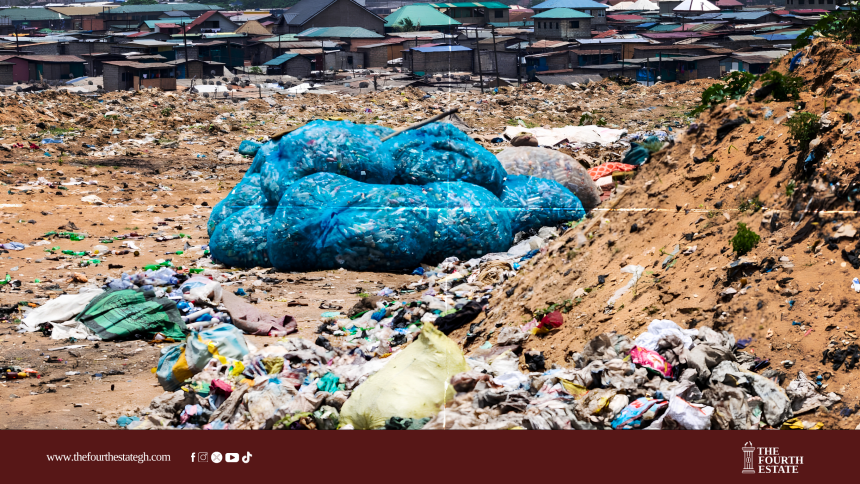
Every day, bottles, sachets, and containers continue piling up across communities, in gutters, and at dumping sites. For Daniel and dozens of informal waste collectors, the work of clearing them has become a daily struggle.
“We don’t have any government support or NGO [non-governmental organisation] support. We do it small, small… and go our way,” Daniel told The Fourth Estate.
He leads a network of informal waste collectors under the Coalition of Plastic Aggregators. Their work involves collecting, sorting, crushing, and baling plastic waste for recycling companies. Most of it is financed through personal savings or loans.
“We have to take loans. But with the way the market is now, you don’t even make profit,” he said.
Daniel said falling prices for processed plastic have eroded already thin margins, making it nearly impossible for small operators to buy or maintain crushing and baling equipment.
“If there is funding, everybody will jump into it. It can serve as a source of livelihood,” he added.
Millions collected, little reaching the front lines
While collectors like Daniel struggle to keep basic equipment running, millions of cedis raised through a national plastic waste levy were not used for the purpose they were collected for, according to the Auditor-General.
This has raised questions about accountability inside Ghana’s plastic waste management system and why money collected in the name of recycling has not reached the people and institutions doing the work on the ground.
Ghana generates approximately 840,000 to 1.1 million tonnes of plastic waste annually, with only 5% – 9.5% collected for recycling, according to the Global Plastic Action Partnership (GPAP). Over 85% of this waste, GPAP says, is improperly disposed of, clogging urban drains, polluting water bodies, and contributing to flooding and severe health risks.
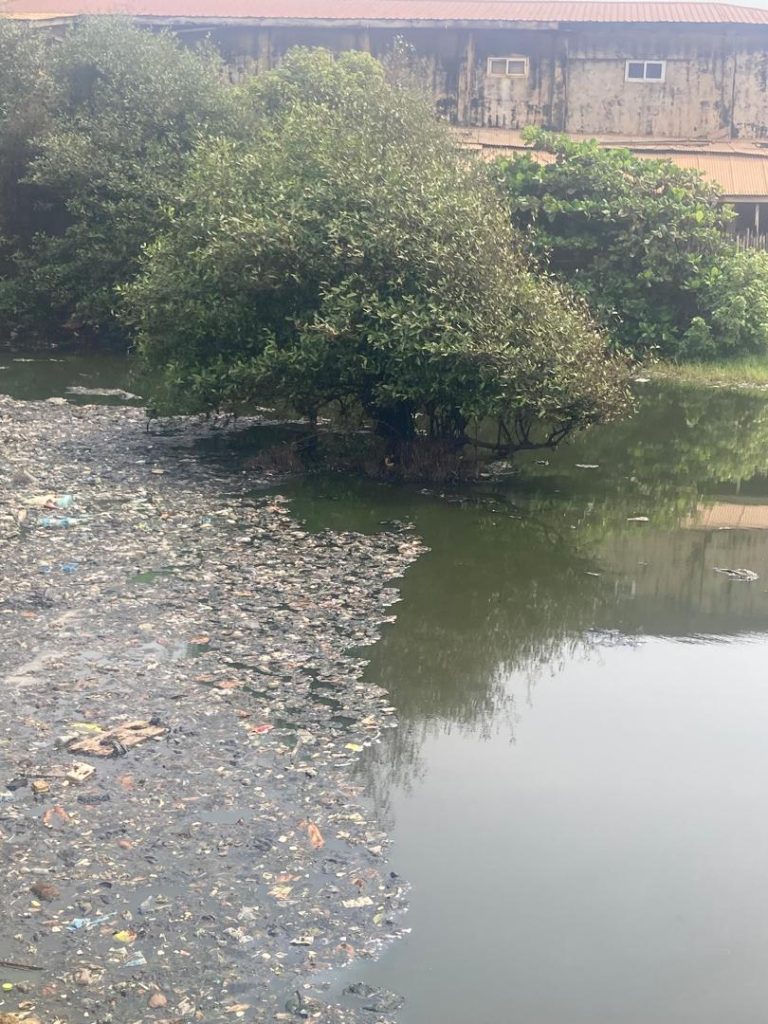
In order to address these challenges, the Plastic Waste Recycling Fund was established to support waste management activities in Ghana, including financing collectors like Daniel, recyclers, municipal authorities, and public sensitisation campaigns.
The fund is financed through proceeds from a 10% Environmental Excise Tax imposed on imported plastics and related products.
But a 2024 performance audit by the Auditor-General paints a worrying picture. The report revealed that the Ministry of Environment, Science, Technology and Innovation (MESTI) received GHC8,593,442 between 2021 and 2023 from the fund. Out of that amount, GHC7,480,804.34 was spent.
The problem, the audit found, was that the funds were not directed towards supporting stakeholders in the plastic waste value chain or used for planned sensitisation programmes tied to waste management and recycling.
What the report says about how the money was spent
Although the report did not state what the fund was used for, it noted that the ministry failed to develop guidelines required under the Environmental Excise Tax Act, 2013 (Act 863) to direct how the Plastic Waste Management Fund should be utilised.
The report said MESTI’s 2022–2025 Medium-Term Development Plan and its 2022 budget also did not explain how the ministry intended to use the fund to support plastic recycling activities, the production of plastic waste bins and bags, or the promotion of biodegradable plastics.
Officials at the ministry, including the Director of Policy Planning, Monitoring and Evaluation and the Accountant, reportedly admitted to auditors that there was no clear direction on how to spend the fund, while the Chief Internal Auditor confirmed that no internal guidelines had been developed for its use.
The report further revealed that the ministry failed to submit expenditure returns on the fund between 2021 and 2023, making it difficult for the Ministry of Finance to monitor how the money was being used as required by law.
According to the Schedule Officer of the Plastic Waste Fund at the Public Investment Directorate of the Ministry of Finance, the returns were necessary to help track the utilisation of the fund and offer guidance where needed.
Despite the absence of these expenditure reports, the Ministry of Finance reportedly continued to release funds to MESTI throughout the audit period without demanding accountability.
Waste collectors, recyclers, and even local authorities responsible for managing plastic waste say they have seen little or no benefit from the fund.
Engineer Solomon Noi, Director of Waste Management at the Accra Metropolitan Assembly, says that revenues from the environmental levy are paid into the Consolidated Fund. Still, the absence of a legal framework leaves no clear mechanism for assemblies to access the funds.
“As an assembly, we fund our own activities through budgetary allocations. The Consolidated Fund, we can’t go there,” Solomon told The Fourth Estate.
The Ministry of Environment, Science, Technology, and Innovation did not respond to The Fourth Estate’s requests in January 2026 for an interview on how the plastic recycling fund has been utilised.
The author, Joshua Narh, is a 2026 Fellow of the Next Generation Investigative Journalism Fellowship – Cohort 8 at the Media Foundation for West Africa.
YOU MAY ALSO WANT TO READ