
Summary: Since we launched The Fourth Estate as a non-profit investigative journalism project, the Media Foundation for West Africa (MFWA) has demonstrated how investment in investigative journalism delivers exceptional public value.
The evidence has been compelling: for approximately every US$1,000 invested in producing an investigation, the resulting public benefit has run into millions of dollars through savings, recovered public resources, policy reforms, stronger accountability, and better governance.
Our work so far has therefore proven that investment in true, independent investigative journalism is not just support for the media; it is more of an investment in empowering people, better governance, and national development.
So far, the project has led to:
- Major Presidential directives
- Parliamentary actions
- Review of public contracts
- Termination of major contracts
- Public policy reforms
- Sanctioning of officials
- Prosecution of several officials
- Asset declarations by more than 500 officials
- Improved access to public goods and services
- International awards
The full article below explains it all with evidence
For over two decades, the Media Foundation for West Africa (MFWA) focused mainly on strengthening media capacity and development, promoting press freedom, and defending journalists across West Africa. While these efforts remain critical, the organisation reached an important decision in 2021: supporting and defending journalism is crucial but not enough. It was equally crucial to demonstrate, through practice, the extraordinary public value that quality, independent investigative journalism can create.
That conviction led to the launch of The Fourth Estate, as a non-profit public interest investigative journalism project in February 2021. We decided to focus on Ghana first and expand gradually in the region.
The vision was simple but ambitious: to prove that rigorous, independent, fact-based journalism remains one of society’s most powerful instruments for promoting transparency, fighting corruption, strengthening accountability, and improving democratic governance.
Five years later, The Fourth Estate has done exactly that.
Despite operating with modest resources, the project has consistently produced investigations that have influenced national policy, exposed corruption, recovered public value, strengthened public institutions, and improved the lives of ordinary citizens.
The impact of The Fourth Estate project can be measured not only by readership or public attention but also by concrete reforms and measurable public benefits.
The evidence is compelling: for approximately every US$1,000 invested in producing an investigation, the resulting public benefit has run into millions of dollars through savings, recovered public resources, policy reforms, stronger accountability and better governance.
Below are snapshots of how the project has shaped policies, promoted accountability and changed lives:
Ensuring review of unbeneficial state contracts
A series of reports on a state contract with a private company in the lotteries sector, prompted a Presidential directive for investigations into the contract. A joint ministerial committee (made up of Ministry of Finance and Ministry of Justice representatives) was set-up and a team from the MFWA led by the Executive Director appeared before the Committee to submit findings from its investigations. After six weeks of the Committee’s investigations, it concluded that true to the reports by The Fourth Estate, the contract was financially unbeneficial to the country. The President then gave a directive for the renegotiation of the contract to ensure it is financially beneficial to the state.
Enhancing the health of the poor
The Fourth Estate investigated and exposed corrupt practices that fleece patients and their families at one of Ghana’s premier hospitals. The report prompted the setting up of a Committee by the Minister for Health to investigate the issues and to proffer solutions to the problem. The Committee subsequently recommended reforms to curb corrupt practices in hospitals. Another investigation into how a woman suffered poor surgical procedure during labour resulting in her having complications, compelled the hospital to perform additional free surgical procedures to resolve her fistula.
Transforming public procurement
A major investigation into the procurement practices for the award of road contracts worth over $10 billion prompted a Presidential enquiry. The President of Ghana requested for a full report from The Fourth Estate after its investigations into how major road contracts worth billions of cedis were awarded mainly through single-source procurement instead of competitive tendering. The President also directed the Minister for Roads to respond to the issues raised by The Fourth Estate. The government has since directed that public contracts above a certain threshold must receive prior cabinet approval. A new legislation is being worked on to restrict the use of single source procurement.
Uncovering ghost names used to defraud the state
The Fourth Estate‘s investigation into payroll fraud in Ghana’s National Service Scheme (NSS) uncovered serious irregularities. The exposé led to significant reforms that have saved Ghana hundreds of millions of cedis. The exposé, which became known as the NSS Scandal, resulted in the removal of thousands of non-existent persons in the payroll data of the NSS.
The revelations also triggered multiple national investigations and prompted presidential directives that have helped strengthen the management and integrity of the NSS. A number of leaders who presided over the fraudulent scheme are facing prosecution. The Attorney General acknowledged and praised The Fourth Estate for its work on the issue.
Stopping a Multi-Million-Dollar Revenue Contract
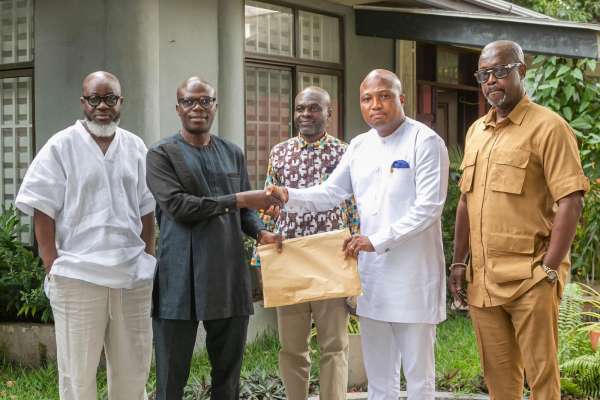
The Fourth Estate exposed a multi-million state-fleecing revenue assurance contract between a private company, Strategic Mobilisation Ghana Limited (SML) on one hand, and the Ghana Revenue Authority (GRA) and the Ministry of Finance on the other.
The investigations prompted the President of Ghana to suspend the contract and commission an independent audit while Parliament simultaneously ordered a suspension of the contract pending further investigations. Following eventual audit findings, the contract was terminated, saving the state hundreds of millions of cedis. Several former public officials, including a former Minister of Finance and former head of the GRA, connected to the contract are now facing prosecution.
Holding Public Officials Accountable
Through its Asset Declaration series, The Fourth Estate revealed widespread non-compliance with Ghana’s asset declaration law among senior public office holders including judges. Following the story, some 294 senior officials immediately filed their assets as required by law.
The sustained public attention generated by these reports compelled judges, chief executive officers and other senior public officials to fulfil their legal obligations, reinforcing transparency and public accountability. Subsequently, the President sanctioned non-compliant appointees.
Making Public Scholarships Fair and Transparent
The “Scholarships Bonanza” investigations exposed how state scholarships intended for brilliant but financially disadvantaged students were instead being awarded to politically connected and affluent individuals. The revelations generated widespread public outrage and sparked national debate.
The investigation ultimately contributed to Parliament passing new legislation aimed at making the public scholarship system more transparent, accountable, and equitable, ensuring that public scholarships better serve deserving students.
Oversight over natural resources and forests
The Fourth Estate investigated how Ghana’s forest reserves were being plundered. A story titled “Forest Invasion,” highlighted how a new legislation was allowing the exploitation of forest reserves for mining, mainly by the powerful and politically-connected. The report prompted public and civil society advocacy seeking the revocation of the law that allowed mining in forest reserves. The legislation was eventually repealed following public agitation triggered by The Fourth Estate story.
Another investigation led to women having access to their traditional salt mining site, which had been granted to a big firm depriving the women of their traditional means of livehood. The story also contributed to the freeing of 13 community members who faced years of prosecution for asserting their rights and standing up against the big firm exploiting salt from their local communities.
International Recognitions
The impact of The Fourth Estate has earned significant international recognition. Among its major honours are the 2024 World Justice Challenge Award and the 2023 Eisenhower Fellowships Impact Award, recognising the project’s outstanding contribution to accountability, transparency, and democratic governance. Journalists with the project have also won several international awards in Africa and Europe.
The challenges facing governance, corruption, environmental protection and public accountability across Africa remain immense. Yet the experience with The Fourth Estate project shows that strategic investment in independent investigative journalism consistently produces measurable returns for citizens, governments and democratic institutions.