
Three months into the 2026 planting season, many farmers across the country say they are yet to receive agricultural inputs promised under the government’s Feed Ghana Programme (FGP), raising concerns that delays in the release of certified seeds, pesticides, and other inputs could undermine production targets and threaten food security.
Farmers also question the limited fertilizer supply at a time when the government expects higher yields.
The concerns come during a critical period when farmers should be planting and nurturing crops to take advantage of seasonal rains.
Feed Ghana is a four-year programme budgeted at GHS302.21 billion. A commitment authorization letter obtained by The Fourth Estate showed that in February 2026, Finance Minister Cassiel Ato Forson released GHS775 million for programme activities, including GHS500 million specifically for procuring fertilizers, seeds, and agrochemicals during the first and second quarters of 2026.
The Programme has been presented as a strategy to modernize agriculture, create jobs, reduce food inflation and strengthen national food security.
The programme also seeks to reduce Ghana’s dependence on food imports, which exceed $2 billion annually, by tackling low agricultural productivity.
According to the policy document, “Smallholder farmers, who form the backbone of the agricultural sector, will benefit from improved access to certified seeds, fertilizers, agrochemicals, and high-yield livestock breeds.”
Between 2025 and 2028, the programme targets the distribution of 214,692 metric tonnes of certified seeds, over two million metric tonnes of fertilizers, and 3.6 million litres of pesticides to support maize, rice, soybean and sorghum production. It also seeks to improve vegetable farming with ambitious production targets, including increasing tomato yields by 2026.
However, interviews conducted by The Fourth Estate in June 2026 with farmers across the Greater Accra, Volta, Ashanti, Upper East and Upper West regions indicate that many have received no assistance despite the planting season already being underway.
Lawrence Nunekpeku, a farmer and Presiding Member of the Ada West District Assembly, said inputs normally arrive around late July or August, although they should ideally be distributed in March or early April, before planting begins. He said the absence of subsidized inputs is forcing many farmers to reduce the size of their farms because they cannot afford improved seeds and fertilizers on the open market.
“These days, we are all using hybrid seeds. Once people are not able to buy them, it means they cannot produce enough,” he said.
Similar concerns were reported in the Upper West Region. An agricultural extension officer in the Sissala West District said farmers had already started planting soybeans and groundnuts without receiving government inputs.
“As of now, we have not received any inputs,” he said, warning that farmers intending to cultivate three acres may be forced to plant only one because they cannot afford the required inputs.
Officials in the Ashanti Regional Department of Agriculture also confirmed they were awaiting the release of inputs for distribution. In the Volta Region, Secretary of the No Farmer No Nation Movement, Godfred Apetorgbor, said farmers had received no support and questioned the transparency of the distribution process. He called for farmer associations to participate in the allocation of inputs to ensure they reach intended beneficiaries rather than political loyalists.
Concerns have also been raised about fertilizer availability. The Ministry of Food and Agriculture only began distributing fertilizer under Feed Ghana on June 16, releasing 40,000 bags nationwide.
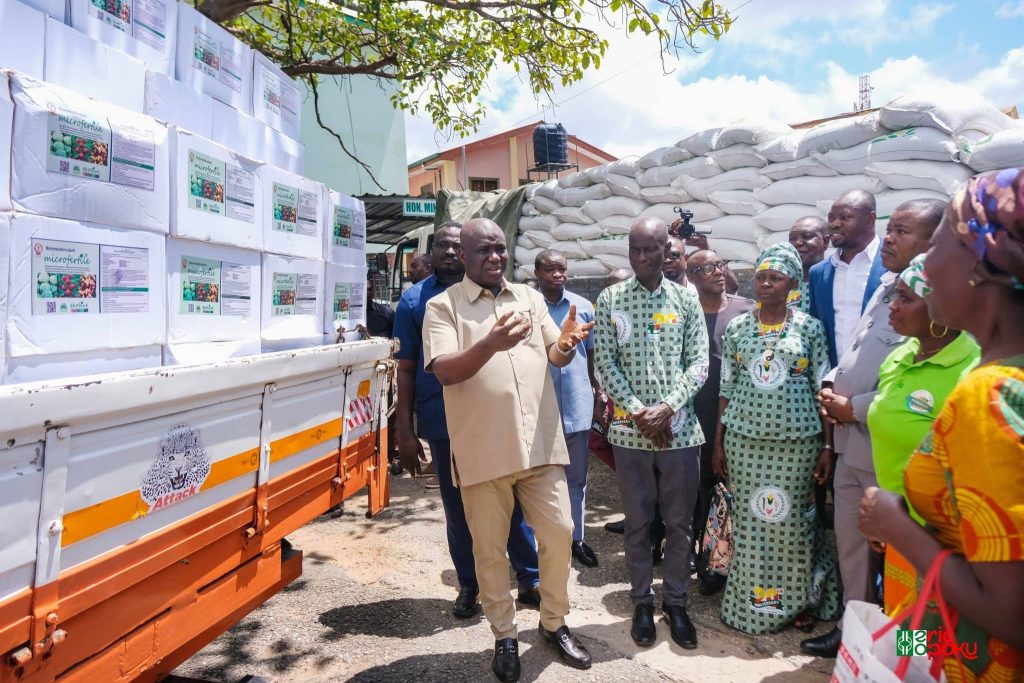
Upper West maize farmer Biyirah Abdallah said the quantity was inadequate. He said he uses at least 700 bags of fertilizer for his 100-hectare farm, noting that many farmers cultivate even larger areas. Weeks after the rollout, he said farmers in his district had still not received any fertilizer.

“I only saw it on social media that the government has started sharing,” he said.
The delayed distribution of agricultural inputs mirrors problems experienced under the now-defunct Planting for Food and Jobs (PFJ) programme under the Akufo-Addo administration. A performance audit by the Auditor-General found that the Ministry of Food and Agriculture failed to ensure fertilizers reached farmers before the start of the planting season. Fertilizers arrived approximately two months late, forcing many farmers to purchase more expensive alternatives and reducing yields even though the government spent over GHS8.6 billion on the project.
The report observed that “the Soil Research Institute advises that the best time for fertilizer application is at planting, usually in April, but fertilizers were accessible to farmers starting in May.”
Farmer groups say similar implementation problems are reappearing under Feed Ghana.
The Peasant Farmers Association of Ghana (PFAG) has warned that the delays have created uncertainty and may affect this year’s production. Acting Executive Director Bismark Nortey said farmers need early information on government support so they can make alternative arrangements if necessary.
Food Sovereignty Ghana, an NGO, has attributed the delays to poor procurement planning.
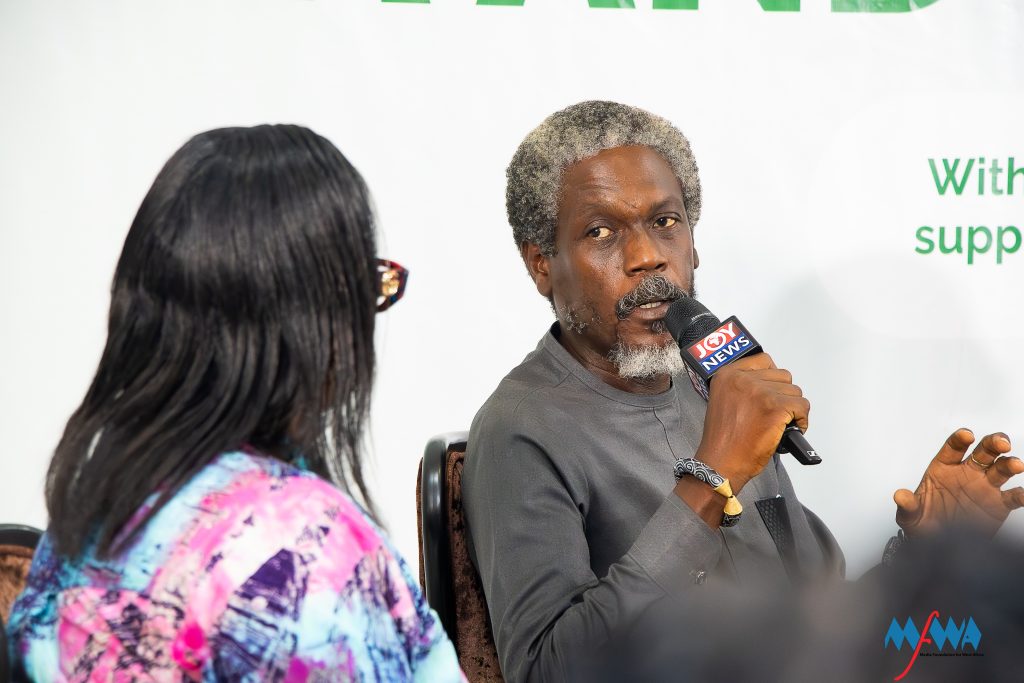
Communications Director Edwin Baffour argued that imported fertilizers and other inputs should have been procured months earlier and distributed between January and February. He warned that delayed procurement and distribution reduce farmers’ ability to achieve optimum productivity and expose Ghana’s agricultural sector to supply chain disruptions and foreign exchange pressures.
Responding to the concerns, Minister for Food and Agriculture Eric Opoku denied that there had been delays, arguing that Ghana’s planting seasons differ by region. He said southern farmers had already received fertilizer carried over from last year, a claim some farmers disputed.
For the northern sector, he said every constituency was receiving 1,500 bags of NPK and urea fertilizer. He also explained that the 40,000-bag distribution was “a backup arrangement for peasant farmers, smallholder farmers” and “an emergency cushion” linked to the 2024 drought rather than a permanent fertilizer programme.
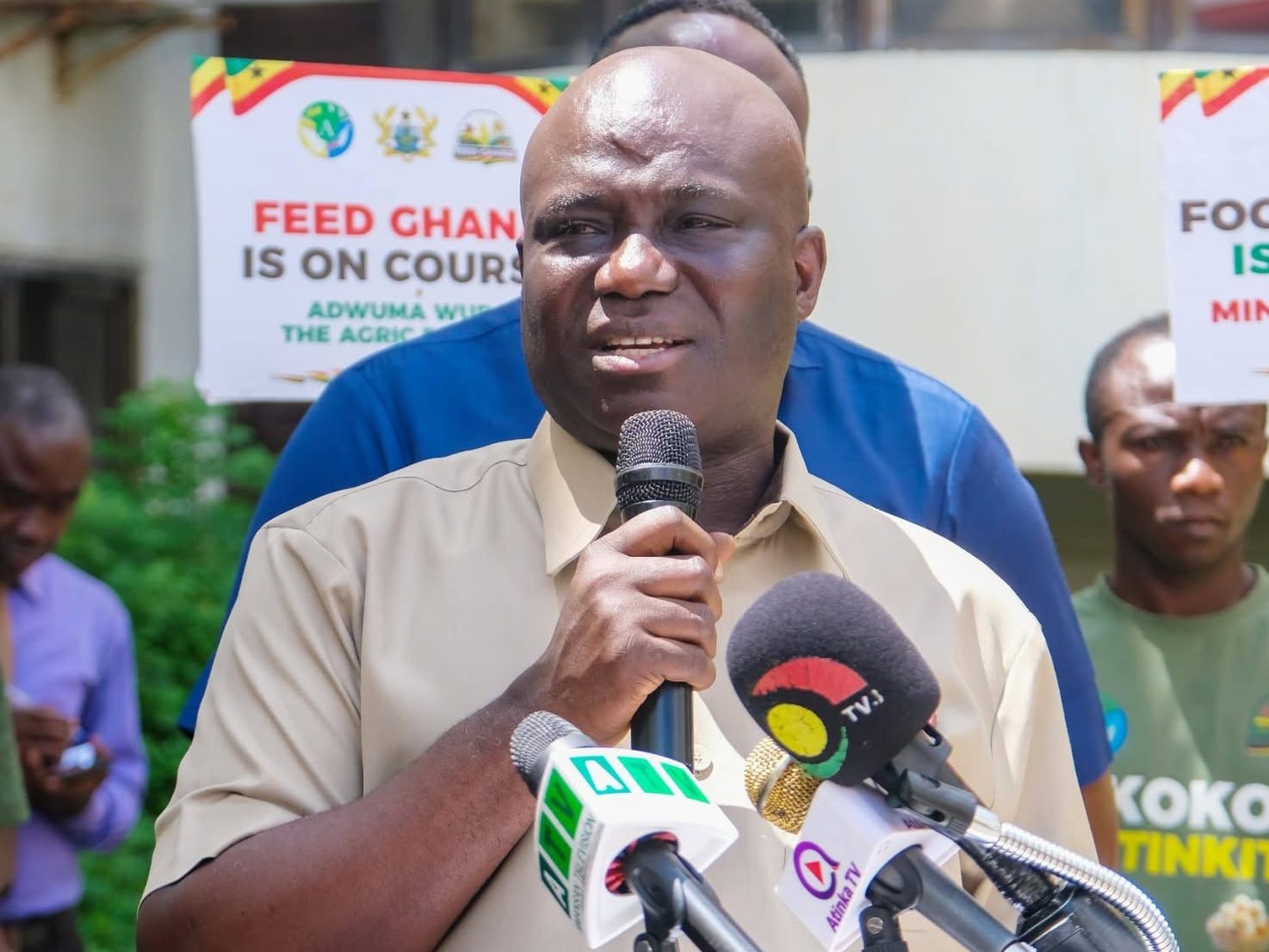
The Minister said the long-term solution would be Farmer Service Centres that would provide farmers with ongoing access to subsidized inputs and mechanization services. However, he repeatedly declined to address questions about delayed seed distribution and said pesticides are supplied only during disease outbreaks.