
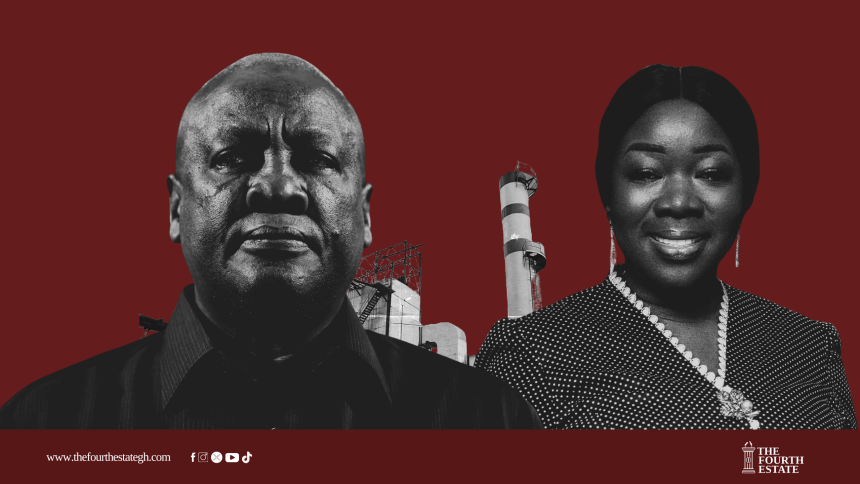
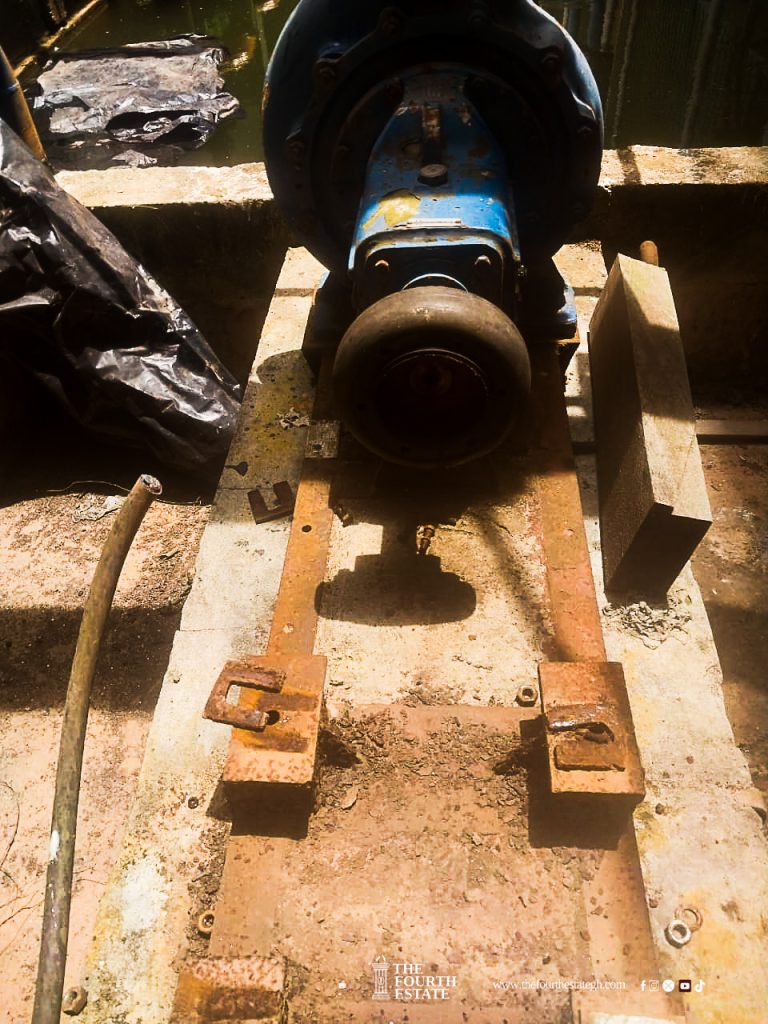
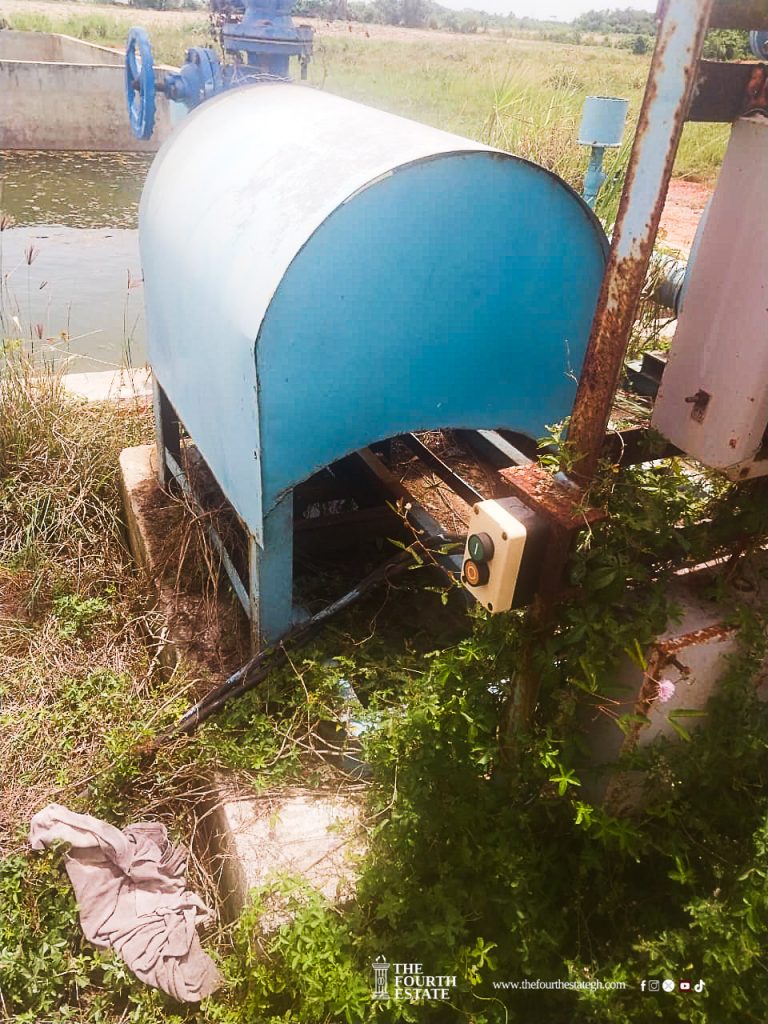
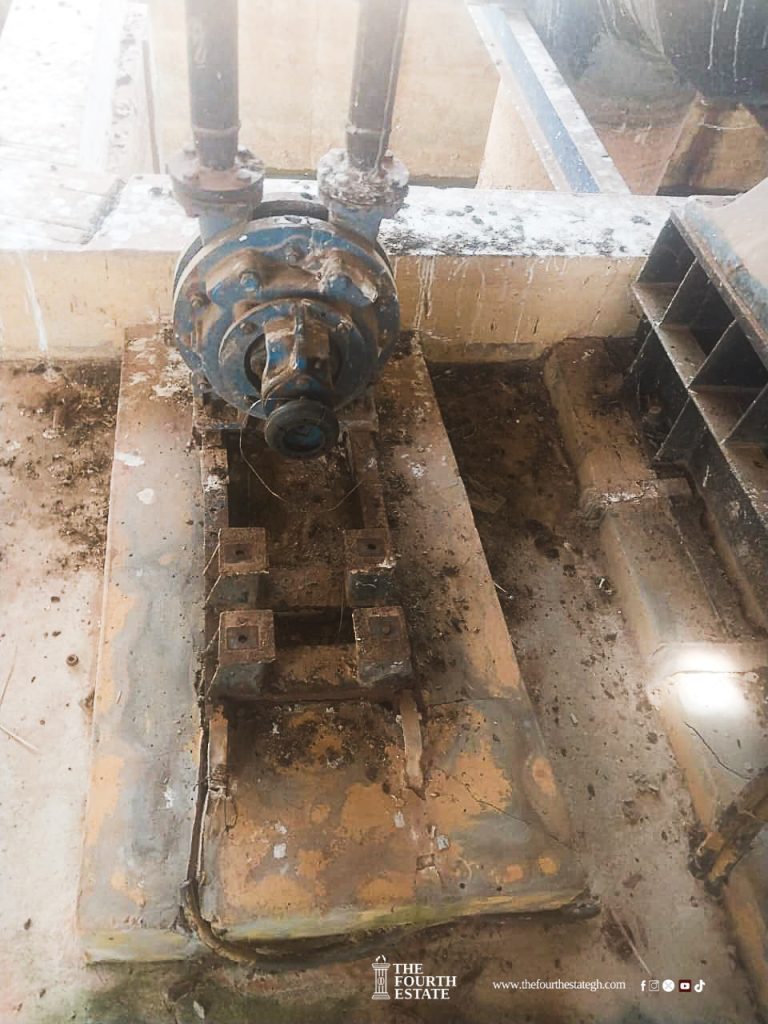
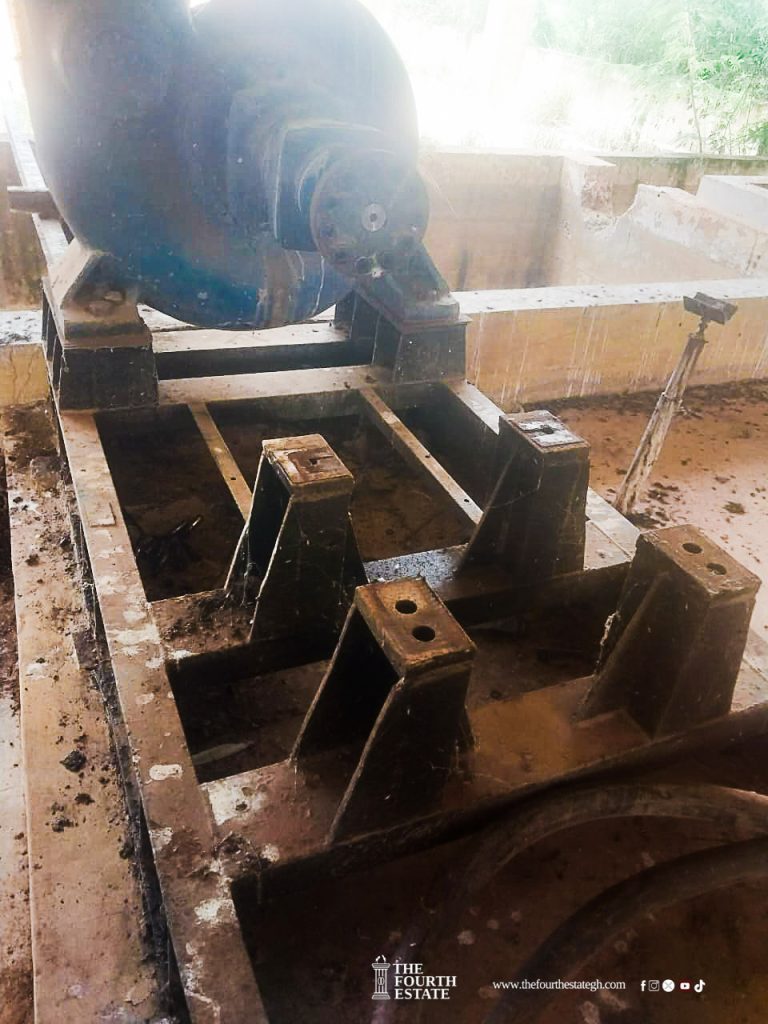
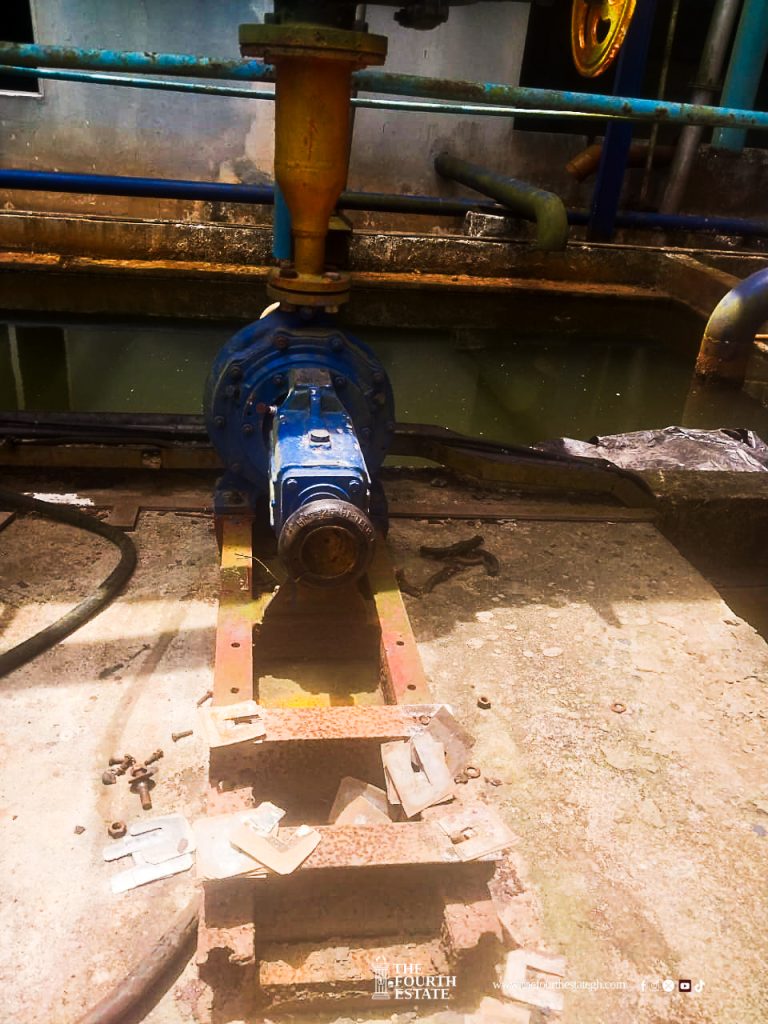
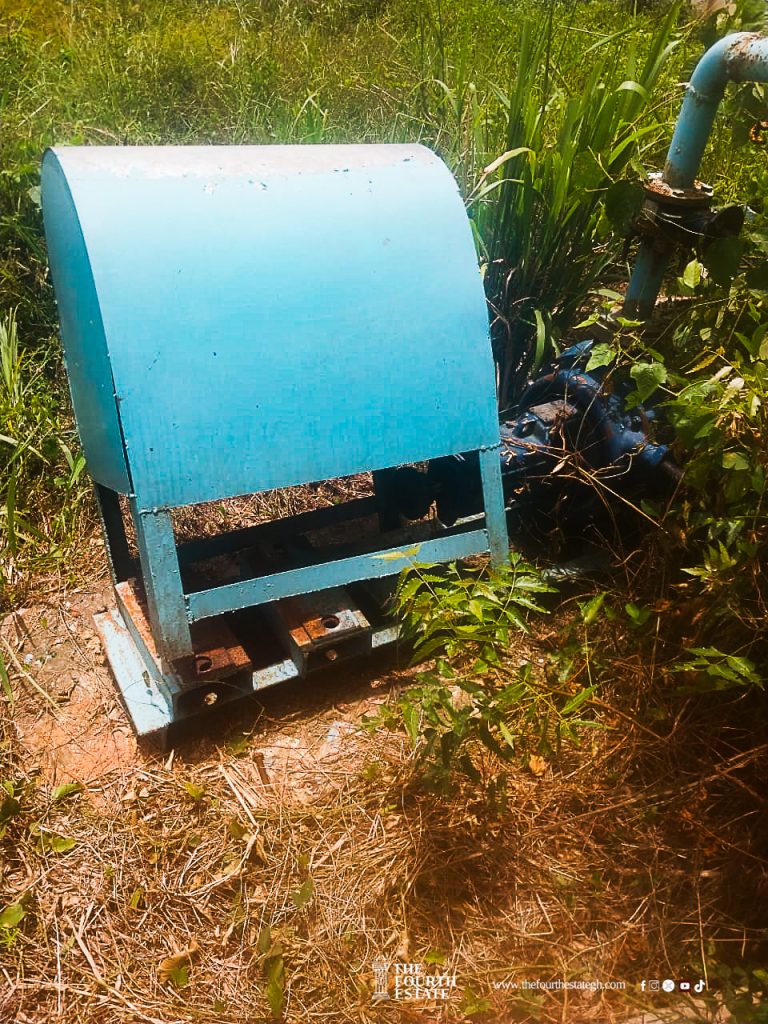
Thieves have broken into the Komenda Sugar Factory, dismantling and making off with some industrial motors and pumps from the long-idle, state-owned plant in the Central Region.
The Government of Ghana spent $35 million building the factory a decade ago, promising it would end the country’s reliance on imported sugar. Instead, the factory has sat largely dormant since its commissioning in 2016 and now lacks equipment in its water reservoir, wastewater, and freshwater systems, as well as a critical firefighting pump. The thieves left behind a large spray pump motor, apparently too heavy to carry off.
The Central Regional Police Command confirmed the theft to The Fourth Estate.
“We received the report of the theft in April,” the Public Relations Officer of the Command, Chief Inspector Isaac Evans Ettie, said. “I can confirm that there are reports that some machines have been stolen from the facility. We are investigating and will make the report available when we finish. No arrests have been reported”.
The Minister for Trade and Agribusiness, Elizabeth Ofosu-Adjare, told The Fourth Estate her ministry received a report that some equipment from the Komenda Sugar Factory were stolen on April 25, 2026
“A formal complaint has been lodged with the Komenda Municipal Police Command, and the Ministry continues to monitor the matter closely to ensure that appropriate action is taken and that the stolen equipment are recovered,” she said.
The theft of the equipment means the nation’s dream of producing sugar locally and reducing Ghana’s dependence on sugar imports will have to wait longer.
Ghana imported GHC2.44 billion worth of sugar in 2024, with ordinary granulated and powdered sugar accounting for more than 97% of the total sugar import bill, according to trade data from the Ghana Statistical Service.
The Fourth Estate has learned that the electric fencing system and certain security infrastructure at the Komenda Sugar Factory are no longer functional, leaving the premises vulnerable to intrusion and criminal activity.
The latest development comes as the Komenda Sugar Factory marks a decade since its recommissioning by the first John Mahama administration amid several failed promises that it would transform Ghana’s sugar industry, create thousands of jobs and reduce the country’s sugar import bill.
Farmers Frustrated by a Decade of Inactivity
The Sugarcane Farmers Association of Ghana (SUFAG) says the factory’s continued inactivity has made them poor. They said the commissioning of the factory in 2016 gave them hope that their produce will constantly feed the factory and eventually positively affect the economic well-being of farmers within the Komenda Edina Eguafo Abriem communities.
“This national asset still sits idle and rusting, while thousands of farmers and the people of Komenda continue to suffer,” SUFAG’s Director of Communication, Okatakyi Nana Kweku Ackon, told The Fourth Estate.
The association argues that years of inactivity have discouraged investment in sugarcane cultivation and weakened confidence among farmers who expanded production in anticipation of a ready market for their harvest.
“There are over 40,000 acres of sugarcane here in the Central Region, and about nine other regions also produce sugarcane in Ghana, so if the factory starts today, there will be raw material,” Mr. Ackon claimed.
SUFAG has questioned the Ministry of Trade, Agribusiness and Industry’s stewardship of the project, arguing that the factory’s inability to commence sustained commercial operations after ten years points to unfathomable management and policy failures.
“Ten years of supervision with zero results is proof that the Ministry has nothing to offer the people of Komenda,” Mr Ackon said.
The association attributed the situation partly to what it described as a lack of political commitment to operationalise the factory. SUFAG called on President John Mahama to consider transferring responsibility for the facility to either the President’s Special Initiatives framework or the 24-Hour Economy Authority.
According to the association, a new management arrangement could accelerate efforts to revive the factory and restore confidence among farmers and investors.
SUFAG also challenged recent remarks by the Minister for Trade, Agribusiness and Industry, Elizabeth Ofosu-Adjare, regarding consultations with sugarcane farmers.
The association claimed the Minister had indicated in Parliament that she had engaged with farmers and that they were satisfied with developments concerning the factory.
“We cannot trust her leadership because she misled Parliament by claiming she is in touch with us and that we are satisfied; meanwhile, when she came here, she didn’t even spend a minute with us”, the association’s Director of Communication said.
A Factory with a Troubled History
The Komenda Sugar Factory was originally built in 1964 under President Kwame Nkrumah’s industrialisation programme, but ceased operations in the early 1990s following years of operational and financial difficulties.
After more than two decades of inactivity, the facility was reconstructed through a US$35 million credit facility from the Export-Import Bank of India under the first administration of President John Mahama.
“We must learn to eat what we grow and grow what we eat. When we see the value of our GDP depreciating, it is because we have become an import-happy country. Your currency is as strong as your production,” Mr. Mahama said during the sod-cutting ceremony of the factory in 2014.
On May 30, 2016, President Mahama commissioned the refurbished factory, describing it as a major step toward reducing Ghana’s reliance on imported sugar and creating jobs. The government projected that the factory would process about 1,250 tonnes of sugarcane daily and support more than 7,000 direct and indirect jobs.
However, the optimism surrounding the project quickly faded. Within months, concerns emerged about the availability of sufficient sugarcane to sustain production and whether the factory was fully equipped for commercial operations. By July 2016, operations had effectively stalled.
Subsequent technical assessments commissioned under the Akufo-Addo administration identified several challenges, including inadequate working capital, insufficient sugarcane supply and missing equipment.
The Minister of Trade at the time, Alan Kyerematen, later informed Parliament that about 35 critical components were absent when the factory was commissioned and that no viable out-grower scheme had been established to ensure a sustainable supply of raw materials.
This is in spite of the fact that before the start of the factory’s reconstruction, President Mahama promised that all these issues would be taken care of.
“The plant is not going to use power from the national grid. It will produce its own power,” he said. “This project is going to take 24 months to complete, but even before the factory is completed, 24 million dollars for the growing of sugar cane has been approved, and we will start growing the sugarcane before the factory is completed.”
In 2021, images from the factory showed it was rusting away, with machines also badly corroded. The factory roof had holes and was badly torn. A year later, the factory was again renovated.
Park Agrotech Ghana Limited was selected as a strategic investor and pledged to invest in sugarcane cultivation and factory operations. But still, the facility remained largely idle.
Another committee set up
In 2025, Mr Mahama returned to power with a firm promise to restore the Komenda Sugar Factory to operation. The Trade Ministry established an Interim Management Committee to assess the factory’s assets, finances and prospects for revival.
Earlier this year, the Minister for Trade, Agribusiness and Industry, Elizabeth Ofosu-Adjare disclosed in Parliament that the factory had been disconnected from electricity and water services over unpaid bills and that several critical machines required refurbishment.
In an interview with Mrs Ofosu-Adjare about whether the government has identified a strategic investor to run the factory, she said “four (4) companies responded, and the Ministry is in the process of finalising the investor selection exercise”.
So the big question is: when will the factory start producing sugar?
The Trade Minister did not provide a definite date but said, “it is anticipated that the strategic investor selection exercise will be concluded shortly, following which the selected investor will undertake the necessary steps to bring the factory into commercial sugar production”.
So, how does the government intend to ensure a steady supply of raw materials to the factory once production begins? Ms Ofosu Adjare said the decision on the acquisition of raw materials will ultimately rest with the selected strategic investor.
She, however, stated that the government, under the “Feed-the-Industry Programme,” would collaborate with the strategic investor to implement an initiative to cultivate the appropriate variety of sugar cane for the factory.