

In a dimly lit bar in Kwabenya on the outskirts of Accra, Fola (not her real name) realised the promise that had brought her from Nigeria was a lie.
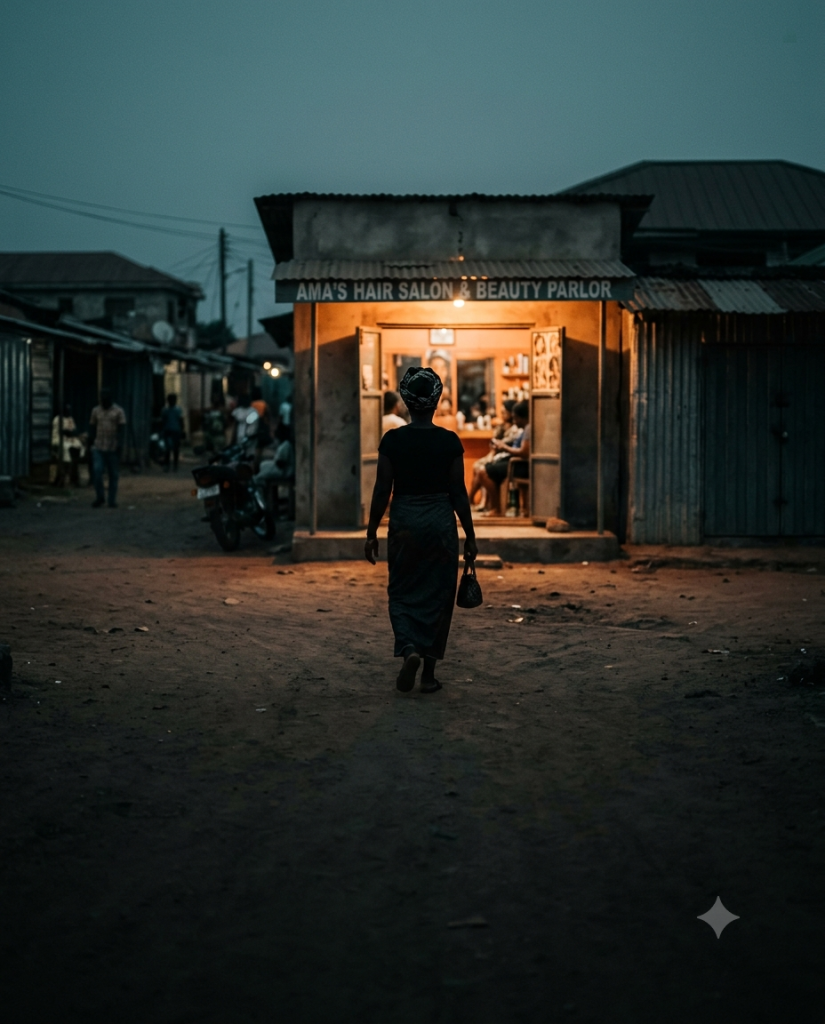
She had arrived in Ghana less than two weeks earlier, believing she would work with Sandy – her Ghanaian contact – in a salon in Nsawam.
“She said when I come, she will let me attend to some of her customers and they will pay me… we never discussed prostitution any day,” Fola tells The Fourth Estate.
The night after she arrived, Sandy took her to a bar, pointed to a man, and told her to follow him home.
“This is not what we discussed,” Fola recalled. “She said I had to do it to pay for my transport into Ghana.”
By dawn, the man had slept with her twice. He paid her GHS250. When Fola returned, Sandy took the entire amount and recorded it in a notebook as “Fola’s work done.”
Within 48 hours, Fola had become another victim of a trafficking network exploiting the hopes of young women seeking a better life.
Sold a promise
Fola’s story is far from unique.
According to the Ghana Police Service, 127 human trafficking cases were recorded in 2025. Forty-two involved sex trafficking, and every victim in those cases was a woman. Police arrested 156 suspected traffickers, but only nine cases were prosecuted, resulting in eight convictions.
Experts say Ghana’s relative stability, English-speaking environment, and reputation as an economic hub have made it an increasingly attractive destination for migrants from across West Africa. Those same factors have also made it fertile ground for traffickers.
“Ghana is an origin, a transit, and a destination country,” says Professor Mary Boatemaa Setrana, Associate Professor at the Centre for Migration Studies at the University of Ghana. “Because it has all three for migration, the challenges associated with trafficking are also high.”
Migration experts and law enforcement officials suggest traffickers are exploiting the ECOWAS Free Movement Protocol, which allows citizens of member states to travel visa-free for up to 90 days.
For many victims, recruitment begins with a familiar promise.
In Benin City, Nigeria, Precious (name changed to protect her identity) dreamed of building a better future. Already trained as a hairdresser, she struggled to survive on low wages and took a job at a fuel station to make ends meet.
When a friend told her about an opportunity in Ghana, she was intrigued.
“She said she had a shop,” Precious explained. “She even showed me evidence.”
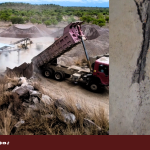
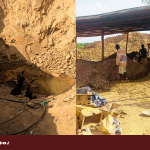
The journey took four days, crossing multiple borders and waterways before ending in a remote mining settlement near Bole in northern Ghana. Only then did she discover the truth – prostitution in an illegal mining camp.
“When you see a man, you flash them torch,” she said, recalling the coded language used to solicit clients.
When she demanded to return home, her traffickers refused.
“I told her I want to go back home. I can’t do this work. She said if I want to go back, I should give her the transport money with interest. I didn’t have a choice. I tried to run, and they caught me. They beat me. They locked me inside the room,” Precious says.
Professor Setrana says victims are deceived in a predictable pattern: “You are told you are coming to work in a shop or salon. They pay for your transportation. You agree to repay money, though you don’t know how much was actually spent. Once you arrive, it is not what you were told. It becomes exploitation.”
Trapped by debt, fear, and violence
The most powerful weapon traffickers use is often not physical restraint but debt.
For Fola, the woman who recruited her claimed she owed ₦ 200,000 (GHS1,700) for transport, even though the actual bus fare was ₦26,000 (GHS222). Every cedi she earned was recorded as “repayment”.
Superintendent William Ayaregah, Director of the Ghana Police Service’s Anti-Human Trafficking Unit, sees the tactic repeatedly.
“They put these girls under debt bondage. They can never finish paying. When a victim thinks she has paid a huge amount, the madam falsely tells her she has only paid a fraction, resetting the debt,” he says.
For another survivor, Eve, the financial control was relentless. She claims victims who failed to meet daily targets were punished. Food was withheld, illness was ignored, and threats became routine.
“She will say, ‘You don’t want to pay me my money? No problem, you will run mad soon,’” Eve recalls her madam’s threats vividly.
Upon arrival in Accra, Eve was taken to swear an oath in a ritual intended to instil fear and obedience.
“Psychologically, they keep telling you that if you report, you will go mad or die,” says Dziedzorm Adzam, a clinical psychologist who manages a state-owned shelter for rescued victims. “In reality, nothing happens. But the fear is very real.”
Rescue is only the beginning
For some women, escape comes through chance.
Fola’s ordeal ended after her trafficker allegedly paid two men to strip and photograph her before threatening to release the images. Abandoned on a street, she encountered a stranger who helped her reach the police. Her trafficker was later arrested.
Precious escaped while pregnant, crossing a river with her last GHS150 before finding an anti-trafficking agent who connected her to a government shelter. There, survivors begin rebuilding their lives.
“We provide everything,” Adzam says. “Sponge, toothbrush, clothes, underwear, slippers, bed sheets. Some come with nothing.”
Yet even rescue centres face severe challenges.
“We sometimes rescue 300 or 400 victims,” Superintendent Ayaregah says. “Feeding them becomes a big challenge.”
The human trafficking fund “can’t sustain the shelter for a month,” Adzam continues. “Sometimes even toothpaste has to be rationed.”
The greatest challenge may come after survivors leave. Many return to the same poverty and vulnerability that traffickers exploited in the first place. Authorities often lose track of them after repatriation. Some are re-trafficked. Others become recruiters themselves, experts say.
Meanwhile, traffickers continue adapting faster than the systems designed to stop them.
“We need to be intentional about this fight,” Adzam says. “We need the public to be aware, to report, to see survivors not as ‘ashawo’ [prostitutes] but as human beings who were lied to and abused.”
Until that happens, buses will continue crossing borders carrying young women chasing opportunity – and traffickers waiting to exploit those dreams.
The author, Jason Dei, is a 2026 Fellow of the Next Generation Investigative Journalism Fellowship – Cohort 8 at the Media Foundation for West Africa.