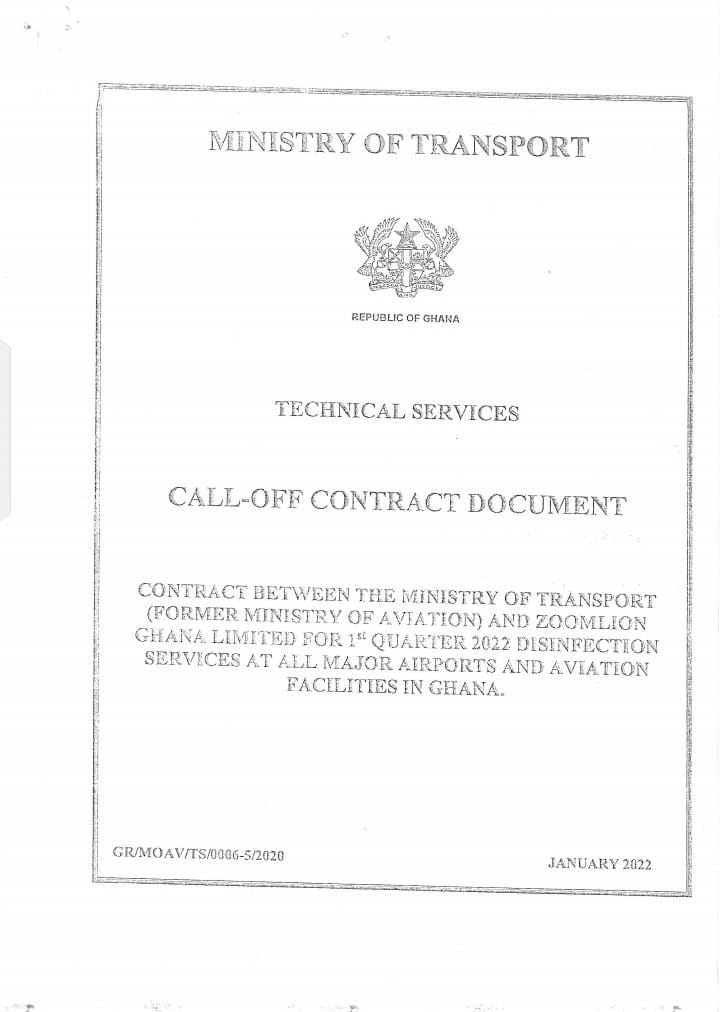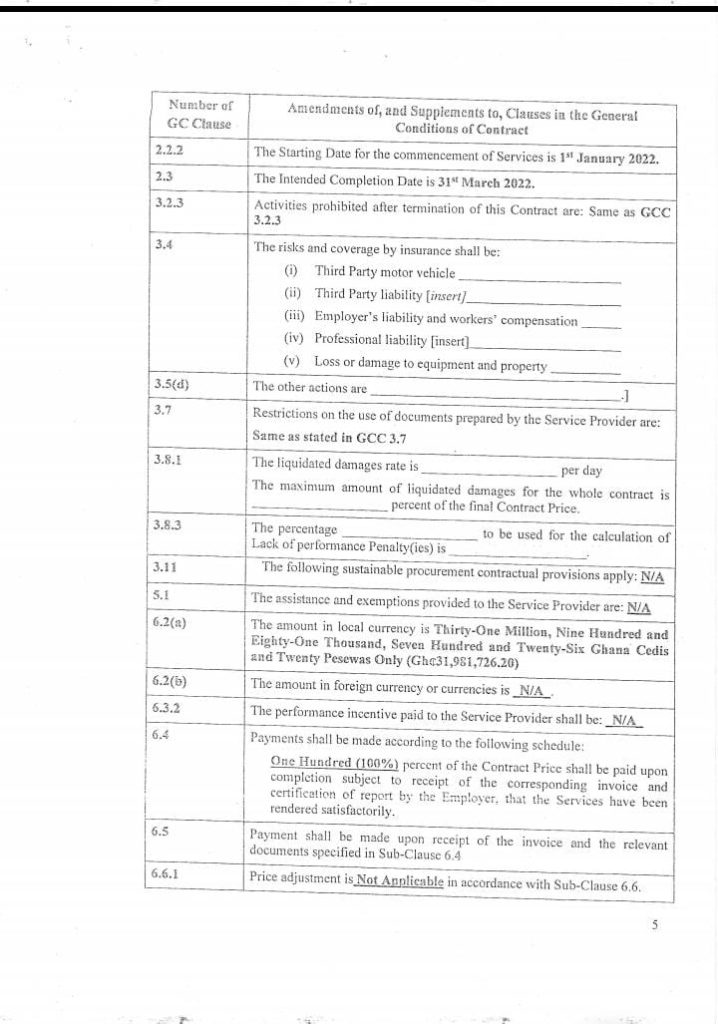


As COVID-19 cases were on a sharp decline in Ghana in 2022, the Ministry of Transport paid Zoomlion Ghana Limited GHC95.9 million to disinfect airports and aviation facilities over nine months. This equates to GHS394,836 per day from January to September 2022.
Documents from the Ministry of Finance show the payment was funded by the Sanitation and Pollution Levy (SPL), a 10-pesewa charge on each litre of fuel sold. This was introduced in 2021 by the Akufo-Addo administration to address Ghana’s sanitation challenges.
Meanwhile, the Ghana Airports Company, responding to a Right to Information request, revealed it spent GHC2.5 million over the 12 months of 2022 on its own airport disinfection programme.
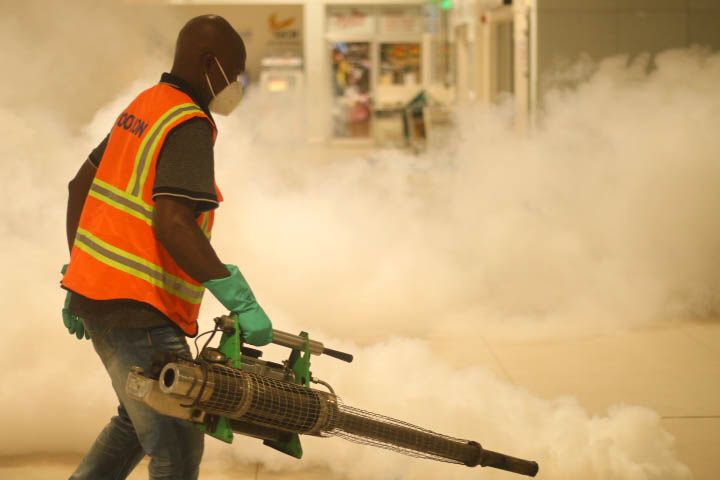
The GACL contracted companies to disinfect high-touch indoor areas such as counters, immigration booths, door handles, and washrooms DAILY – all in line with World Health Organization (WHO) recommendations for combating COVID-19. Zoomlion, contracted by the Transport Ministry, disinfected similar high-touch areas in addition to open spaces, but only ONCE a month. The open areas included terminal frontages, sidewalks, tarmacs, and car parks.
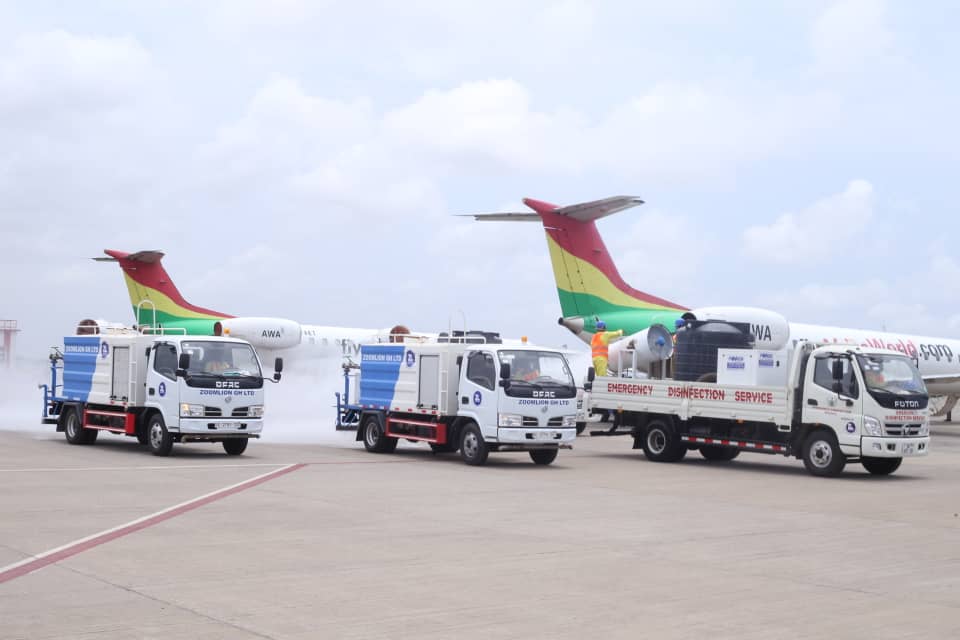
Yet, Zoomlion was paid almost 38 times what the GACL spent on what, according to World Health Organisation guidelines, was more necessary and pressing towards combating the Covid-19 pandemic. This also means that while the GACL spent about GHC6,954 per day on disinfecting critical areas, Zoomlion was paid almost GHC394,835.95 per day to engage in disinfection that the WHO had rejected as unnecessary.
These payments were made to Zoomlion when COVID-19 cases had drastically reduced. According to the WHO, Ghana recorded about 58,000 new cases in 2020. The following year, the country recorded about 95,000 cases, reducing to 15,000 new infections in 2022.
Long before the contract between the Ministry of Transport and Zoomlion, the WHO had deemed spraying porous outdoor surfaces like streets and sidewalks ineffective and unnecessary.
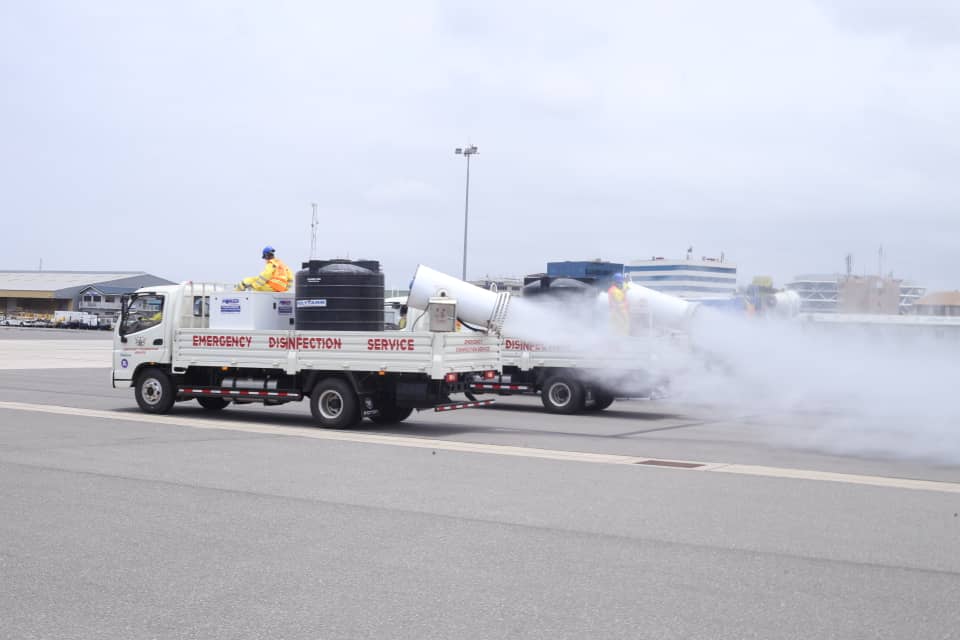
“Spraying or fumigation of outdoor spaces, such as streets or marketplaces, is not recommended to kill the COVID-19 virus or other pathogens because the disinfectant is inactivated by dirt and debris, and it is not feasible to manually clean and remove all organic matter from such spaces,” the WHO guidelines stated. The organisation, which coordinated the global pandemic response, further warned that such spraying “can be harmful for human health.”
Ironically, GACL now defends the Zoomlion contract. In written responses to questions by The Fourth Estate, it described the outdoor disinfection as a “precautionary measure aimed at minimising potential transmission risks,” claiming it drew inspiration from early large-scale public space disinfections in China.

Policy analyst Bright Simons calls this justification misguided, noting key differences between China’s early outbreak and Ghana’s.
“Spraying fields to try and contain COVID is madness,” Mr. Simons says. “Unless there was a vector like in China, where pangolins were considered a potential vector, in which case you are killing mammals.”
Mr Simons added that monthly disinfections also lacked a scientific basis for a fast-spreading respiratory virus.
“The monthly cycle doesn’t make sense because this is a very fast-moving pathogen, infecting people very quickly as they walk to the airport. If you come and disinfect today and come back in a month, the pathogen infection rate will have gone through the roof already before you show up,” he said.
Former Transport Minister Kwaku Ofori Asiamah, under whose tenure the GHC95.9 million was paid to Zoomlion, has not responded to The Fourth Estate’s calls, WhatsApp messages, or texts. We also requested an interview with the current Minister of Transport, Joseph Bukari Nikpe. He is also yet to respond.
To probe the contract’s rationale, The Fourth Estate sought the agreement and scope of work from the ministry via the Right to Information Act.
The ministry initially refused, citing Section 11(1)(a) of the Act, claiming disclosure could expose “trade secrets or commercially sensitive information” that might prejudice Zoomlion’s competitive position.
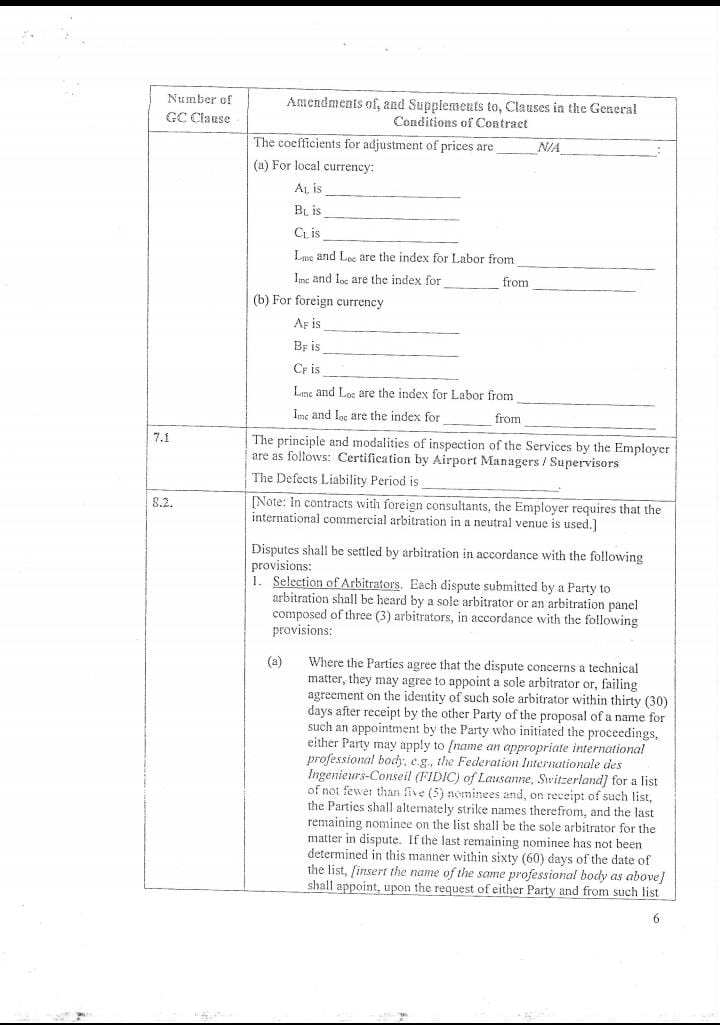
After months of follow-ups, the RTI Commission ordered the ministry to release the contract. The Ministry’s response was to provide a heavily redacted version of the contract from which little sense could be made.