
When The Fourth Estate revealed that a non-existent World Bank-funded water project for the people of Kamshegu had been captured as completed, the team spoke with the contractor of the project to find out why the project was not executed. The Contractor, Mohammed Gazale, told The Fourth Estate that, even though he was paid, he could not find underground water in the community.
It will be recalled that in April 2026, The Fourth Estate team visited Kamshegu, Kpatua and Guntingli in the Yendi Municipality of the Northern Region to investigate claims that water projects under the World Bank-funded SOCO project had been completed in the three communities. The team, however, discovered that although each community was listed as a beneficiary of a water project, none had received the facility.
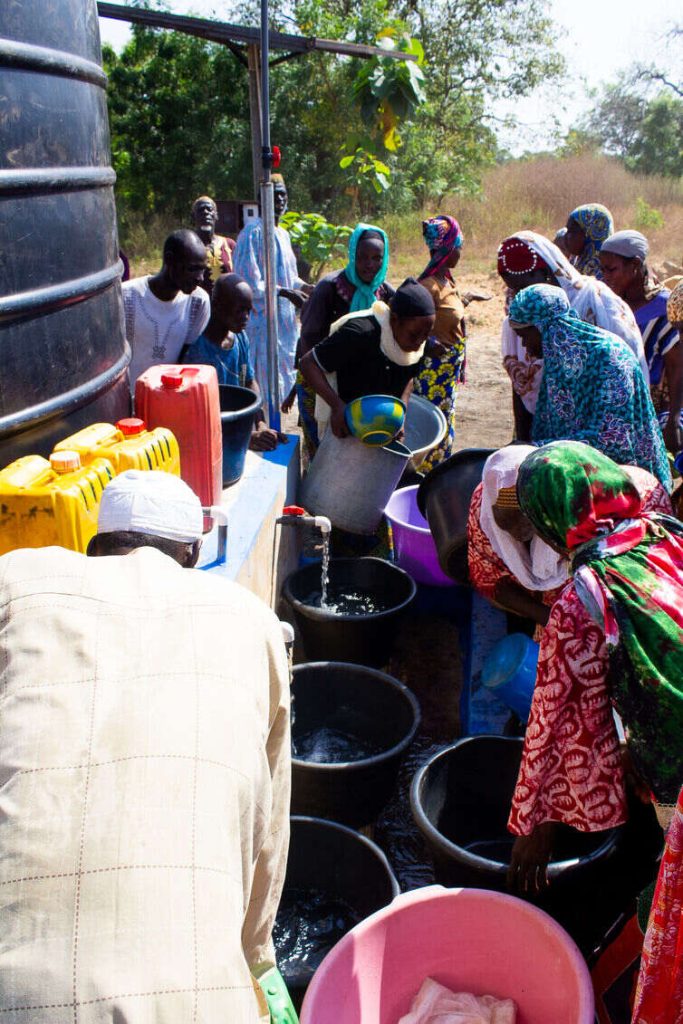
The investigation exposed how residents of Kamshegu had, for decades, relied on bacteria-contaminated dam water, which they shared with cattle and other livestock, to meet their daily water needs.
Touched by the plight of the community after watching the documentary, SOCO: The Ghost Boreholes, a Ghanaian based in Switzerland, Moses Wash, and his wife, Anna, decided to engage with the Media Foundation for West Africa (MFWA), the organization that runs The Fourth Estate project, to explore possibility of getting water for the Kamshegu community.
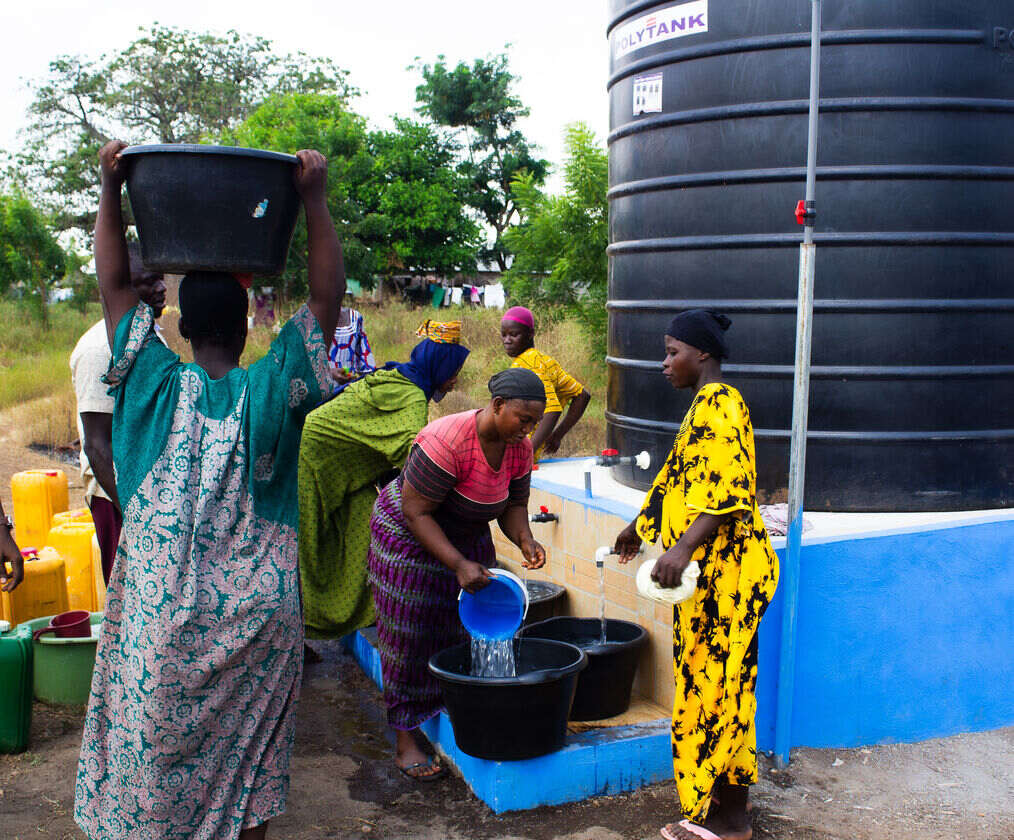
Subsequently, a private company, Gomda Drilling and Construction was engaged to site, drill and mechanize a borehole for the community. Within hours of drilling, the company struck water at a location just a few feet from the spot where Mohammed Gazale, the SOCO contractor, had claimed he could not find water.
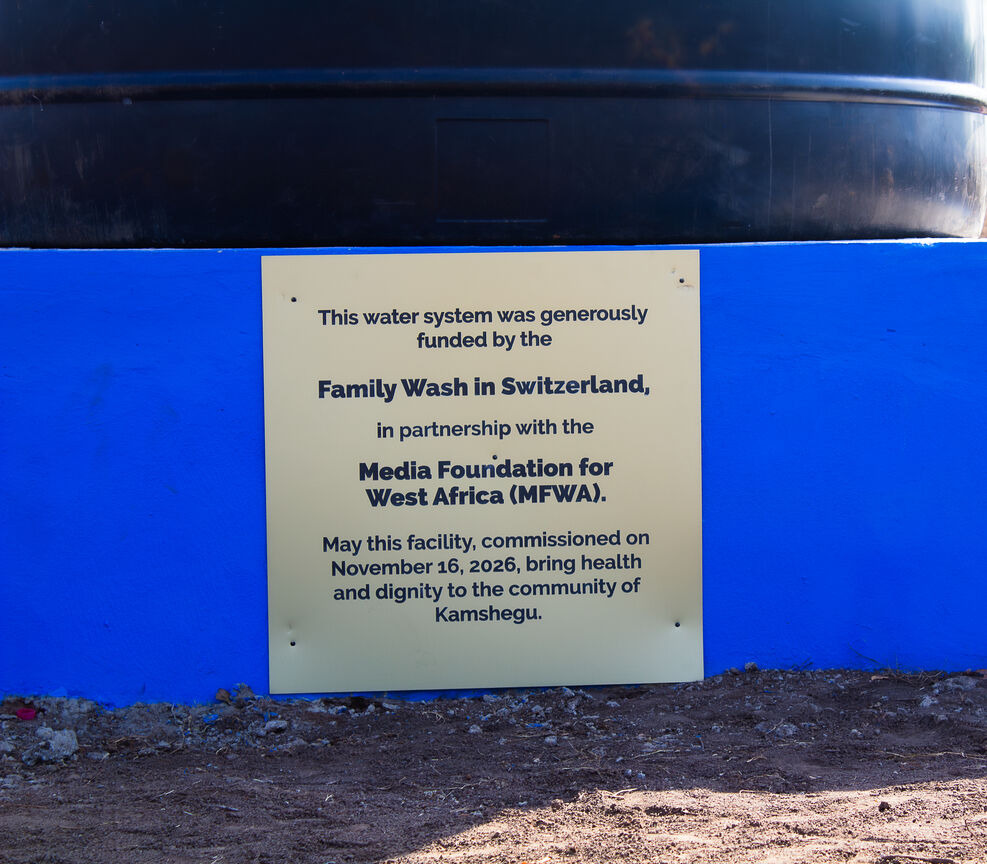
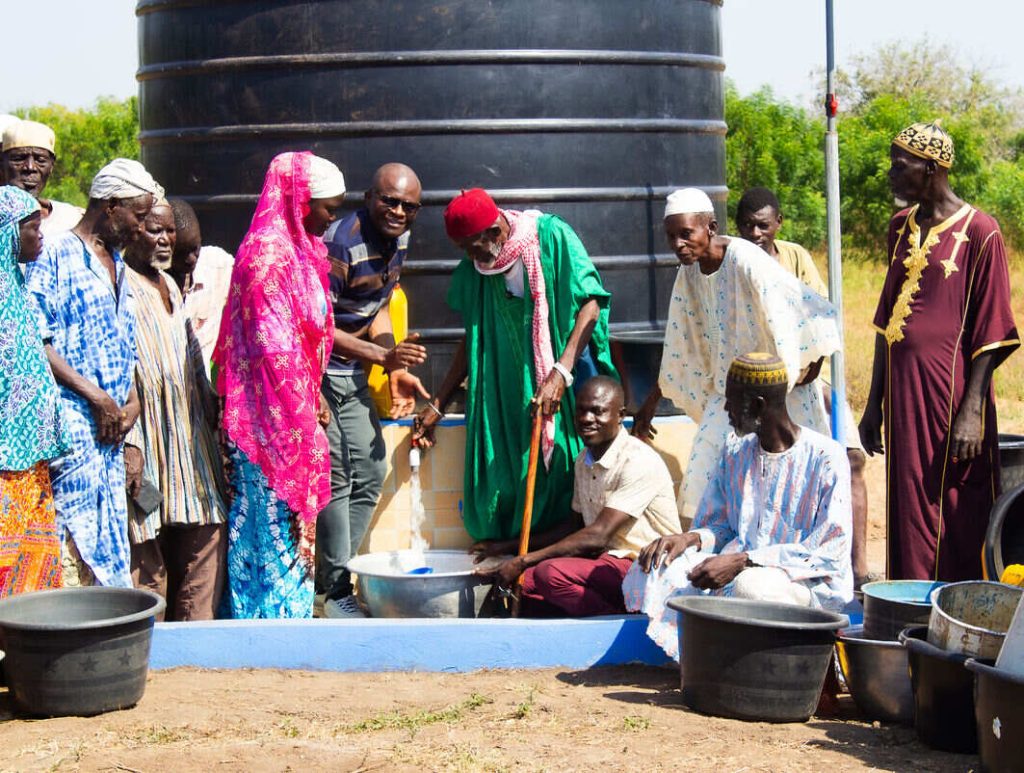
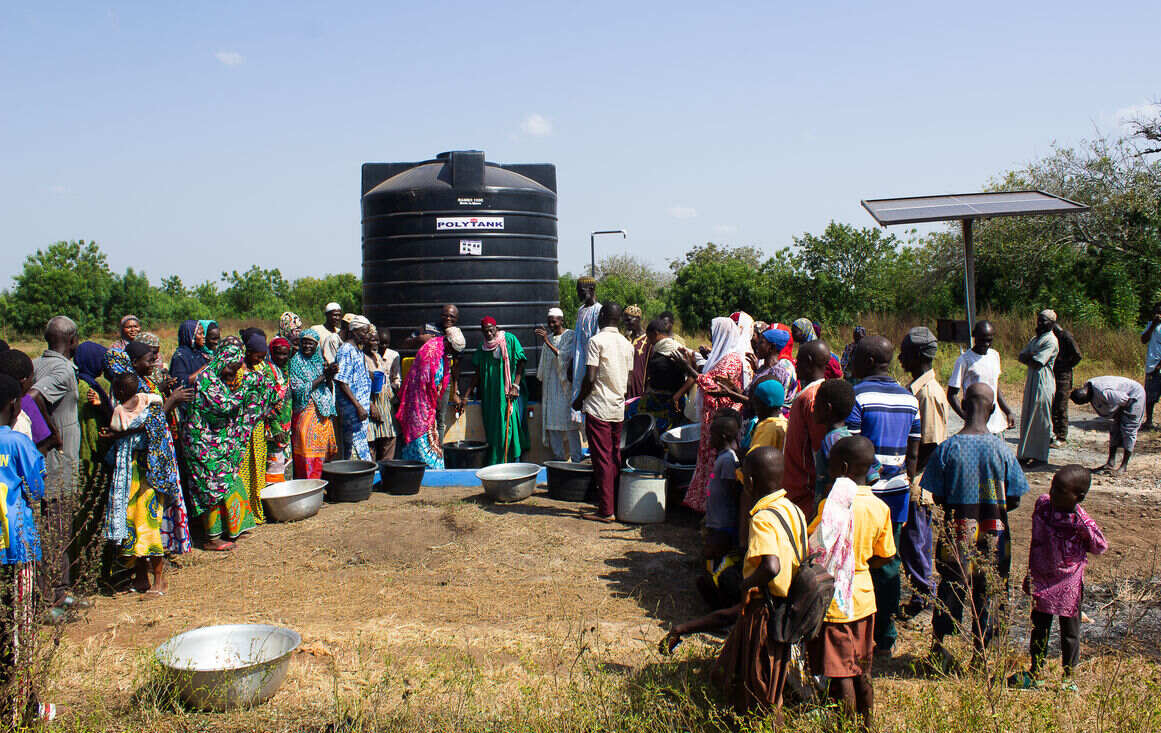
On Monday November 16, 2026, a team from the MFWA was in the community to hand over the mechanised borehole to the people of Kamshegu. The brief ceremony brought together the chief, elders, opinion leaders and residents, who gathered to witness the fulfillment of a long-awaited dream.
A community’s relief and gratitude
The Assembly Member for the Zagbang Electoral Area, which includes Kamshegu, Moses Nakuja, recounted the health challenges residents had faced as a result of their dependence on the dam. These, he said, included dysentery, cholera and typhoid fever.
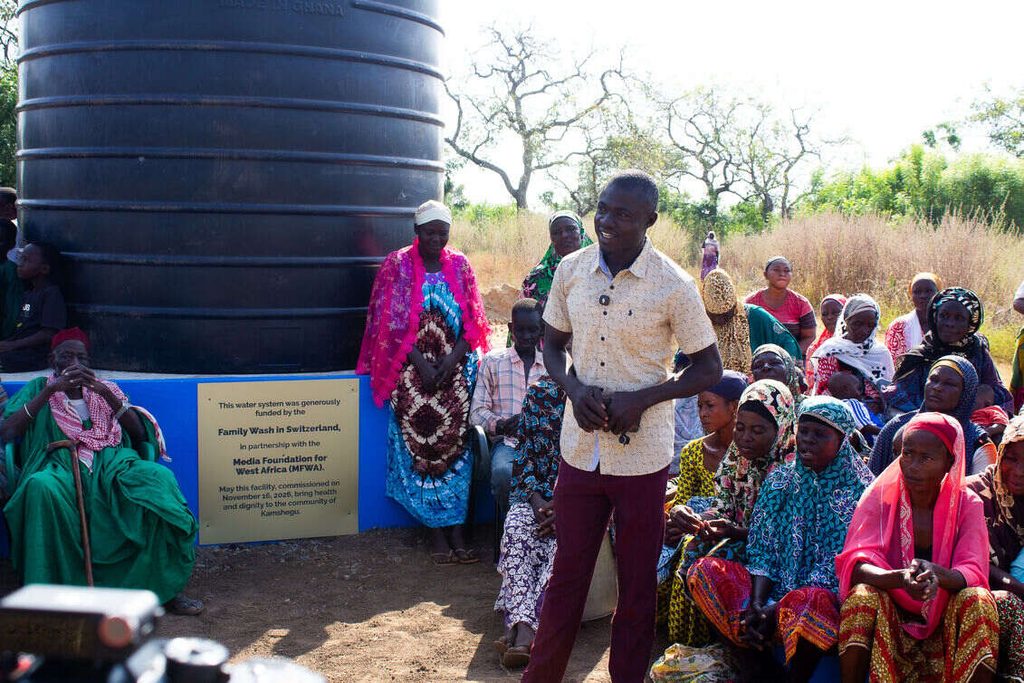
On behalf of the community, Mr Nakuja thanked Family Wash for not only providing an alternative source of drinking water but also restoring the dignity of residents who had endured the indignity of sharing a water source with animals.
In all, Family Wash spent GH₵ 62,280 on the water project – GH₵ 59,030 for sitting, drilling, mechanization, and construction of a platform for a 1,000-litre capacity polytank which they purchased, and GH₵ 3,250 to engage the Council for Scientific and Industrial Research in Tamale to conduct laboratory tests on Kamshegu dam water. The results of the tests revealed that the water was contaminated with bacteria and was therefore unsafe for human consumption.
The Chief of Kamshegu, Zangbang-Naa Iddrisu Alhassan, also expressed gratitude to Family Wash and the MFWA for responding to the community’s water needs.
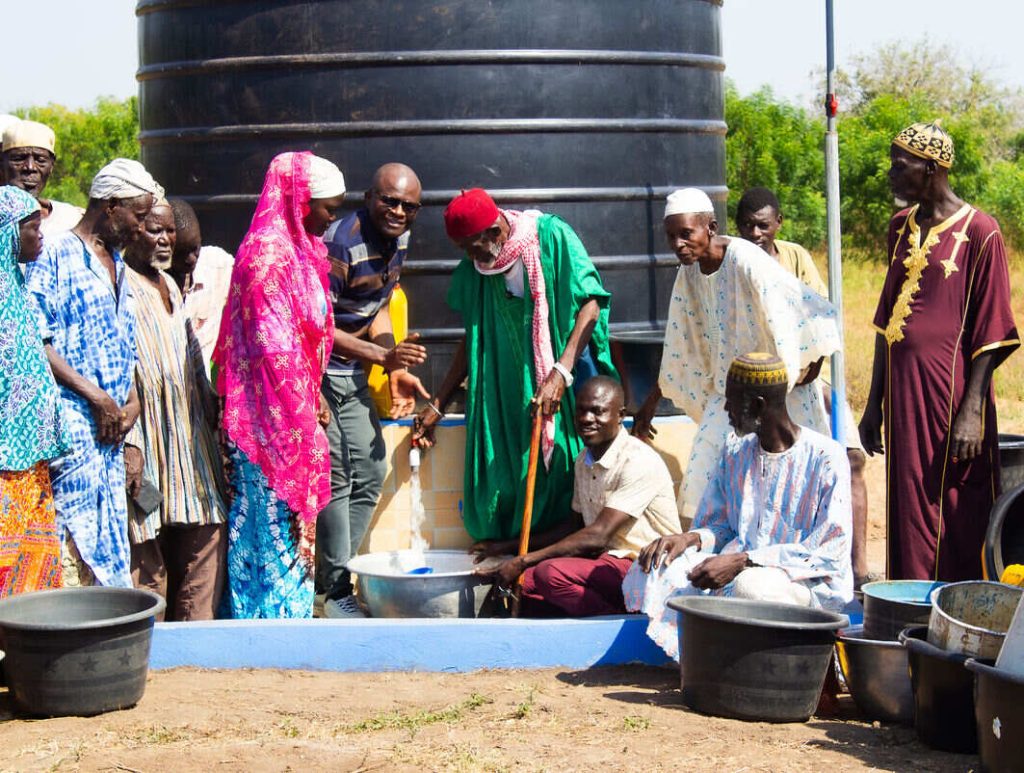
“May Allah bless Family Wash. May they never lack anything. May they live long and fulfil Allah’s purpose for their lives,” he prayed.
Mohammed Awulatu, popularly known as Madam SOCO, who served as the community’s local representative for the SOCO Project, also welcomed the intervention.
However, she expressed disappointment with the Yendi Municipal Assembly and the SOCO Project, accusing them of deceiving the community over a promised water facility that was never delivered.
A family’s sacrifice
For Moses Wash, the decision to fund the water system followed the shock and anger he felt after watching The Fourth Estate’s documentary.
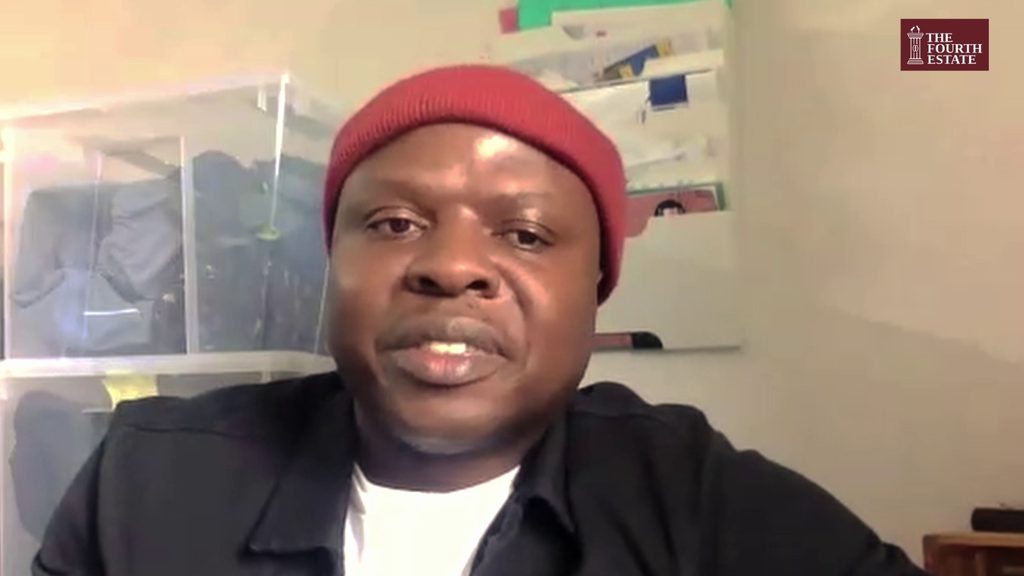
He said he was particularly disturbed that residents were still depending on a water source shared with animals despite government development interventions intended to improve their living conditions.
“I never thought that in 2026, we would still have such a situation in Ghana because I used to see these things when I was very young. So when I saw it, how people were sharing dam water with animals, I was really angry and, at the same time, surprised. The big surprise for me was that it was recorded in the government books as completed,” he said.
Mr Wash disclosed that he and his family had planned a trip to Ghana for the holidays but decided to put it off.
“My family was planning to come to Ghana this December, but we then decided that we wanted to postpone this pleasure of coming to Ghana for these people to get water. So, we decided that we would use the money to get them water so that we can come to Ghana at another time. So, this is the sacrifice that we made. We did not raise funds from any external source. In Christian theology, it’s called substitutional sacrifice,” he said.
He urged residents to protect the facility, keep it clean at all times and ensure regular maintenance to guarantee its longevity.
For the people of Kamshegu, the new water system represents more than an infrastructure project. It is relief from years of dependence on an unsafe water source and a renewed hope for a healthier and more dignified life.
Become a member of The Fourth Estate community
For 5 years, we've investigated matters of public interest and helped hold power to account.
Now we're launching our Membership Programme, a community of people who believe independent journalism is worth sustaining, and want to help us do more. Join us as a member, and bring a friend along.
Join the community now
Road Ministry promises to deploy abandoned bridge components, but dozens remain unaccounted for
Foreign Affairs Ministry promises reform of document attestation services after The Fourth Estate investigation
Former UDS students petition GTEC over collection of unapproved levies
‘Circle Dubai’ brightens up again after years of darkness
Comments
No comments yet. Be the first to share your thoughts on this story.