

The Ministry of Foreign Affairs says it is introducing reforms to digitize the payment of fees for document attestation services offered by the Ministry to eliminate the human interface that is susceptible to extortion.
“Reforms are being pursued to make the payment process cashless, and digital platforms are being developed to anchor the entire attestation process and drastically reduce human interface,” it said in a statement.
The Ministry’s statement followed The Fourth Estate’s latest investigation, which exposed how applicants for document attestation services at the Ministry are being fleeced to pay exorbitant fees for services between GHS 900 and GHS 1200 for services that should cost GHS 200.
The findings from the investigations have triggered a response from the Ministry of Foreign Affairs, which says the “reforms will produce desirable outcomes similar to what we have achieved with Passport Administration in Ghana.”
The Fourth Estate commended
The Ministry commended The Fourth Estate for the investigation and said the findings would help improve governance and accountability.
However, the Ministry insists it does not tolerate middlemen or third-party facilitators in attestation services. It says any such practice runs against its own standards of integrity and transparency.
The statement placed the blame squarely on what it called unscrupulous middlemen. It says these individuals who take advantage of vulnerable citizens have no official link with the Ministry.
“We reiterate that the parliamentary approved fees for attestation is GHS200 which is collected by officials of the Controller and Accountant-General who issue the appropriate receipts,” it said. “No one should engage the services of middlemen — it is strictly illegal. Citizens with relevant information, enquiries or complaints are encouraged to call: +233 240913284/ +233 240793072.”
Middleman sanctioned, reported to police
The Ministry confirmed that the man implicated in the investigation has been sanctioned. It said he has been reported to law enforcement for further investigation and prosecution.
“The said gentleman has also been prohibited from entering the premises of the Ministry of Foreign Affairs,” the statement said.
The Ministry had told The Fourth Estate during the investigations that Michael Gomeh, the man who demanded GHS 900 from its undercover, to facilitate a fraudulent attestation, was not its employee.
However, The Fourth Estate found that Mr Gomeh is in fact a staff member seconded to the Ministry from National Security.
The statement does not name Mr Gomeh or say which institution has sanctioned him.
Reforms promised
The Ministry said it has been working on reforms to its consular and attestation services even before the investigation. It said it is moving toward a cashless payment system. It also said digital platforms are being built to reduce human contact in the attestation process.
The Ministry reiterated that the approved fee for attestation is GHS200. It also said this fee is collected only by officials of the Controller and Accountant General, who issue proper receipts.
The statement noted that the attestation process involves several institutions across different arms of government. It said work has been ongoing for months to improve coordination and credibility across these institutions.
Unanswered questions remain
The Ministry’s statement does not address how forged documents were successfully attested during The Fourth Estate’s undercover test. It also does not explain why front desk staff routinely directed applicants to unofficial facilitators inside the building.
Background
Ghana’s Ministry of Foreign Affairs charges GHS200 for attesting and validating travel documents, a service some embassies require before they process visa applications.
But The Fourth Estate investigation found applicants were paying far more than that, sometimes as much as GHS1,200, through unofficial middlemen operating inside the Ministry itself.
The investigation focused on document validation needed for certain embassies in Ghana, including the Egyptian Embassy, which since October 2025 has required bank statements and invitation letters to be validated by the Ministry before granting visas.
Victims said front desk staff at the Ministry routinely directed them to men in suits inside the building who offered to speed up the process for a fee.
To test this, The Fourth Estate reporter went undercover with a forged invitation letter for an event in Egypt.
The receptionist referred the reporter to Michael Gomeh, who wore a Ministry staff tag.
Gomeh charged GHS900 to handle the attestation. A week later, the reporter received validated documents along with an official receipt showing only GHS265 had been paid.
Despite using forged paperwork, the documents came back endorsed on official Ministry letterhead, signed by the Director of the Consular and Humanitarian Affairs Bureau.
Become a member of The Fourth Estate community
For 5 years, we've investigated matters of public interest and helped hold power to account.
Now we're launching our Membership Programme, a community of people who believe independent journalism is worth sustaining, and want to help us do more. Join us as a member, and bring a friend along.
Join the community now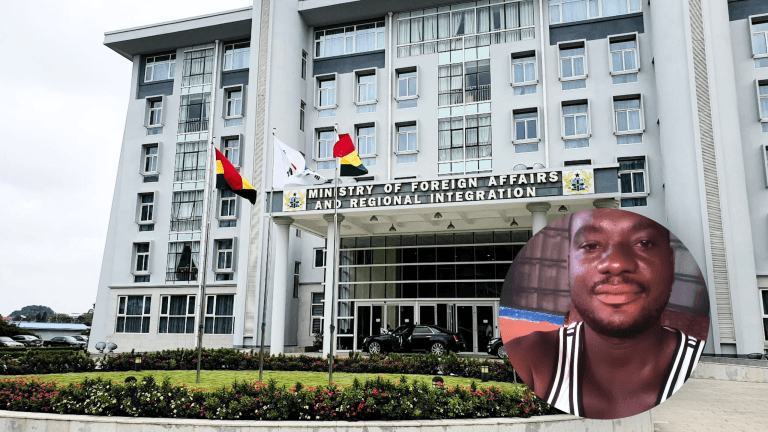
Illegal charges rock Foreign Affairs Ministry’s travel document attestation process

The Fourth Estate petitions RTI C’ssion over KPMG’s refusal to provide information on contracts with govt

MFWA’s Executive Director picks up top US award for The Fourth Estate’s impact

Why the courts need to block SLAPPs to protect our frail democracy
Comments
No comments yet. Be the first to share your thoughts on this story.