
Livestock farmers across the country say they are yet to benefit from government promises to improve breeding, veterinary care and dairy production under the Feed Ghana Programme (FGP)
More than a year after the programme was launched, national associations representing cattle, goat, sheep and pig farmers say they are yet to see or feel its impact.
The government has confirmed that the interventions for pigs and ruminants have not begun, with their launch now scheduled for September 2026.
The delay comes as Ghana continues to depend heavily on imported meat and livestock.
In 2023, the country spent nearly $100m importing livestock and meat, mainly from Burkina Faso, Niger, Mali and Nigeria. Cattle, goats and sheep accounted for 70% of the imports, according to the Ghana Statistical Service.
Feed Ghana follows an earlier livestock initiative, Rearing for Food and Jobs, introduced under the government of former President Nana Akufo-Addo.
It formed part of a wider agricultural programme that cost Ghanaian taxpayers more than GHC8.6bn over eight years.
But farmers say the initiative failed to produce the expected results.
“We have not felt the impact of the Rearing for Food and Jobs,” said Imam Hanafi Sonde, President of the Ghana National Association of Cattle Farmers.
It was against this background that the Feed Ghana Programme arrived with fresh promises for the livestock industry.
In its 2024 election manifesto, the National Democratic Congress pledged to “boost meat and dairy production, especially of cattle, piggery and small ruminants.”
After the party took office, the pledge became the second component of the Feed Ghana Programme’s livestock agenda. According to the policy document on the programme, “to successfully implement the FGP, a total estimated investment of GHS 302.21 billion will be required over the four-year period.” However, a commitment authorization letter sighted by The Fourth Estate shows that the Finance Minister has released GHS 775 million for agricultural activities in 2026.
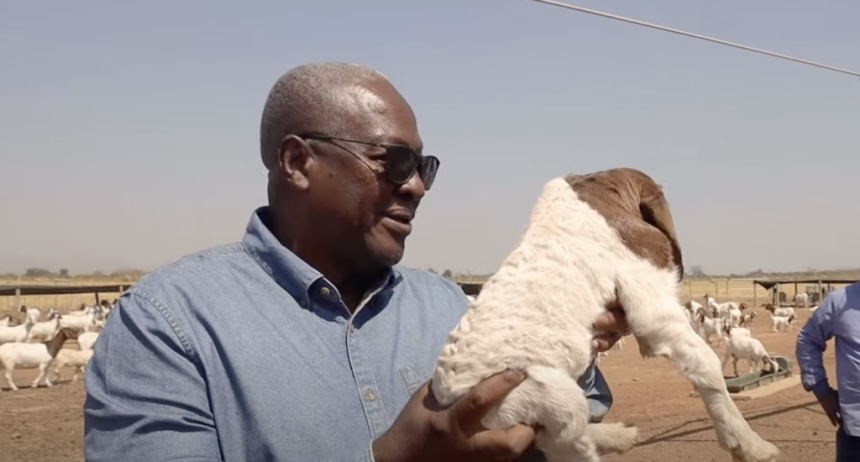
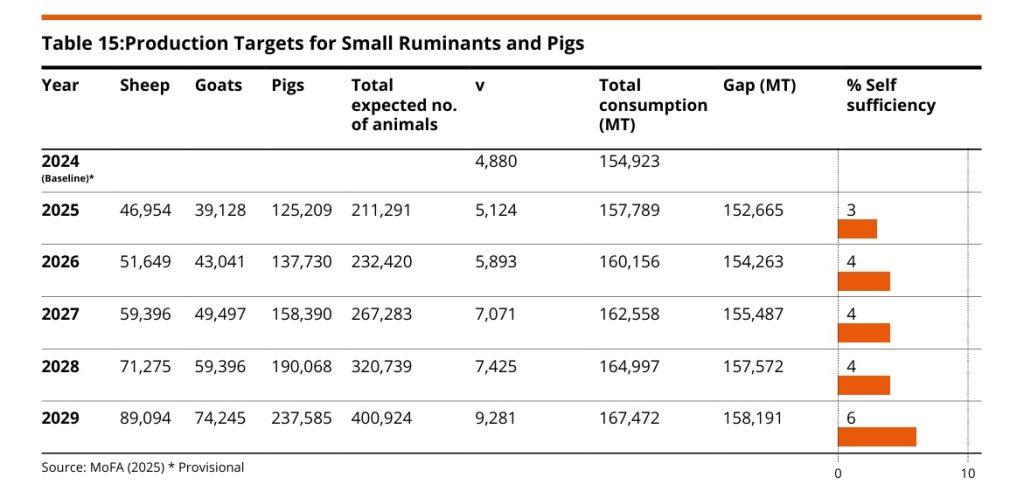
For farmers rearing goats and sheep, the policy promised subsidised breeding stock, restocked breeding stations, a vaccination programme and animal-tracking systems.
Pig farmers were promised subsidised breeds, improved bloodlines and stronger surveillance against African swine fever.
The dairy component included plans to rebuild the Dairy Farm at Amrahia, train artificial insemination technicians and support milk processing.
The programme also promised upgraded livestock markets and abattoirs, as well as new grazing corridors intended to reduce conflict between farmers and herders.
Despite the programme’s ambitions, the three national associations representing livestock farmers say they have seen little evidence of implementation.
President of the Pig Farmers Association of Ghana, Kwame Danquah said the Ministry of Food and Agriculture had not engaged his members.
“We are yet to meet them,” he said, more than a year after the programme was launched.
Spokesperson for the National Livestock Breeders and Traders Association, Daniel Akolgo, said the industry had again been excluded from the implementation of a government agricultural policy.
He said most government attention had been directed towards crops and backyard poultry.
On interventions for cattle, goats and sheep, Mr Akolgo said “we have not encountered anything for now.”
When told about the specific measures contained in the policy, he added “Since 2025 that they came, they have not done anything for us.”
Mr Akolgo, who is also a goat farmer, warned that Ghana’s dependence on imported livestock would increase unless the government deliberately invested in local breeding stock.
Mr Sonde expressed similar frustration on behalf of cattle farmers.
“From our end, we are yet to see any physical action,” he said. “Farmers who understand the ground are routinely left out of planning and implementation.”
Communications Director at Food Sovereignty Ghana, Edwin Baffour told The Fourth Estate the concerns raised by all three associations suggested a wider problem with the implementation of the programme.
“If associations of a national nature are not receiving any information, then all of us must be worried because it is more than a year since the project started,” he said.
Mr Baffour described the problem as structural, arguing that political parties often develop agricultural policies before taking office without consulting the farmers expected to benefit from them.
He said national farmer associations, whose members cut across political affiliations, should be involved in designing and implementing such policies from the beginning.
The National Coordinator of the Feed Ghana Programme, Bright Demordzi, confirmed that the interventions for ruminants and pigs had not started.
He said they were expected to be launched in September 2026, explaining that implementation of the backyard poultry programme had taken longer than anticipated.
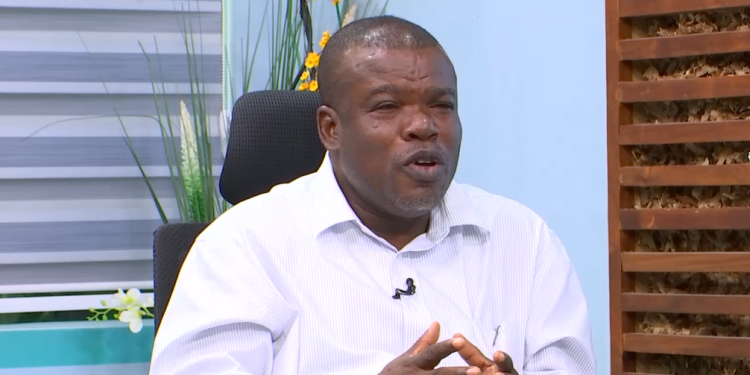
Mr Demordzi acknowledged that the delay would affect the livestock targets set for 2025 and 2026.
“Surely, it is definitely going to affect the target, but we will do our best,” he told The Fourth Estate.
The Minister for Food and Agriculture, Eric Opoku, has meanwhile said the Ministry’s central veterinary laboratory has been rehabilitated.
He said a mobile system for reporting animal-disease outbreaks had also been introduced, supported by new vehicles and equipment.
But livestock associations say those measures have not yet translated into the breeding support, veterinary services and investment promised directly to farmers.
Earlier publications by The Fourth Estate show that the government’s failure to deliver on its promises to livestock farmers is not an isolated case. Rather, it mirrors what critics describe as a recurring pattern of poor implementation of under initiatives intended to transform Ghana’s agricultural sector.
The Fourth Estate’s earlier investigations into the poultry component found that although the government outlined three mechanisms to revitalise the poultry industry, only the backyard poultry scheme (Nkoko Nkitinkiti), had reached some beneficiaries, and even then, only partially. The commercial and medium scale support components remained largely unimplemented at a time when all three interventions were expected to be fully operational under the programme’s implementation timeline.
With the livestock components now scheduled to begin in September 2026, farmers say they are still waiting to see whether Feed Ghana will succeed where previous interventions failed.