
When journalist Stanley Nii Blewu recalls the moment a mining giant threatened to sue him, the memory still carries a quiet unease.
“I got frightened. I had never encountered anybody threatening me with a legal issue before,” Blewu said.
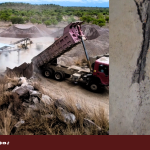
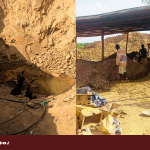
Blewu had travelled to Tarkwa Nsuaem to report what seemed like a straightforward story. Residents displaced by mining activities linked to AngloGold Ashanti had been resettled in a newly built community. The houses were neat. The layout looked orderly. But one essential thing was missing: water.
For five days, Blewu stayed in the town documenting what residents described as a daily struggle. Buckets in hand, they walked into the bush to fetch water from a rust-coloured stagnant pool.
The water had been trapped by construction work and left to sit. To collect it, residents first skimmed the surface with bowls before scooping what lay beneath.
Blewu spoke to community members and local assembly representatives. He repeatedly tried to reach the Municipal Chief Executive (MCE) but received no response. Eventually, he returned to Accra and filed his story.
“When I filed the story and mentioned AngloGold Ashanti, the company got upset,” he said. “They felt I had defamed them.”
The company threatened to sue both Blewu and his employer, Media General. For a young journalist who had never faced legal action before, the impact was stressful, particularly when he was summoned back to Tarkwa to meet the company’s management.
Blewu remembers the meeting vividly. The chief executive reprimanded him over the story. At the end of the encounter, he agreed to write a formal apology, co-signed by his editor.
“It dampened my spirit,” he told The Fourth Estate. “I thought I had done a good story. Everybody commended me. But the company claimed their name had been mentioned in the wrong way.”
After sending the apology letter, the threat of litigation faded. But the experience left Blewu questioning his career choices.
“I learned lessons I would not want to repeat,” he said. “It shaped me. It moulded me to look at the profession differently.”
The new pressure after criminal libel
Ghana abolished criminal libel in 2001, a reform widely celebrated as a milestone for press freedom. Journalists could no longer face prison for defamation. But many reporters say the threat of legal reprisal never disappeared. It simply evolved.
In October 2025, a High Court granted an injunction against GhanaWeb over a report alleging that foreign fugitives had acquired Ghanaian citizenship. The court ordered the article removed while a defamation case was pending, in a ruling observers say will pose a serious threat to press freedom if it is left unchallenged.
More than a decade earlier, in 2014, an Accra High Court ordered the Daily Guide newspaper to pay GHC250,000 to then National Democratic Congress General Secretary Johnson Asiedu Nketiah in a defamation case. It is unknown whether the fine was paid, but there is every indication that, if it had been, the newspaper would have easily fallen into serious financial distress.
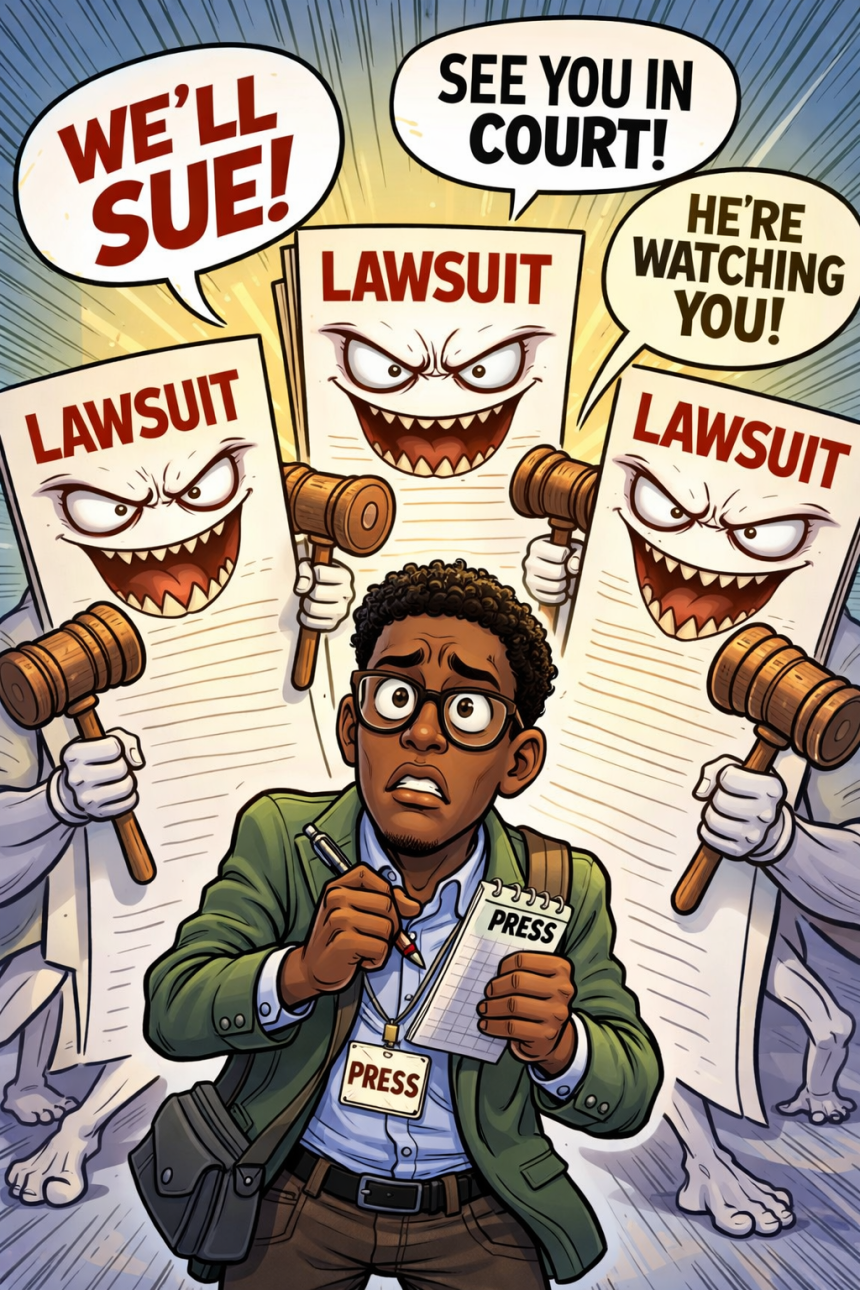
But besides fines and take-down orders, many journalists say the threat of legal action fills them with dread.
“The first part is the mental torture,” says investigative journalist Seth Bokpe,and associate editor at The Fourth Estate. “Hearing of a lawsuit is not a joke for an ordinary person. And then you’re going to court to defend it. It makes it very difficult.”
Bokpe still remembers the first time he was sued personally. The case stemmed from a report about mining in forest reserves.
“It got me a bit worried about how this will end,” Bokpe said. “I had never been sued before.”
The chilling effect
Beyond individual cases, journalists say lawsuits often silence broader public debate.
“Once the media knows a particular case is in court, they will stay away from it,” Bokpe explains. “There is this notion that when there is a case in court, you cannot talk about it.”
Bokpe recalls an instance where the subject of an investigation circulated court documents to other media houses before formally serving the newsroom involved.
“Basically, [it was] to prevent them from talking about it,” he said.
Media coverage often amplifies investigative reporting, helping stories reach policymakers and the public. Without that echo, journalists say, investigations can fade quietly.
“Which story can I touch that will not put me in trouble?” Bokpe recalls asking himself after that first lawsuit.
When newsrooms cannot fight back
The weight of litigation does not fall evenly across Ghana’s media industry.
Many journalists work on stipends or irregular pay, making long legal battles nearly impossible to sustain.
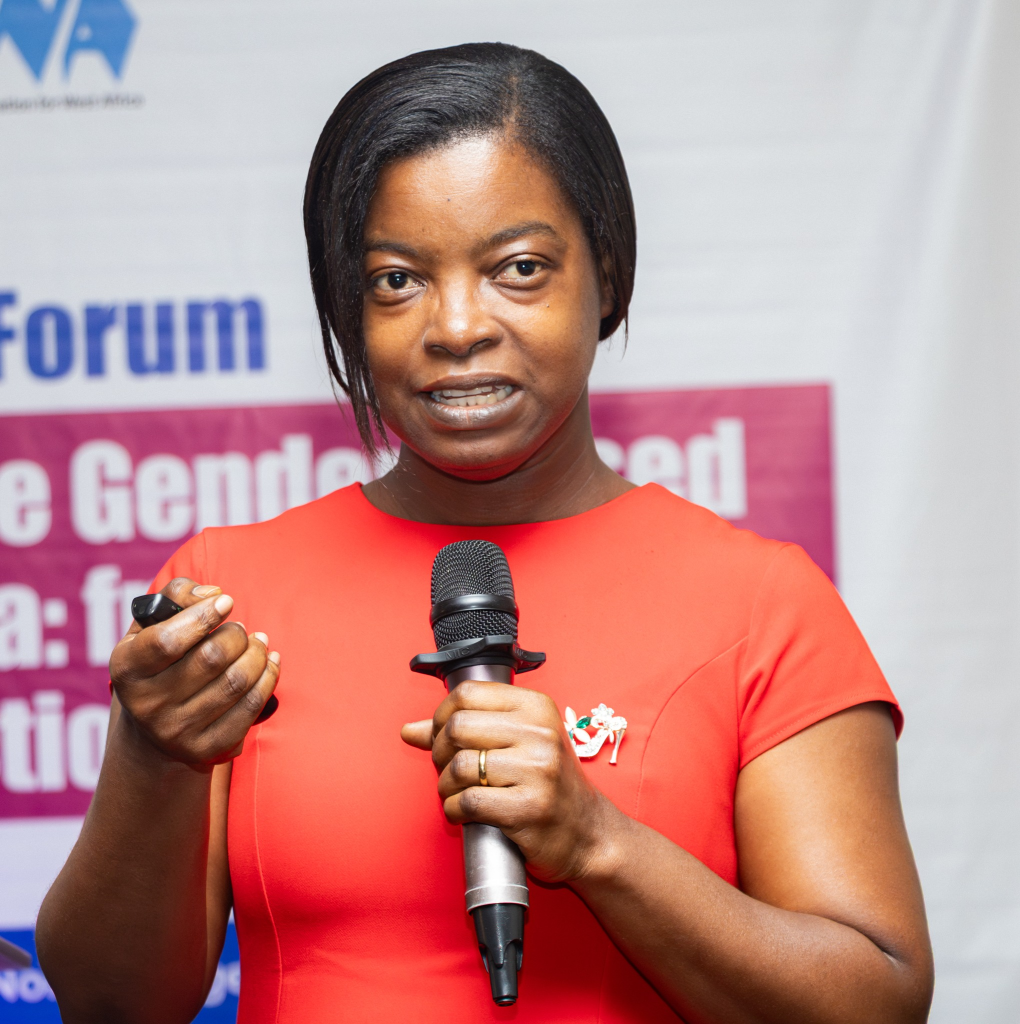
“The media sector in our country is not too financially viable,” says Dora B. Mawutor, Director of the Freedom of Expression & Digital Rights Programme at the Media Foundation for West Africa.
“With the exception of a few who have built themselves, quite a number of journalists are on some kind of stipend. Some of them are actually not on salaries.”
That financial vulnerability, she says, makes lawsuits an effective tool of pressure.
“The threat of litigation is a big issue for many media outlets and journalists in the country because they don’t have sustainable sources of income to commit to hiring a lawyer, the time it will consume, the back and forth, and possible damages they may have to pay,” Mawutor says. “If you have an organisation that is actually struggling to pay its utilities and it is faced with a threat to litigate, automatically it will just chicken out, render an apology, [and] pull down the story even when they are right.”
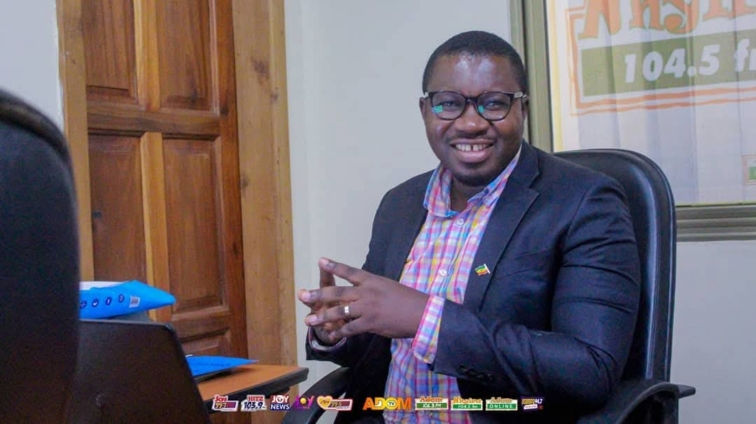
Kofi Adu Domfeh, news editor for Luv FM and Nhyira FM, who also doubles as Ashanti Regional chairman of the Ghana Journalists’ Association, says his newsroom once faced a lawsuit after reporting on illegal mining.
“They felt it could be a way to cower us to pull down the story,” he told The Fourth Estate. “But because we knew what we were doing, we stood our ground.”
Multimedia Group backed its journalists during that fight. But Domfeh acknowledges that such support is rare in the Ghanaian media.
“At my media organisation, we will always stand by and support journalists who did their work professionally,” he said. “But in general, it’s not every media house that will have the financial muscles and the ability to follow through with critical legal suits.”