
Inside an abandoned building in the affluent Cantonments area in Accra, stagnant water, algae, weeds and shrubs have taken territory.
In its corridors, electrical wires hang loosely alongside rusty, protruding iron rods, while pools of water fill what were meant to be lecture halls, studios, offices, a commercial production wing, and a film archive.
This was supposed to be the permanent campus of the National Film and Television Institute (NATFI), which is now the Institute of Film and Television under the University Media, Arts and Communication (UNIMAC-IFT).
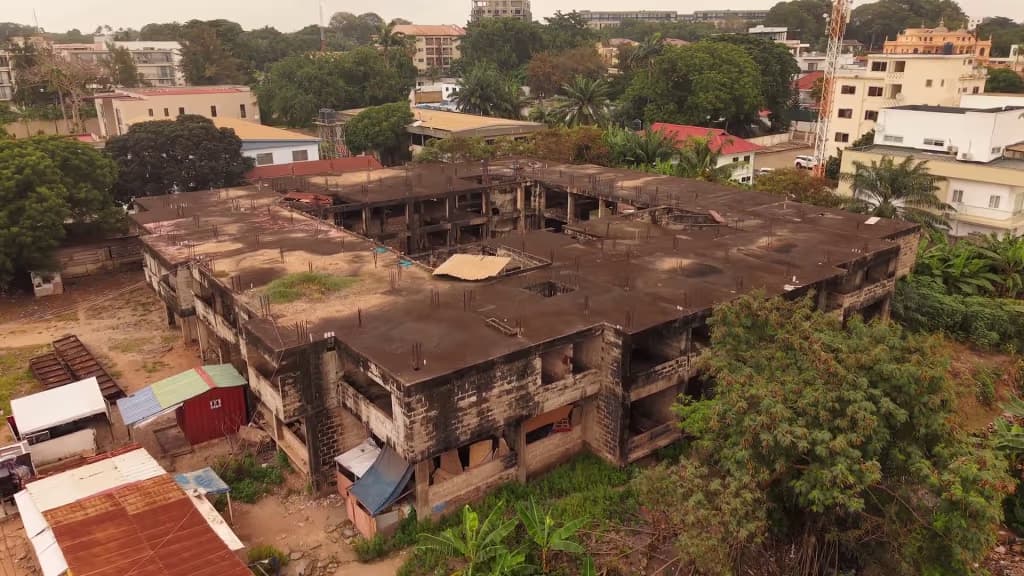
But years of neglect have turned the unfinished four-storey structure into nature’s colony while its importance disappears from national priorities. Its abandonment has been so long that officials of the university cannot remember its cost.
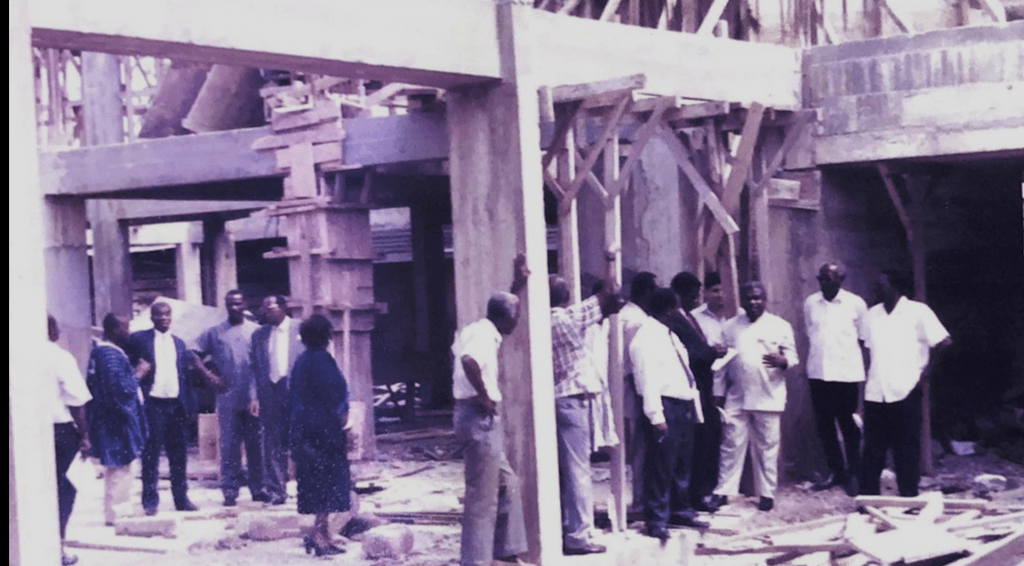
Available documentation shows that the project started as far back as 1977, a year before NAFTI was established. But multiple sources, including UNIMAC’s Director of Physical Development and Estates, Stanley Opoku-Yeboah, told The Fourth Estate that construction work started in the 1980s.
Sited right across from one of their current campuses, students of UNIMAC-IFT have renamed the decaying project “The Monster.” It’s a name that depicts the architectural horror that has blotted the rather beautiful landscape of Cantonments.
Emmanuel Ansah, a carpenter who was part of one of the construction crews in the 1990s, told The Fourth Estate that the contractor abandoned the project in 1999 after funds dried up. He said hundreds of bags of cement and other building materials were also left to rot.
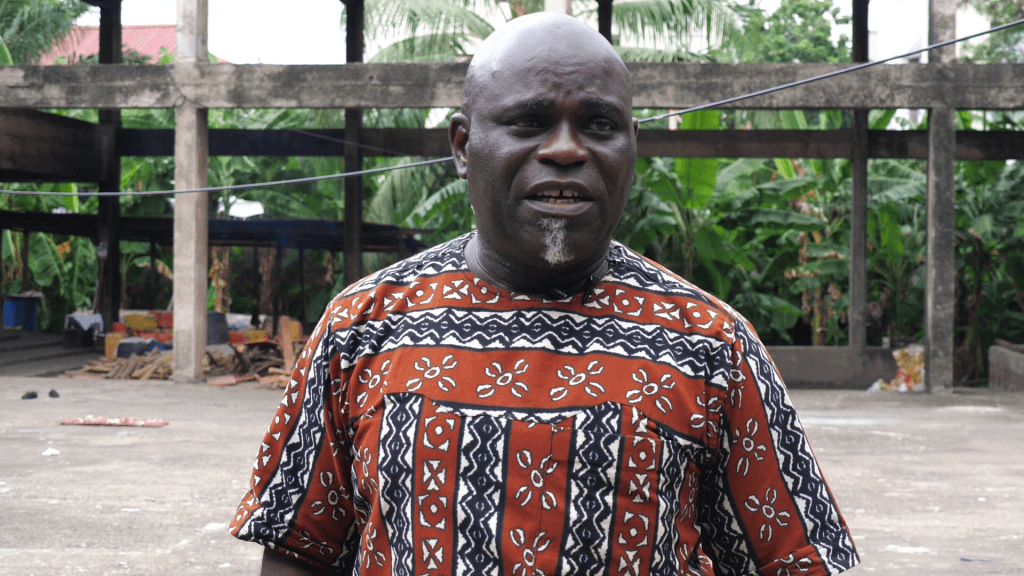
For more than 40 years, he became the caretaker of the building and the institute’s carpenter and turned portions of the building into his home and raised children, all of whom are now married adults.
He has since been joined by food vendors, some of whom have turned parts of the building into a kitchen and eatery.
Students cry for help
Student admissions at UNIMAC-IFT have shot up from the annual 30 in its early years to more than 400 students today. However, the growth in student intake has far outpaced available infrastructure.
With limited lecture halls, lectures are spread across UNIMAC’s Adabraka, East Legon and South Legon campuses, creating both physical and financial strain for students who have to move from one campus of the university to another.
Some students told The Fourth Estate that in some cases, lectures scheduled in halls at the other UNIMAC campuses clash, leaving them stranded or turned away because there is no space to accommodate them.
There were times that even when classes clash, you would have to do some of the classes outside while other students occupy the lecture halls because we have limited lecture halls here,” a level 400 student, Ernest Owusu-Addo, said.
UNIMAC-IFT’s immediate past Students Representative Council President, Ernest Akpakli, agreed and asserted that “it is very sad to see such an infrastructure just go to waste,” while students struggle with space.

“Our course is very practical, so we need space to be practicing some of these things. The whole school has two lecture halls, and the students’ numbers are growing every year,” he said. “We need spaces for studios and practice labs. We have to do everything in one space. We have to finish one before we go to the other, and time is not on our side.”
Mr Opoku-Yeboah, who has been full of anticipation for the completion of the project in the last 20 years, said the construction work halted as funding dried up.
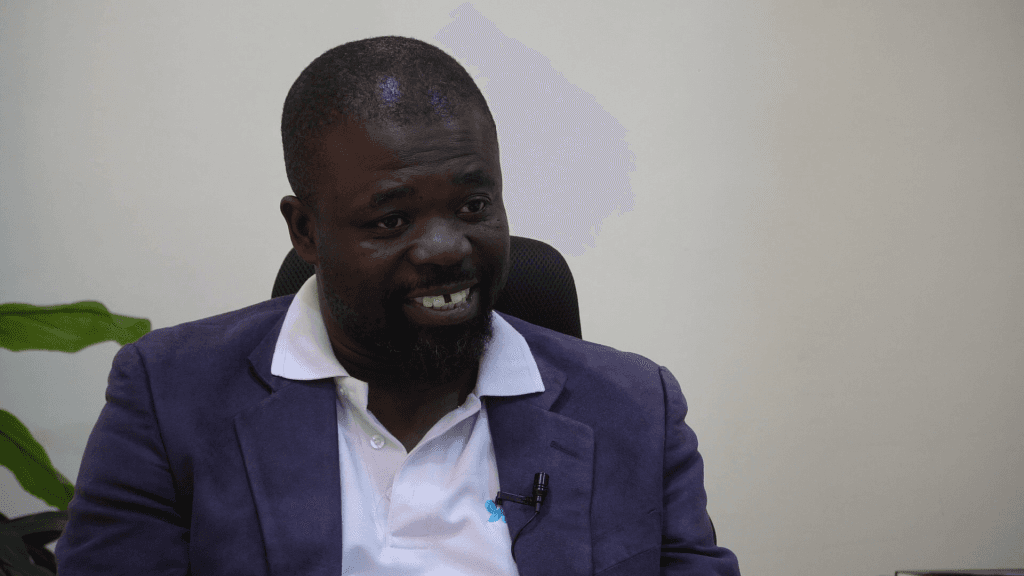
“Historically, NAFTI has been under the Ministry of Communication before it was moved to the Ministry of Education. Over the years, we didn’t have GETFund support as has been the case of most tertiary institutions,” he said.
Lecturer and NAFTI alumnus George Busumpim, who first saw the Monster as a student in 1995, described the country’s premier film institute as “orphan... who lives on people’s properties,” a school that outgrew its home before that home was ever built.
The institute’s current administration block, a rented premises that continues to serve staff and students, is also showing signs of decay. There are visible cracks on its walls. The institute spends thousands of dollars monthly to rent the building – an expenditure that drains its internally generated funds.
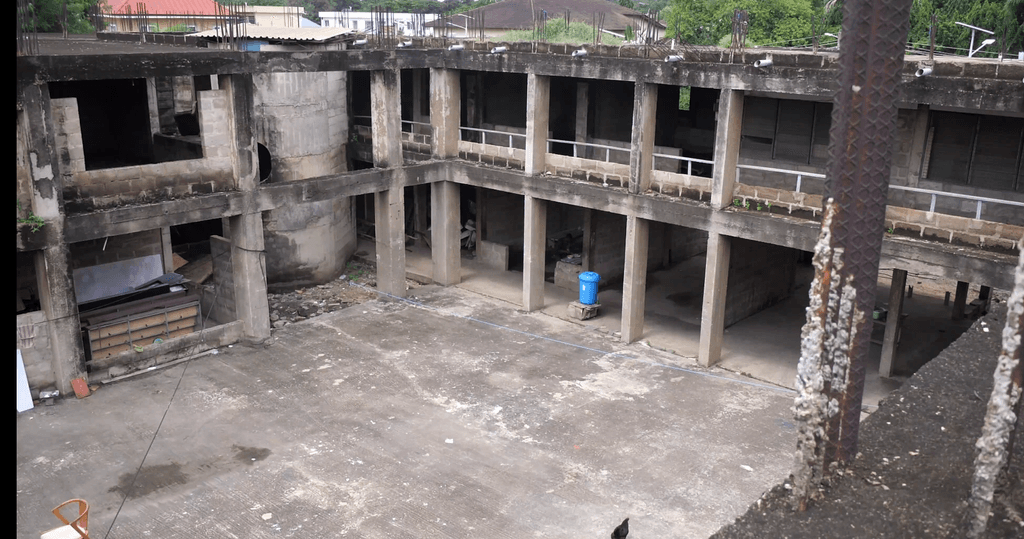
Ironically, the Monster itself is not structurally defective. A structural integrity assessment conducted in 2022 found it to be sound.
“It was built with very good materials,” Mr. Opoku-Yeboah said.
But the institute’s needs have outgrown the original design. UniMAC has since redesigned plans for a modern seven-storey facility. Mr Opoku-Yeboah observed that the existing foundation cannot support that expansion, meaning the current structure may ultimately have to be demolished before a new complex can be built.
The newly designed campus of NAFTI
The estimated cost has also ballooned from a few hundred thousand old cedis in the late 1980s to about US$45 million today, including construction and equipment.
Promises unkept
The Monster has had its share of promises from politicians. As Vice President in 2012, John Mahama put smiles on the faces of management and students of the institute.
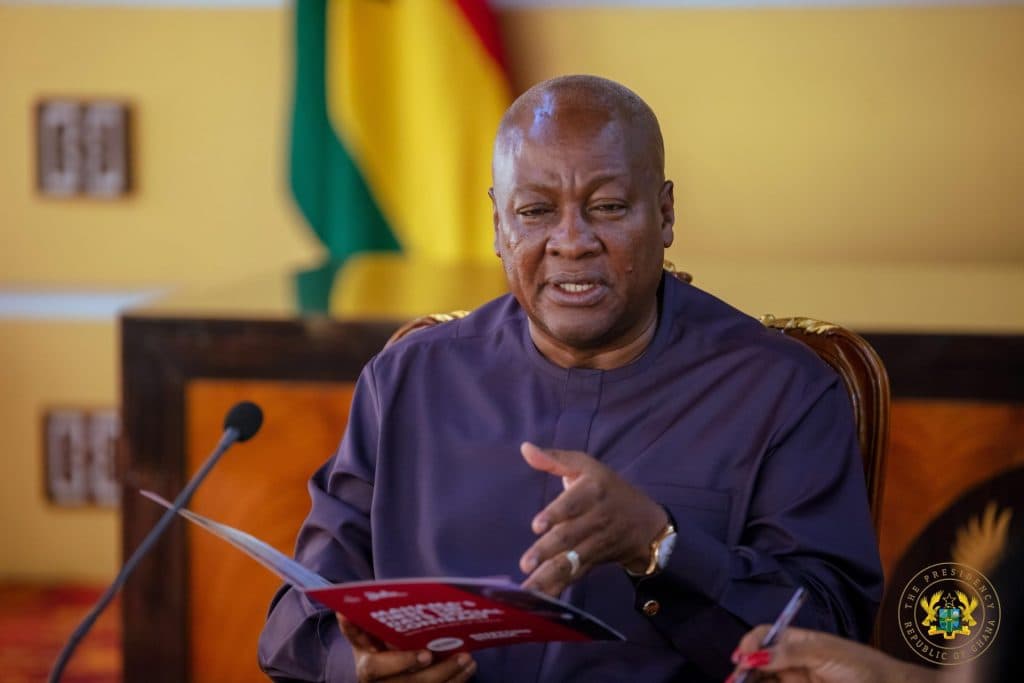
During an event in the school, Mr Mahama, whose official residence was not far from the Monster, vowed to “make it a personal mission” to finish the project, so that he wouldn’t “pass that way every morning and see the building uncompleted.”
“I was very ashamed to see the studio complex still uncompleted,” he said. “I’m sure this is the longest history of uncompleted building in this country. I’m sure by the time it is completed, it would have outlived its usefulness.”
However, Mr Mahama left office in 2016 with the building untouched. In April 2021, President Akufo-Addo announced that €45 million had been approved to transform NAFTI into “a world-class training facility.”

That money, Mr Opoku-Yeboah told The Fourth Estate, was never released.
With the creative world becoming extremely competitive, former SRC President Ernest Akpakli believes the unfinished building represents a lost opportunity.
“Please complete the Monster for us,” he says.
Ministry of Education’s response
When The Fourth Estate contacted the Ministry of Education, its Director of Tertiary Education, Dr. Emmanuel Newman, acknowledged that the UNIMAC, which was created out of a merger of three institutions, Ghana Institute of Journalism, Institute of Languages and NAFTI, was a new institution that deserved seed money for infrastructure.
“I’m not sure they have been given seed money. If they weren’t, I have advised them before that they should request seed money, listing their issues, not just this one. I have been there and seen their infrastructure, and they listed all their issues,” he said.
"If they are requesting GETFund, they should push this project. Sometimes, GETFund just gives you the money, and you decide what to spend it on as an autonomous institution. It is their business to allocate some of their internally generated funds. They have a very strong case because they are a new institution.”
Become a member of The Fourth Estate community
For 5 years, we've investigated matters of public interest and helped hold power to account.
Now we're launching our Membership Programme, a community of people who believe independent journalism is worth sustaining, and want to help us do more. Join us as a member, and bring a friend along.
Join the community now
Relief for commuters, residents as contractor completes Bolga-Bawku road repairs

Five Fourth Estate journalists shortlisted for 2026 CJID Journalism Excellence Awards
Parents forced to buy desks as Upper East schools struggle with infrastructure deficits
Cocoa farmers report shortages and delays in delivery of promised free inputs
Comments
No comments yet. Be the first to share your thoughts on this story.