
More than GHC280 million owed to the state by public officials and other individuals surcharged by the Auditor-General remains unpaid, more than three years after a special recovery account was established to collect such funds.
Documents obtained by The Fourth Estate under the Right to Information law show that while GHC57.2 million has been recovered since the account was created in June 2022, outstanding surcharges amount to GHC280.5 million.
The figures have raised questions about the effectiveness of efforts to enforce surcharge directives and recover public funds lost through financial irregularities.
The Auditor-General’s Recovery Account was set up to receive money recovered through disallowances and surcharges issued after audits of public institutions.
Under Ghana’s financial accountability framework, individuals found responsible for unlawful payments, procurement breaches, payroll irregularities and other financial losses can be ordered to refund the money.
Records provided by the Audit Service show that as of February 2026, the recovery account had accumulated GHC57.2 million across accounts held at the Bank of Ghana and GCB Bank.
According to the documents, the Bank of Ghana account accrued about GHC19.5 million by the end of 2023, a further GHC10 million by November 2024, GHC15 million in 2025, and another GHC5 million by February 2026, bringing the total to approximately GHC49.5 million.
The GCB Bank account accrued GHC5.4 million in 2025 and a further GHC2.3 million by February 2026, bringing its total to GHC7.7 million.
The Audit Service, in its response to The Fourth Estate’s RTI request, says all monies recovered had been transferred to the Consolidated Fund.
However, the amount still outstanding is nearly five times the total recovered since the account was established.
The list of individuals yet to comply with surcharge directives is dominated by persons linked to the National Service Authority and covers the period from September 2021 to January 2025.
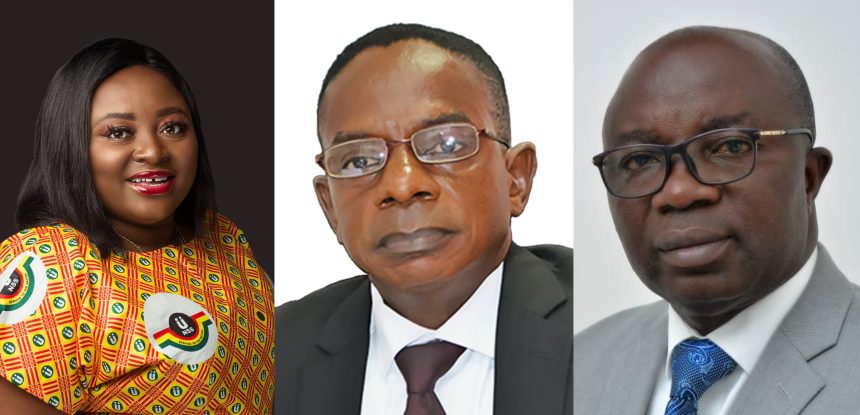
Former Director-General of the National Service Authority, Osei Assibey Antwi, is listed as having multiple disallowances and surcharge directives issued against him. The various amounts attributed to him exceed GHC265 million.
When contacted by The Fourth Estate, Mr Assibey Antwi said the matter was before the courts and declined further comment.
Other individuals listed include Afriyie Owusu and Emmanuel Akorsah, both described as related parties to Mr Assibey Antwi; Iddrisu Ibn Abubakar, Head of Accounts at the National Service Authority; Gideon Osei; Stephen Twumasi; and former Deputy Executive Director Gifty Afia Oware-Aboagye.
According to the records, the total outstanding amount owed by individuals who have not complied with surcharge directives stands at GHC280,506,523.98.
Anti-corruption campaigner Edem Senanu told The Fourth Estate that weak institutional capacity and inadequate enforcement mechanisms continue to undermine efforts to recover public funds.
Mr Senanu argued that successful recovery efforts require both political will and sustained public scrutiny, adding that citizens should demand regular updates on actions taken to enforce surcharge directives.
Mary Addah, a governance expert and head of Transparency International Ghana, said Ghana’s legal framework for accountability is adequate but often poorly implemented.
“It is not the lack of the law,” she says. “It is the challenge of enforcement.”
She called for stronger deterrent measures, including linking compliance with audit recommendations to promotions, performance assessments and the release of institutional budgets.
2026 NGIJ Fellowship, Cohort 8 fellows:
Jason Dei, Joshua Narh, Mamavi Sephakor Tay, Prinsella Vera Aidoo, Moses Abaah Apiah, Nana Ntiako Dacosta, Derrick Nimako, Maame Efua Duker, Jennifer Anyeyore Azure and Jackson Ocloo