
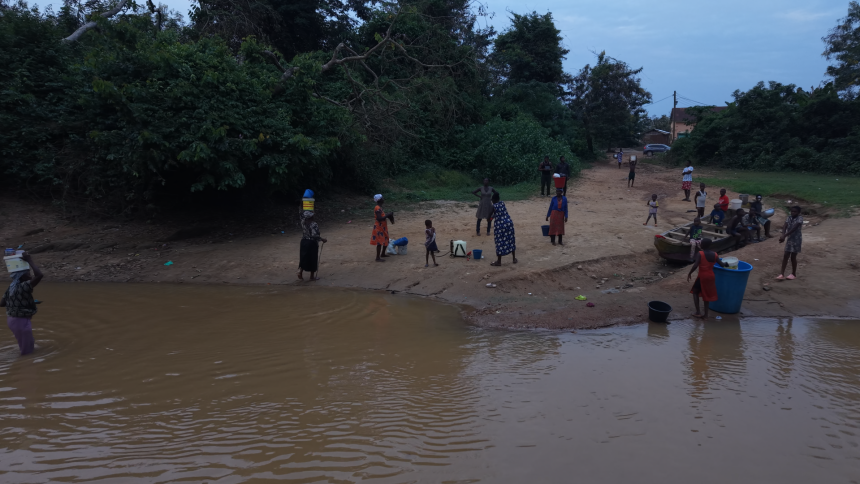
Hawa, 14, lives with her 84-year-old grandfather in Ayensuadze. After school, she fetches water from the Ayensu River or walks a kilometre to the community standpipe, where she waits in long queues.
“I fetch water from here every day before and after school till nightfall. I cannot study after school,” she says.
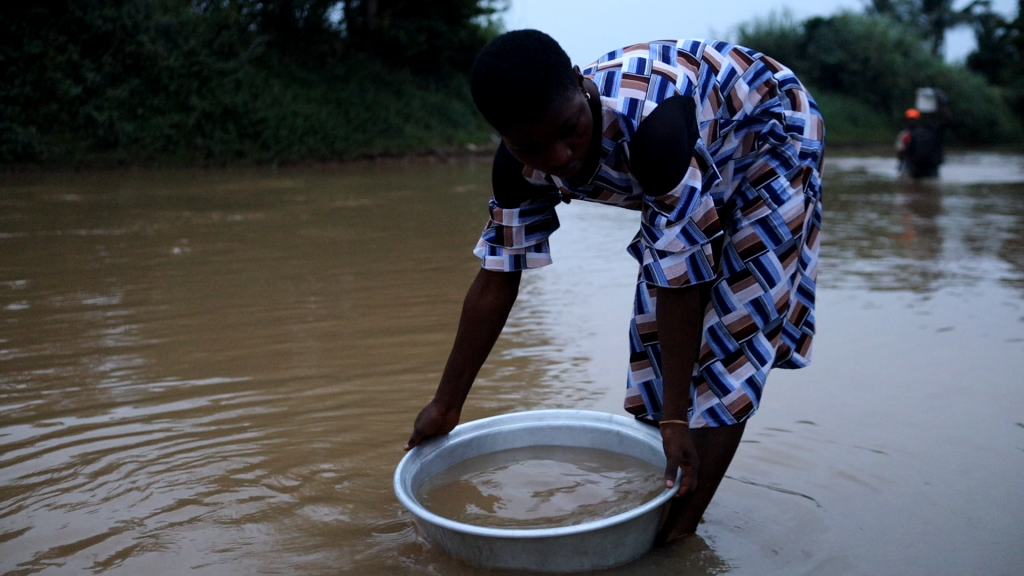
Her grandfather, Kwesi Bukari, who has lived close to the Ayensu downstream in the Central Region, says the river is polluted by illegal mining activities. When the household uses water from the river for bathing, it causes skin rashes, but they have no option.
“We do not do galamsey here, but galamsey has destroyed our river,” says Mr Bukari. “The river is no longer clear like before, but we have no choice. We have only one pipe in this community. It does not flow every day.”
Neighbouring downstream villages — Brofo Ye Dru, Owakrom, Mankrong — and suburban Winneba, Swedru, and Kwanyako, all along the Ayensu, face similar conditions. Long before there were taps, residents relied on the river for farming, cooking, and washing. Now it’s brown, silt-heavy water is hardly usable.
In Swedru, food vendor Felicia recalls how recent water challenges slowed her business.
“When the water shutdowns began months ago, friends had to supply water from Kwanyako for the business,” she says. “They said the Ayensu was too polluted to treat due to [galamsey]. But why is our river polluted when we don’t do galamsey here?”
Over the past 6-12 months, water shortages have increased across communities in Ghana following severe river pollution and siltation, forcing repeated shutdowns of government treatment plants in the Eastern, Western, and Central regions. This crisis, experts warn, is now creeping steadily into urban Accra.
A lifeless river, a toxic pollution trail
The Ayensu River, about 69 kilometres from Accra, is a lifeline to 11 districts across the Central Region. It supplies raw water to the Kwanyako and Winneba headworks of the Ghana Water Company Limited (GWCL).
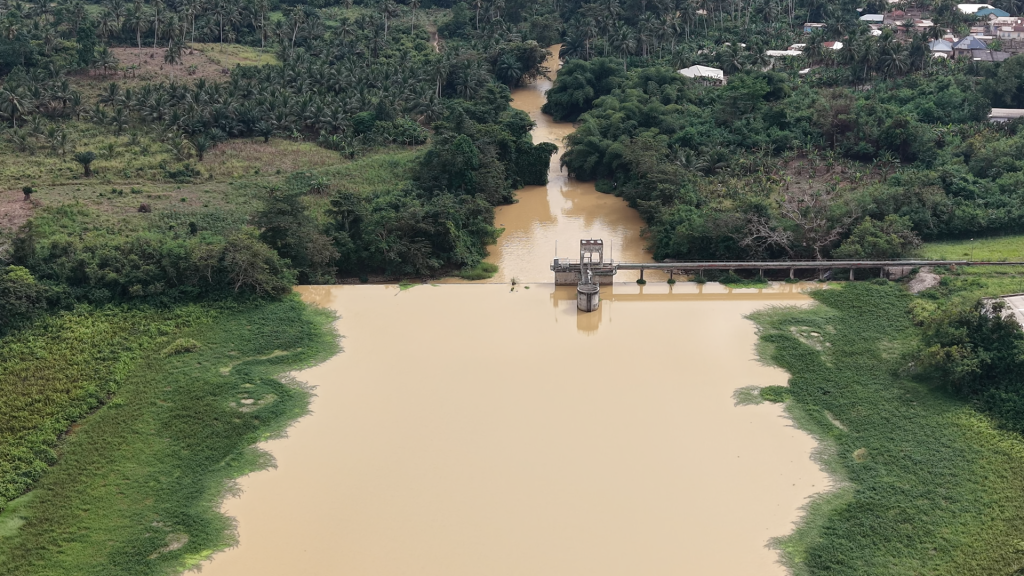
For over six months, both treatment plants shut down repeatedly. According to GWCL records, the Kwanyako headworks alone recorded shutdowns totalling 2541 hours, equivalent to over 100 days from January to December 2025. They cite turbidity and heavy siltation reaching levels where raw water became nearly impossible and significantly costly to treat.
Although water supply resumed at the Kwanyako and Winneba headworks in late December 2025, residents say the supply remains intermittent and rationed.
As of early February 2026, the Ayensu was a brown, lifeless wastewater, stripped of its former clarity, with no signs of fish or aquatic lifeforms. This pollution stretches upstream, leading to a pattern beyond the Central Region.
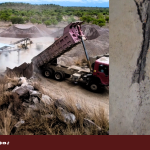
Upstream in the Eastern Region, along the Ayensu’s course near its source, illegal mining intensifies. In the Akyem Abuakwa districts, illegal mining pits and dugouts overtake the Ayensu in villages like Ayensuano and Obuoho, where the river should be fresh from the source.
Humphrey Darko of the CSIR Water Research Institute says Ghana’s buffer zone law restricts human activity of at least 100 meters near a water body.
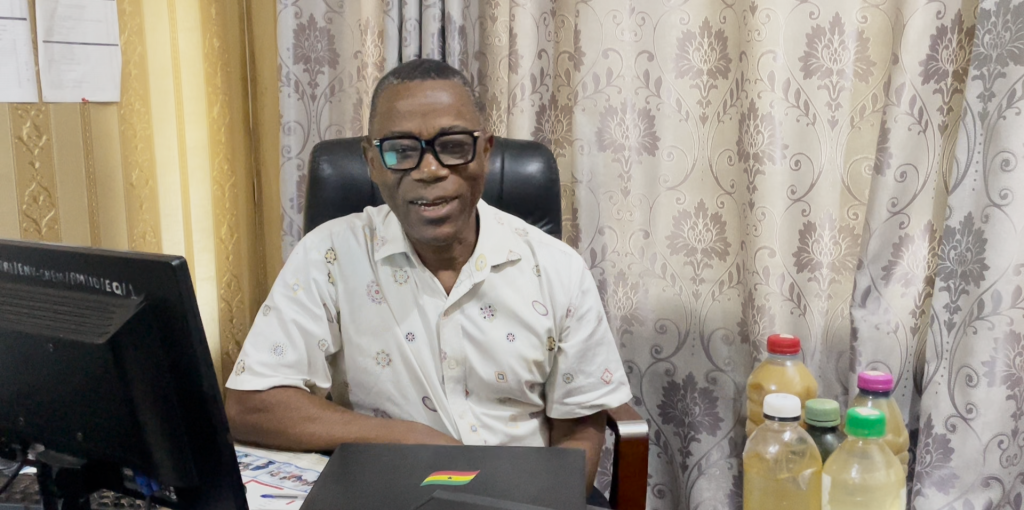
“Mining or any human activity, including even farming, is not allowed anywhere near 100 meters of rivers. We are now even pushing for a 1-kilometre distance,” Darko says.
Yet, the digging and washing of toxin-laden sediments continues directly within the Ayensu’s course, replacing the waterway with multiple dugouts and wastelands.
The destruction extends into the Atewa Forest Reserve, also in the Eastern Region — one of Ghana’s critical headwater forests and the source of rivers Ayensu, Densu and Birim, and 99 smaller streams.
“In Ghana, most rivers that we drink from take their sources from forest reserves,” says Elikem Kotoko, Deputy Director of Operations at the Forestry Commission. “We are responsible not only for the forests, but for the rivers that start there.”
Kyebi runs dry
In Kyebi, closest to the Atewa Forest Reserve, a thirst has persisted for more than six months. Taps do not flow, and groundwater remains murky and heavily silted.
The Kyebi Water Works, the first treatment plant on the Birim River from its source in Atewa, has remained shut down since August 2025. Officials at this treatment plant, who prefer to remain anonymous, say water obtained from the Birim can no longer be treated due to excessive silt. They say a continuous treatment risks damaging equipment worth millions of cedis. Requests for interviews at this plant were declined, with management indicating no approval from superiors. They hinted at threats of dismissal if the interview is granted.
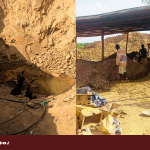
As the capital of the Akyim-Abuakwa South Municipality, Kyebi is known for its beauty: it is symbolic of the Okyehene’s palace, elite schools like Abuakwa State College, tarred roads, and well-lined housing. Yet, Kyebi itself is busy with a rush for gold, contrasting its natural beauty. Open pits line high streets and sit behind residential buildings.
Directly behind the local office of A Rocha Ghana, an environmental NGO stationed in the town, an active illegal gold mine clings to Atewa’s southern edge.
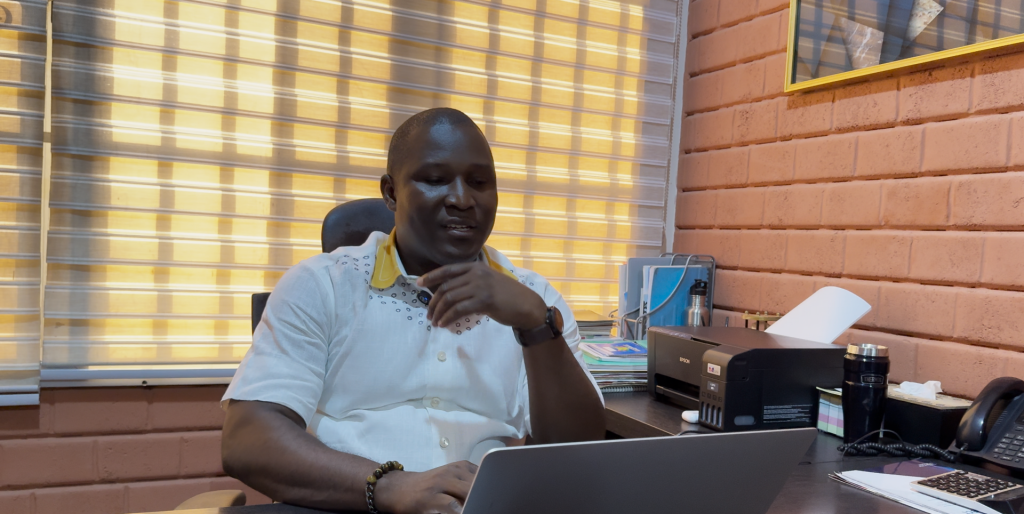
“It’s oftentimes difficult to understand how a town this close to a protected zone became so busy with galamsey,” says Daryl Bosu, A Rocha Ghana’s Deputy National Director in charge of operations.
Schools and childhoods disrupted, farmlands under siege
The illegal gold boom affects the surrounding communities in Kyebi. In Asiakwa, headteacher Emmanuel Adu of the Methodist Basic School says the water strain is felt both at home and school. He waits for his children to fetch water from the boreholes before preparing for work. When boreholes fail, the children walk a kilometre to a hole filled with water.
“The situation is serious. Sometimes I have to join in the hunt for water,” Adu says.
At school, he says, the crisis disrupts teaching and learning; learners struggle for water while others leave school to engage in illegal mining.
“The children, especially the boys, hardly stay at school. They leave classes to do galamsey because their parents want them there,” Adu says.
Kojo, 16, and Kweku, 13 (not their real names), are Emmanuel’s students. They combine school with mining to support their families. At the mining pits, they are made to heat mercury and lead to wash gold ore. The fumes cause migraines and eye irritation, hampering learning abilities.
“I want to stop this work. I want to finish school. I feel sick whenever I go there. But I go so I can help my mother and my siblings,” says Kweku.
In neighbouring Potroase, farmers are also affected. Polluted rivers can no longer support irrigation, while farmlands are overturned in a desperate search for gold.
Gideon Asante, a cocoa farmer, says his farm was given to illegal miners by the landowners.
“My farm was all I had. I have nothing else,” he says, as he gazes at mounds of brown earth and gaping pits replacing his once thriving cocoa farm.
Now 32 and a father of two, he says losing his farm has sometimes pushed him into illegal mining to survive.
River Densu under attack at source
Potroase, the first town the Densu River descends into from Atewa, and a once-thriving agricultural community, has become a hotspot for illegal mining. Tributaries feeding the Densu are overtaken by excavator activities. Armed men guard active sites at Apapam. Wastewater seeps into the Densu, carrying silt and toxic substances downstream, travelling miles to the Weija Dam in Accra.
The Water Resources Commission’s management data shows declining water quality in the Densu at both upstream Potroase and downstream Weija over the past five years. The data indicates illegal mining as a major factor.
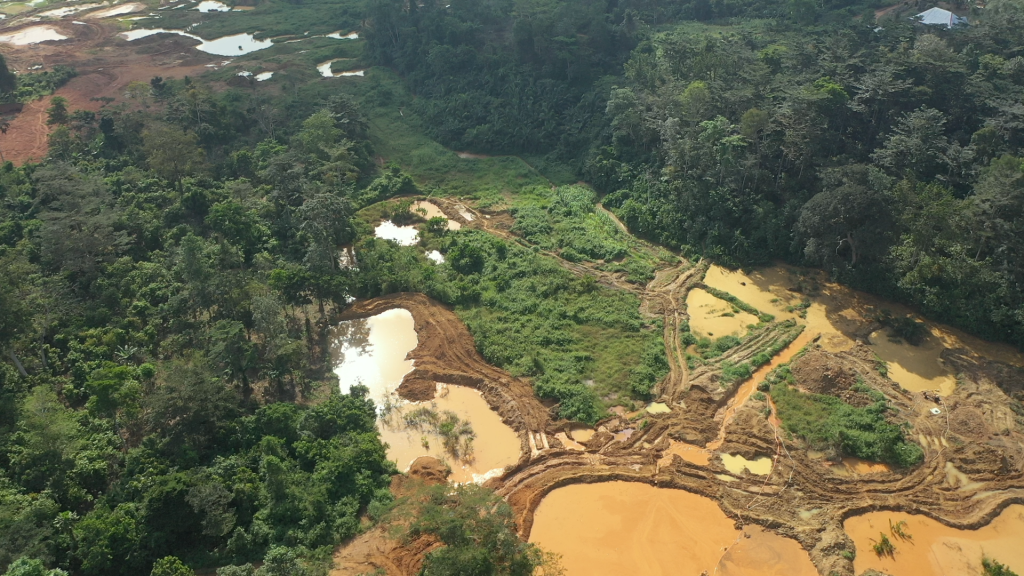
A November 2025 baseline assessment by the University of Environment and Sustainable Development and the Ghana Atomic Energy Commission found arsenic, mercury, and lead in samples taken near river sources at Osino, Obuoho, and Apapam.
“Heavy metals like mercury, lead, and arsenic can cause severe kidney problems when consumed into the human body,” explained Humphrey Darko of the CSIR Water Research Institute. Mr Darko has been monitoring river formation in Atewa and water quality in the Ayensu, Densu, and Birim over the past few years.
“This is why everyone must be concerned,” says Elikem Kotoko of the Forestry Commission. “You cannot sit in Accra and say there is no galamsey, so you are not affected.”
Illegal mining threatens Weija Dam
The Densu, which feeds the Weija Treatment Plant, serves Accra Central, Dansoman, Gbawe, Weija, Mallam, and parts of Kasoa.
Although there is no mining in Accra, Adams Mutawakilu, MD of GWCL, points out that upstream pollution flowing downstream has significantly increased treatment costs. He explains that the Ghana Water Company is currently facing financial challenges, which have been exacerbated by the high expenses associated with treating raw water from rivers affected by illegal mining.
“We now rely on expensive chemicals like polyelectrolytes because of high turbidity and heavy metals,” he said in an interview on Citi FM.
For fisherman Isaac Martey, the Densu River is central to survival for downstream communities in Weija, Gbawe, and Afuaman.
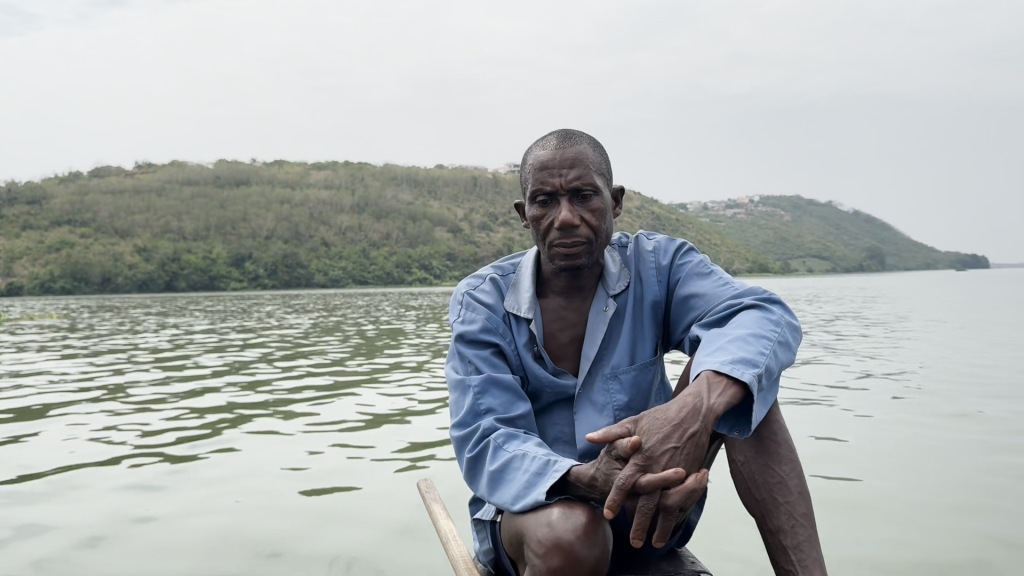
He has fished in the Densu for about four decades and says fish quality has declined in recent years, forcing fishermen to resort to harmful practices.
“Government has to protect the Densu. This is the only big river we have in Accra; if we lose it, we have nothing else,” he says.
A crisis that spreads
From Ayensuadze to Kyebi to Accra, a crisis is growing into a potential catastrophe with wide-ranging ramifications. Rivers are choked with silt and contaminants linked to upstream illegal mining activity. What began as intermittent water shortages has grown into prolonged shutdowns affecting livelihoods, education, and health services.
“Children are falling ill. Pregnant mothers are losing babies because these rivers are polluted,” says Awula Serwah, an environmental activist and founder of EcoConscious Citizens in Ghana. “The crisis affects everybody, and not just those living in these communities.”