
A long red bus parked in front of the Tamale Central Prison in June 2021. Armed immigration officers were on guard, ushering in groups of 43 men and a woman into the bus.
They had regained their freedom after 99 days in the Tamale Prison in the Northern Region of Ghana.
They were Nigerians locked up for three months for offences, including staying illegally in Ghana. The court that sent them to jail also sent them away from Ghana.
It was the court’s order that they should be expelled from Ghana after serving their sentences.
According to Joy News, it was the first time the Ghana Immigration Service (GIS) was deporting a large group of people from the Northern Region in response to a wave of illegal entries into the country.
There are more Nigerians in Ghana’s prisons than any other foreign citizens, The Fourth Estate has found.
The Fourth Estate wrote to the Ghana Prisons Service through the right-to-information (RTI) law requesting data, including the number of foreign inmates in the country’s prisons.
From the data, out of the 893 foreign prisoners in the country’s jails as of July 2021, 314 were Nigerians.
It means Nigerians constitute 35% of the foreign convicts in Ghana’s prisons and 2% of Ghana’s total prison population As at July 27, 2021, there were 13,200 convicts in prisons across the country.
| Country | Prison population |
| 1. Ghana | 12,307 |
| 2. Nigeria | 314 |
| 3. Togo | 125 |
| 4. Burkina Faso | 106 |
| 5. Niger | 98 |
| 6. Benin | 85 |
| 7. Cote dÍvoire | 69 |
| 8.Mali | 34 |
| 9.Liberia | 19 |
| 10. Zambia | 4 |
| 11. Tanzania | 4 |
| 12. Kenya | 3 |
| 13. Guyana | 3 |
| 14. Cameroon | 3 |
| 15.Zimbabwe | 3 |
| 16. Uganda | 3 |
| 17. Sierra Leone | 2 |
| 18. Gambia | 2 |
| 19. South Africa | 2 |
| 20. Malawi | 2 |
| 21. Britain | 2 |
| 22. China | 2 |
| 23. Spain | 1 |
| 24. Morocco | 1 |
| 25. St Vincent | 1 |
| 26. United States | 1 |
| 27. India | 1 |
| 28. Malaysia | 1 |
| 29. Jamaica | 1 |
| 30. Venezuela | 1 |
Source: Ghana Prisons Service
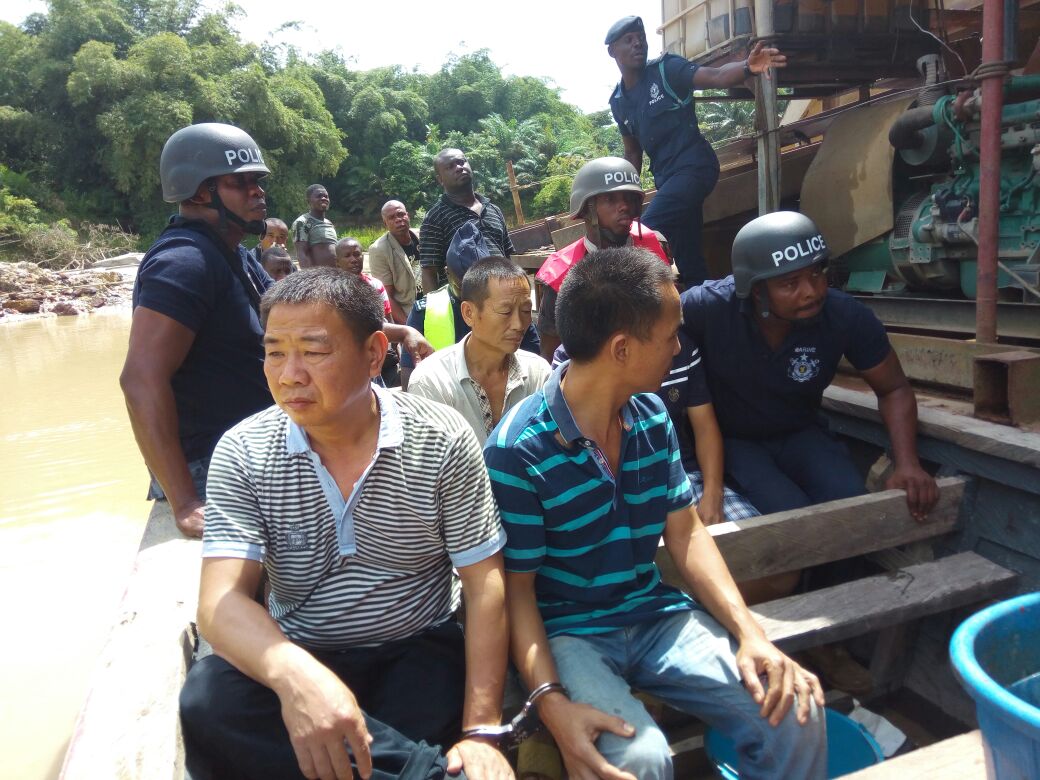
Although Chinese illegal miners are among the highest number of foreign suspects arrested in Ghana in recent times, there are only two in Ghana’s prisons.
Ghana has no extradition treaty with China requiring that Chinese offenders in Ghana be repatriated to their country to face the law.
Ghana’s Attorney-General and Minister of Justice, Godfred Yeboah Dame, made this position clear in May 2021 when he appeared on Joy Fm’s Newsfile programme.
With Ghana reviewing its mining law in 2019, the Attorney-General was emphatic that, under the revised law, no Chinese citizen arrested for illegal mining would be deported.
“The current laws do not countenance the extradition of any Chinese after the person has been convicted. So, you can be assured that the process will be followed to its conclusion and there will be conviction and they will serve their sentences in Ghana after which they will be deported if any.”
At the time, he made this commitment, he said 45 persons, including 10 Chinese were under prosecution for engaging in illegal mining, popularly known as galamsey.
Ghana’s water bodies and forests have come under intense attack from illegal miners who, with little regard for the environment, mine in water bodies or on river banks.

The environmental consequences have been devastating, according to experts. Traces of two heavy metals, arsenic and mercury, have been found in the country’s rivers in researches conducted by the Water Research Institute (WRI).
These chemicals have been tagged as harmful by the World Health Organisation (WHO). Although the WRI found small traces of the dangerous chemicals in some of the water bodies, the WHO paints a deadly picture of the chemicals, saying even small amounts may cause serious health problems, and are a threat to the development of the child in the womb.
Data for 2016, 2018, 2019 and 2020, which The Fourth Estate received from the Ghana Prisons Service through a right-to-information (RTI) request showed that 220 people were jailed for illegal mining offences. These were mainly Ghanaians and other West African nationals.
Ghana’s renewed fight against illegal mining between 2017 and 2021 saw the arrests of hundreds of Chinese illegal miners either as sponsors or workers at illegal mining sites.
However, statistics of foreign nationals in Ghana’s prisons, which the Ghana Prisons Service provided to The Fourth Estate, showed that as of July 2021, only two Chinese nationals were in Ghana’s prisons.
This does not come as a surprise to many because some of the biggest Chinese culprits in illegal mining and illegal logging, whose arrests dominated national headlines for weeks, were set free under inexplicable circumstances.
Disappearing Chinese
The prosecution of two Chinese women heavily involved in galamsey and the illegal harvesting and export of rosewood was surreptitiously aborted and the two were deported at different times.
In July 2019, Huang Yanfeng, aka Helena Huang, who was standing trial for transporting large quantities of rosewood to Tema for illegal export to China, was deported and her prosecution was discontinued.
The most infamous case that outraged the nation involved another Chinese woman who was described as the “galamsey queen”. En Huang, for that was her name, was arrested on May 9, 2017, together with her gang of four other Chinese nationals.
However, on December 19, 2018, the Attorney General filed a nolle prosequi to discontinue the trial.
She was also deported.
The then Senior Minister, Yaw Osafo-Maafo, defended the decision during a townhall meeting in the United Kingdom, choosing economic diplomacy over the punishment of environmental crimes Aisha Huang committed.
President Nana Akufo-Addo would later describe the decision as a mistake during
“I think the decision to deport Aisha Huang, in hindsight, was a mistake and that is why that process and procedure is being stopped,” he told his audience at a forum in the United States in September 2019.
The Ghana Immigration Service (GIS) has refused to respond to The Fourth Estate’s RTI request on the number of Chinese nationals who arrived in the country from 2012 to date and the number deported during the same period.
The GIS told the United Kingdom’s The Guardian in July 2013 that more than 4,500 Chinese nationals were deported after a series of swoops on illegal goldmines in Ghana.
YOU MAY ALSO WANT TO READ:
Only two Chinese citizens in Ghana’s prisons despite hundreds arrested for illegal mining