

At least 10 Ghanaian free-to-air television stations are airing advertisements that promote money-doubling schemes, ritual wealth, and questionable investments, some during prime time.
Yet, regulators disagree over who is responsible for policing the airwaves.
An investigation by The Fourth Estate, which monitored broadcasts between January and October 2026, identified such promotions on Bless TV, Nhyira TV, Hill TV, Righteous TV, Victory TV, Happy TV, Servant TV, Smart TV, Sharp TV and Rush TV.
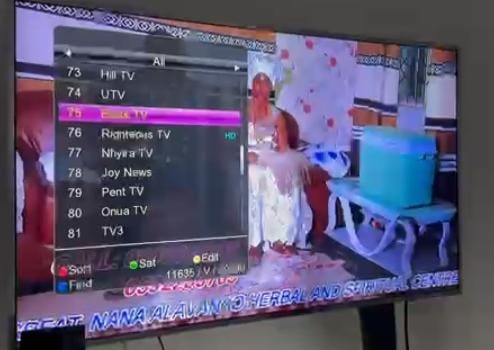
The advertisements promise extraordinary financial returns or supernatural routes to wealth, often presenting instant riches as achievable with little effort. Telephone numbers appear on screen, inviting viewers to call for personal consultations on investing small amounts and watching their money multiply within days.

While financial regulators repeatedly warn Ghanaians against unauthorised investment schemes, the promotions continue to reach television audiences, exposing what media experts describe as a serious gap in broadcast oversight.

‘We do not regulate content’
The National Communications Authority (NCA), responsible for authorising broadcasting services, insists that policing television content falls outside its mandate.
“The NCA does not regulate content on the media. The NCA authorises interested parties or entities to use the spectrum and a portion of the radio and television services,” said Nana Defie Badu, its director of corporate affairs.
Mrs Badu cited constitutional protections for media independence and referred questions concerning financial advertisements to the Bank of Ghana. But the NCA’s position contrasts with its previous commitments to tackling harmful broadcasts.
In September 2023, the authority and the National Media Commission (NMC) announced a joint enforcement arrangement explicitly targeting money-doubling promotions and other harmful content.
Under the protocol, the NMC would assess complaints, using evidence gathered through the NCA’s broadcasting monitoring facilities, before referring proven breaches to the communications regulator for appropriate action.
The arrangement envisaged sanctions, including the possible suspension of broadcast authorisations under the Electronic Communications Act. The agencies reinforced their cooperation in December 2025, when the NCA, NMC and the Securities and Exchange Commission (SEC) held an engagement with broadcasters over fraudulent investment advertisements.
The meeting emphasised broadcasters’ responsibility to scrutinise commercial promotions before transmitting them. Despite those commitments, questions remain over how effectively the measures have been enforced.
George Sarpong, Executive Secretary of the NMC, acknowledged that his institution faces significant legal obstacles.
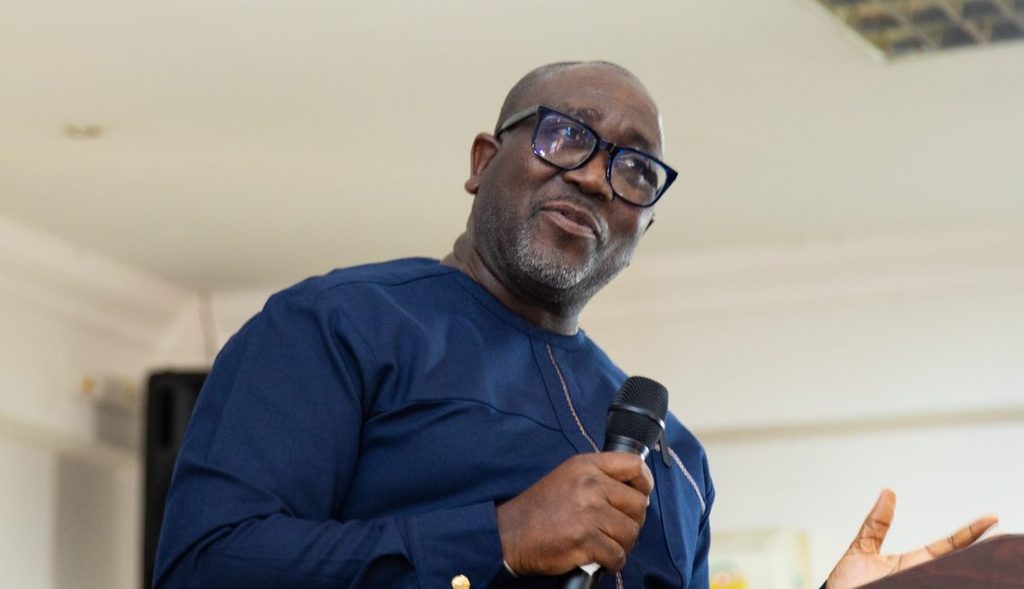
“The National Media Commission has responsibility for dealing with media content. But the laws and legal rules are inadequate,” Sarpong told The Fourth Estate.
He traced the difficulties to a 2016 Supreme Court decision striking down provisions of the NMC’s Content Standards Regulations that required broadcasters to obtain approval before transmitting content.
The court ruled that those provisions amounted to unconstitutional censorship, although it did not rule out properly defined media standards and lawful sanctions.
Mr. Sarpong said the judgment had left the commission heavily dependent on persuasion.
“All that we are able to do now is advise, caution and condemn. But these are completely inadequate in addressing the problem,” he said. “We need to amend the NMC Act and empower the Commission to do exactly what we think it should do.”
In November 2025, the SEC publicly identified 33 television stations carrying out suspected fraudulent investment (money-doubling) advertisements, warning that the schemes it had identified were neither approved nor licensed by the Commission.
The dangerous cost of promises of instant wealth
For media experts, the consequences extend beyond the financial losses that viewers could suffer after responding to dubious investment offers.
They warn that repeated exposure to claims of miraculous wealth and effortless riches can normalise potentially dangerous beliefs, particularly among young people and financially vulnerable audiences.
Dr Mary Ayim-Segbefia, head of the Radio and Television Production Department at the University of Media, Arts and Communication’s Institute of Film and Television, said television’s influence makes such advertisements particularly concerning.
“Television has a wide reach. People believe the things they see on TV. The effects are very devastating,” she said. “There should be a mandatory pre-vetting of all financial advertisements before they are aired.”
Dr. Ayim-Segbefia proposed closer cooperation among the NMC, NCA and Bank of Ghana, backed by sanctions against stations that repeatedly breach advertising standards.
The risks associated with promises of ritual wealth have particular resonance in Ghana. In April 2021, 10-year-old Ishmael Mensah Abdallah was murdered at Kasoa in a crime prosecutors linked to a quest for supernatural riches. Prosecutors told the court that one of the accused had consulted a ritualist after watching a television programme on ritual wealth.
Civil society organisations say the persistence of questionable advertisements or programmes reflects a broader failure to establish clear and enforceable standards.
“Ghana’s current media regulation system is fragmented and ineffective in tackling misleading and fraudulent advertisements,” said Vivian Affoah, senior programme manager for freedom of expression and digital rights at the Media Foundation for West Africa (MFWA).
She said divided responsibilities among regulators have created gaps through which questionable promotions continue to reach the public.
Ms Affoah also wants accountability to extend beyond the people promoting illegal financial schemes to broadcasters.
“Broadcasting executives and station owners who accept money for illegal advertisements should face heavy administrative fines and criminal liability,” she added.
Such penalties would require a clear legal basis and evidence establishing the relevant offences. The debate places renewed scrutiny on television operators, whose responsibility to assess advertisements cannot be overlooked simply because regulators disagree over their respective mandates.
It also raises questions about whether the NCA and NMC have adequately used the monitoring and enforcement arrangements they previously announced.
The author, Regina Deladem Kevi, is a 2026 Fellow of the Next Generation Investigative Journalism Fellowship – Cohort 10 at the Media Foundation for West Africa.
Become a member of The Fourth Estate community
For 5 years, we've investigated matters of public interest and helped hold power to account.
Now we're launching our Membership Programme, a community of people who believe independent journalism is worth sustaining, and want to help us do more. Join us as a member, and bring a friend along.
Join the community now
Dismissed PPA CEO banned for 10 years, directed to declare assets within 3 months

Relief for commuters, residents as contractor completes Bolga-Bawku road repairs

Five Fourth Estate journalists shortlisted for 2026 CJID Journalism Excellence Awards

Parents forced to buy desks as Upper East schools struggle with infrastructure deficits
Comments
No comments yet. Be the first to share your thoughts on this story.