
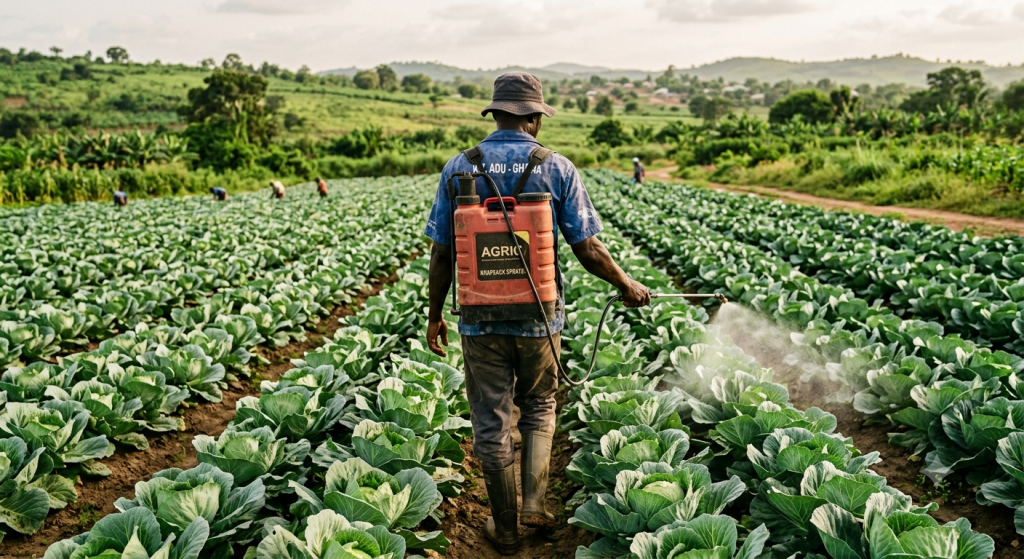
A new study by the Ghana Standards Authority has found high levels of pesticide residues in okro and cabbage sold in two of Accra’s busiest markets.
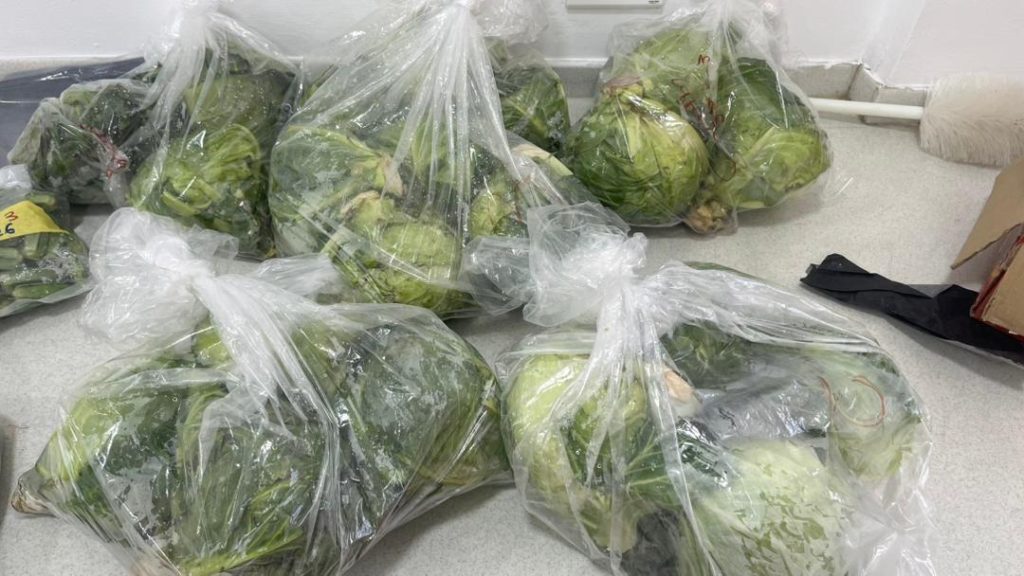
All cabbage samples tested from the Agbogbloshie and Madina markets exceeded the maximum residue limits and were considered unsafe for consumption. Okro performed slightly better, with one-third of the samples failing the safety test.
From the findings, Agbogbloshie’s produce was far riskier than Madina’s. Only 16.7% of Agbogbloshie samples were compliant, compared to 50 per cent at Madina.
The study, which reflects growing public concern about chemical contamination in food, detected eight pesticides above safe limits.
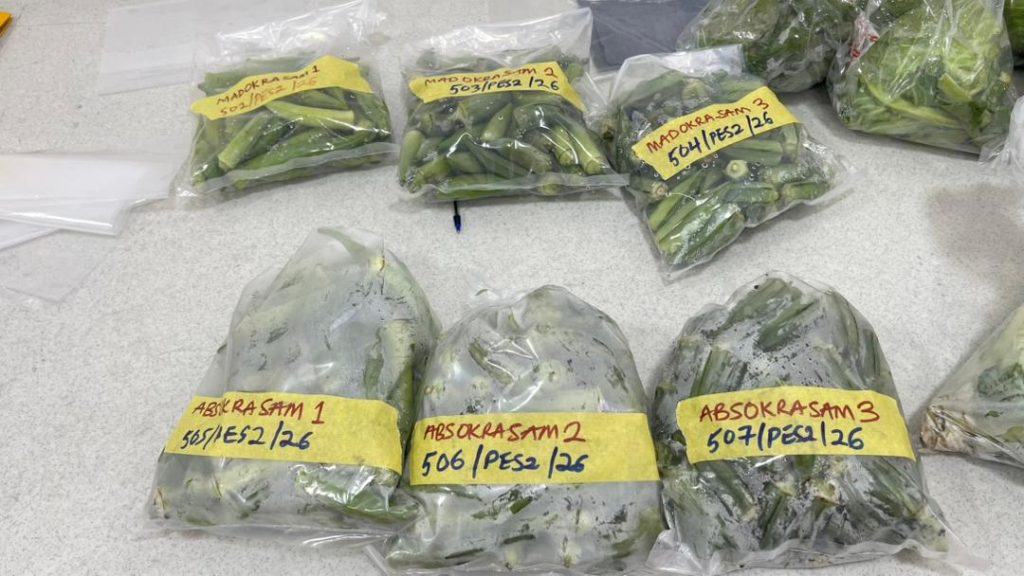
The most common pesticide detected was triticonazole, which appeared in seven of the eight failed samples across both crops and markets. Other pesticides linked to the high residues are acetamiprid, carbendazim, dimethoate, dinotefuran, emamectin, imidacloprid, and Mevinphos.
The contaminated cabbages came to the two markets from Begoro and Asesewa in the Eastern Region; Kumasi and Tepa in the Ashanti Region, and Adetor in the Volta Region, while the non-compliant okro were from Kumasi and Lakpo also in the Volta Region.
The safe okro were sourced from Atomic DVLA and Dodowa in the Greater Accra Region, Kpando in the Volta Region, and Kumasi.
The research commissioned by the Centre for Indigenous Knowledge (CIKOD) raises questions about what is ending up on the plates of Accra residents. The study’s objectives were to determine pesticide residues in okro and cabbage, assess compliance with maximum residue limits, compare residue occurrence by crop and market, and identify pesticides frequently exceeding safety limits.
The report also flagged pesticide products reportedly in use around Haatso in Accra, several of which contain the very same active ingredients implicated in the failed samples.
Deliberate, not ignorance
Mr Willy Laate, the Director of Programmes of CIKOD, who presented the findings at a stakeholders’ meeting last Friday, expressed worry that although most farmers know about the health implications of excessive agrochemical use, including pesticides, they place commercial interests above food safety.
He said the Agbogbloshie and Madina markets were selected because food produce from most regions in the southern part of the country, including Central, Western, Eastern, Ashanti, and Volta regions, was transported to the two markets.
A former extension officer himself, he observed that cabbage is more vulnerable to insect attack than okro, and farmers appear to be responding by excessively using chemicals for pest control rather than relying on integrated pest management or safer alternatives
Mr Laate, therefore, rallied farmers to adopt agroecological practices to reduce the reliance on agrochemicals, including pesticides.
“We need to enhance farmer training and reduce monitoring. We need to enforce the rules around pesticide use so that the farmers can do the right thing,” he said. “We also need to use more of the biopesticides and also educate consumers.”
The Head of the Food and Agriculture Department of the Ghana Standard Authority (GSA), Dr Paul Osei-Fosu, observed that some farmers were misusing the agrochemicals in a way that posed danger to the consuming public.
“What we have noticed is that as soon as farmers apply the agrochemicals during pre-harvest, they harvest instead of the pre-harvest period of seven days,” he said.
He noted that the GSA’s research identified another dangerous chemical being misused, Dursban. Although it is intended for wood treatment, some farmers use it as a pesticide because of its insect-killing effectiveness.
Dr Chaka Ozondu, a food systems analyst, asserted that most of the pesticides applied in agricultural and industrial settings do not remain confined to their target areas; instead, a significant portion disperses into the surrounding environment, posing danger to public health.
Health consequence
He cautions farmers against the use of pesticides and notes that they have significant consequences on health, including “reduced sperm count and quality in men and ovarian dysfunction, menstrual cycle disruptions, and infertility in women.”
“Exposure increases the risk of spontaneous abortions (miscarriage), premature births, low birth weight, and congenital birth defects,” he added.
Meanwhile, research shows that the chemicals found in the cabbages from Agbobloshie and Madina markets pose a significant risk to public health.
Triticonazole: it is a fungicide used to control fungal diseases in crops. Exposure to high levels or prolonged contact may cause eye and skin irritation, headaches, dizziness, or nausea after significant exposure and may have potential effects on the liver.
Acetamiprid: It can affect the nervous system. It is also linked to potential endocrine disruption, reproductive issues, and developmental risks, particularly for children and fetuses.
Dimethoate: Various studies show that it can lead to excessive sweating, blurred vision, difficulty breathing, and, in severe cases, convulsions or death. Chronic exposure is tied to neurodevelopmental harm and deadly reproductive challenges.
Emamectin: Research shows it primarily targets the nervous system, with poisoning cases showing gastrointestinal distress, central nervous system depression, seizures, and, in severe instances, respiratory failure.
Mevinphos: Scientists say it is highly toxic and can cause rapid health conditions, including muscle twitching, respiratory paralysis, and death in high exposures.
Become a member of The Fourth Estate community
For 5 years, we've investigated matters of public interest and helped hold power to account.
Now we're launching our Membership Programme, a community of people who believe independent journalism is worth sustaining, and want to help us do more. Join us as a member, and bring a friend along.
Join the community now
Medical Kalabule 2 : When Doctors profit from patients’ desperation – FULL VIDEO

Medical Kalabule: Ministry of Health to set up probe committee, The Fourth Estate pledges support

Publicly funded but closed to the public: Ghana’s premium hospitals shut out NHIS patients

Medical Negligence: How parents’ joy was cut short after birth – FULL VIDEO
Dear Fouth Estate,
I have followed your recent publications on the effects of chemical pesticides found in cabbage and okro keenly. This is due to my background in Agricultural Biotechnology, where throughout my thesis research in the University for Development Studies (UDS) I researched extensively on finding a sustainable solution to this chemical pesticides menace. By the end of my Master’s of Philosophy in Biotechnology, I have developed an innovative organic insecticide using plant materials often regarded as waste. A full pilot test was done independently by a Professor of Agronomy and Entomology in UDS whose results attest to the high effectiveness of the organic WAH Insecticide and helps the farmers to increase yields. I have won both local and international awards as a result of this invention to curb insect pests and chemical pesticides menace. My Academic Entrepreneurship journey was published by the Business and Financial Times (BFT) Newspaper and I recently did a presentation at Falling walls organized by DAAD Ghana. UDS has also published my successful journey on their website. I have gone to different communities in the Northern and Southern of Ghana, engaging farmers and teaching them the importance of organic farming using organic WAH Insecticides.
I believe strongly that in this recent dangers of chemical pesticides menace, if you would you can kindly publish this sustainable organic solution; WAH Insecticide as Mr. Wilberforce Lartey (Head of Programs, Center for Indigenous Knowledge) recently recommended the use of biopesticides as the best alternative to these chemical pesticides.
I would be available for any extra information or provide you with documentation of pilot test or the publication by BFT to support my sustainable organic invention.
Thank you.