
When the Akufo-Addo government introduced the Sanitation and Pollution Levy in 2021, Duncan Amoah spoke vehemently against the imposition of the 10-pesewa charge on each liter of fuel consumed by Ghanaians. Mr. Amoah, the Executive Secretary of the Chamber of Petroleum Consumers, didn’t like the tax because it was going to increase fuel prices. At the time, he spoke as if he had foreknowledge that the levy was not going to be used for the purposes it was intended.
According to the erstwhile government, the Sanitation and Pollution Levy (SPL) was specifically to help build up a steady stream of funding to improve air quality in urban areas, enhance garbage collection to stop waste burning, and build waste treatment/disposal facilities.
“Anybody can slap any tax at all, but at the end of the day, [were] they even using the money for what they [were] collecting it for?” Mr Amoah asks. “My answer will be a big no.”

Feeling vindicated, he insists that Ghana’s towns and cities are “even dirtier” now after four years of collection of the SPL, highlighting the disconnect between the funds disbursed and actual results on the ground.
The levy, which was recently repurposed to settle energy debts by the new Mahama government, generated a total of GHC1.73 billion between 2021 and 2024. Out of this money, GHC1.48 billion, about 80% of the total accrued, was paid solely to the Jospong Group of Companies.
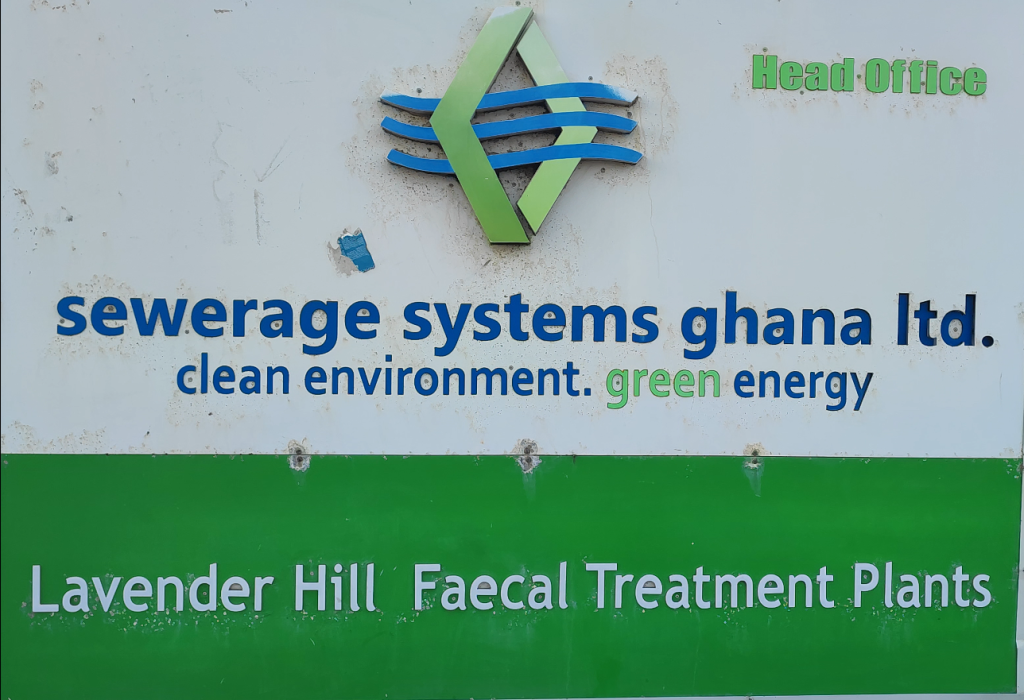
Sewerage Systems Ghana Limited (SSGL) was the first Jospong subsidiary to receive money from the levy. In 2021, the company was paid for managing its own plants – the Mudor Wastewater and Lavender Hill Faecal Waste Treatment Plants in Jamestown, Accra. The following year, Waste Landfills Company Limited also received funds to take care of landfill sites across the country. Another Jospong subsidiary, Dredge Masters was paid to dredge the perennially reeking Odaw River and the Korle Lagoon in Accra.
In the Ashanti region, the government started paying Jospong’s Kumasi Compost and Recycling Plant Limited (KCARP) so-called tipping fees for solid waste management from October 2020 to March 2022. This company received payments from the SPL in the same month its plants were commissioned – October 2020 – which is several months before the introduction of the SPL.
The most popular Jospong subsidiary, Zoomlion Ghana Limited, was paid millions to supervise and manage sanitation guards across the country in 2022. Zoomlion was also paid over GHC115 million to disinfect airports and aviation facilities and also to collect and dispose COVID-19 vaccination waste.
In 2023, Zoomlion was again paid GHC288.8 million to evacuate 250 refuse dumpsites in 78 districts across the country, as well as other sanitation services it provided in 2022.
For overseeing its own recycling and compost plants across the country, the Integrated Recycling and Compost Plant Limited (IRECOP), also under Jospong, received hundreds of millions of cedis in so-called outstanding payments in 2024.
Interestingly, the Jospong Group of Companies received over half a billion cedis from the SPL in 2024 alone – GHC505 million to be precise. That means the Jospong Group raked in over GHC42 million every single month – that is more than one million Ghana cedis every day of the year. These payments were made by the Ministry of Local Government and Rural Development and the Ministry of Sanitation and Water Resources.
Professor Kofi Amegah, a professor at the University of Cape Coast, who consistently monitors air pollution and campaigns for clean air, was shocked when he heard that almost all disbursements from the SPL had been paid to the Jospong Group of Companies.
“Wow! GHC1.4 billion of that money goes to one company, and we are still struggling with waste management in this country?” the associate professor of Environmental and Nutritional Epidemiology asked.

He wondered why the government continued to pay the company when there was little improvement in the country’s waste management.
Lack of Transparency from Ministries
Despite the massive disbursements, the ministries responsible have largely refused to provide details about the contracts underpinning the payments to the Jospong Group. The Fourth Estate’s right to information requests for copies of contracts and specifics on the scope of work were met with resistance or redirection.
The Ministry of Health was the only ministry to provide a contract detailing the GHC20 million paid to Zoomlion for the disposal of COVID-19 vaccination waste.
The Ministry of Local Government, Chieftaincy and Religious Affairs (MLGCRA), now responsible for over GHC 1.1 billion paid to the Jospong subsidiaries, has repeatedly refused to respond to queries. On June 5, 2025, The Fourth Estate requested contracts relating to the payments to five Jospong subsidiaries. After days of silence, the ministry deferred the release of the requested information without specifying a timeline in violation of the RTI law.
The Ministry of Transport also refused to disclose details of the GHC95.9 million contract with Zoomlion for airport disinfection in 2022.
Initially, the Transport Ministry refused to furnish the information. Citing Section 11(1)(a) of the RTI Act, the ministry said disclosing the information could reveal “trade secrets or commercially sensitive information” that would “prejudice the competitive position of the parties involved, in particular Zoomlion Ghana Limited.”
After months of follow-ups, the RTI Commission ordered the ministry to release the contract. The Ministry’s response was to provide a heavily redacted version of the contract from which little sense could be made.
The Works and Housing Ministry redirected inquiries about payments made for the dredging of the Odaw River and Korle Lagoon to the Local Government Ministry.
The lack of transparency, characterized by the refusal to release information the public should know about how their taxes into the SPL were disbursed and used, only adds to Duncan Amoah’s sense of vindication. “With Ghana still engulfed in filth, what exactly can we say the SPL was used for?” he asked. “I hate to say I told you so. But in the circumstance, I can’t help but say I told you so.”
Become a member of The Fourth Estate community
For 5 years, we've investigated matters of public interest and helped hold power to account.
Now we're launching our Membership Programme, a community of people who believe independent journalism is worth sustaining, and want to help us do more. Join us as a member, and bring a friend along.
Join the community now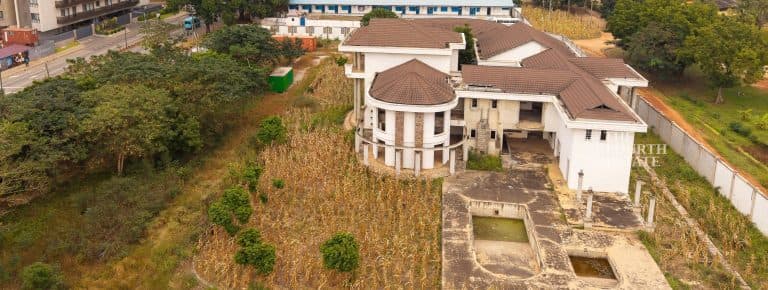
Proposed Vice Presidential Villa abandoned for 13 years after over $ 2.4 million spent
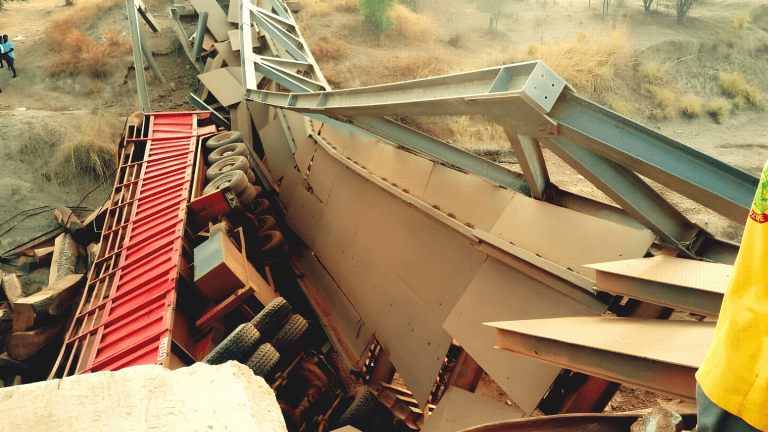
Four years after collapse, Navio bridge still claims lives
MFWA establishes GHS 544,000 Legal Support Fund for journalists in Ghana
Bridge components worth over £43 Million abandoned while communities face dangerous crossings
You were expecting government to pay the money to KCARP, Mudor Waste, Dredge Masters or Zoomlion to Fourth Estate for no work done? As a so-called investigative institution you do not know that waste management is the responsibility of the government? All the payments you have listed in your write up which of them is undeserving? The landfill overseeing, the Odaw River Dredging, Mudor Sludge management, the tipping cost or the airport disinfection or covid-waste was done by somebody else and paid to Jospong? You should not write when it is unnecessary. Waste of everyone’s time.