
• Our Impact
  • Whistleblower
  • Fact-Check Ghana
Donate
The Fourth Estate
  • Home
  • General News
  • Anti-Corruption
  • Environment
  • Human Rights
  • Opinions
FourthEstate FourthEstate
  • Our Impact
  • Whistleblower
  • Fact-Check Ghana
Search
  • Home
  • General News
  • Anti-Corruption
  • Environment
  • Human Rights
  • Opinions
© 2024 | The Fourth Estate
Fact-checks

John Kumah’s claim of Ghana having the third strongest currency in Africa false

By Adwoa Adobea-Owusu Date: September 9, 2022
SHARE

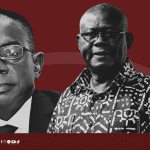
The Deputy Minister of Finance, Dr John Kumah, stated on Friday, September 9, 2022, that Ghana’s cedi was currently the third strongest currency in Africa.

According to him, claims that Ghana’s cedi was the worst currency were mere propaganda.

Fact-Check Ghana has verified the deputy minister’s claim and finds it untrue.

Claim: “Ghana is third, actually, according to any global ranking of currencies. I am talking about the strength of currencies in Africa. The Libyan Dinar, followed by Tunisian Dinar, and then the Ghana cedi is the third strongest currency in Africa. But, maybe, they were talking about the rate of depreciation.”

Ghana Cedi is the third strongest currency in Africa – Deputy Finance Minister, Dr John Kumah. #PMExpress pic.twitter.com/wMeyNCZLj5

— JoyNews (@JoyNewsOnTV) September 9, 2022

Verdict: False

Explanation: Data produced by Bloomberg, one of the most trusted sources on market and financial data globally, as of September 9, 2022, shows that from September 2021 to date, the cedi has dropped by 38%. According to Bloomberg, this makes the Cedi “the worst performing currency in Africa and worldwide, the worst apart from Sri Lanka’s rupee”.

Africa Currency Ranking

World Currency Ranker Source: Bloomberg

World Ranking of Currencies 

World Currency Ranker  Source: Bloomberg

The measurement of the strengths of global currencies by Bloomberg is based on real-time measurement of world currencies against some more stable currencies. These currencies include the US dollar (dollar index), UK pounds (pound index) and the Euro ( Euro Index).

Bloomberg’s methodology of measuring the strengths of global currencies has been corroborated by an economist at the University of Ghana, Prof. Lord Mensah.

In an interview with Fact-Check Ghana, Prof Mensah explained that the strength of a country’s currency was calculated based on the rate of depreciation. He said a country’s currency could be determined as either weak or strong depending on “the quantum of money that is needed to purchase an external currency or look at the currency itself and how it is growing.”

This is contrary to the claim by the deputy minister of finance that even though the rate of the cedi’s depreciation might be the worst on the continent, the cedi is the third strongest currency in Africa.

Further checks by Fact-Check Ghana across many other trusted global currency ranking platforms, including FXSSI and Statista, did not show the Ghana cedi as the third strongest currency in Africa today.


TAGGED:Currency in the worldFact-checksGhana cedighana newsJohn Kumah
Share This Article
Facebook Whatsapp Whatsapp LinkedIn Telegram Email
Leave a comment Leave a comment
  • Isaac Boakye says:
    September 10, 2022 at 2:41 am

    I agree with your argument but I was expecting you the add the country that has the third strongest currency to the story to establish the false claim.

    Reply
  • Nana Yaw says:
    October 6, 2022 at 3:25 pm

    Read the Bloomberg report well. Different terminologies. “Worst performing” means something different from Kumah’s statement.

    Did you the writer study anything financial or economic? ?

    Reply

Leave a Reply Cancel reply

Your email address will not be published. Required fields are marked *

LATEST STORIES

‘I never did this advert’, AI clones hijack Ghanaian identities for profit
Artificial Intelligence: Why African governments must adopt, adapt, and indigenise, but do not copy and past
CHRAJ sleeps on Songor Salt human rights abuses petition as victims cry for justice
“It’s deadly”: Violence and intimidation deter reporting on illegal mining
Scholarship Secretariat publishes list of beneficiaries after Fourth Estate exposé

You Might Also Like

Uncover the stories that related to the post
senyo_hosi
Opinions

FULL TEXT: “Avoiding the impending death of the 1992 constitution” — by Senyo Hosi

Our Impact

Manifesto Promises: NDC, NPP pledge to ensure full transparency in scholarship awards in response to The Fourth Estate’s exposé

Environment

Billions in Sanitation Levy Collected, yet Deaths and Piles of Waste Mount

Health

FULL DOCUMENTARY: The COVID-19 spraying scandal initiated by President Akufo-Addo

Journalism That Serves The People’s Interest

Sign up for The Fourth Estate’s newsletter and get our latest stories delivered straight to your inbox.

The Fourth Estate

The Fourth Estate is a non-profit, public interest and accountability investigative journalism project of the Media Foundation for West Africa (MFWA). Our aim is to promote independent and critical research-based journalism that holds those in power answerable to the people they govern.

Latest Stories

‘I never did this advert’, AI clones hijack Ghanaian identities for profit
Artificial Intelligence: Why African governments must adopt, adapt, and indigenise, but do not copy and past
CHRAJ sleeps on Songor Salt human rights abuses petition as victims cry for justice
“It’s deadly”: Violence and intimidation deter reporting on illegal mining

Quick Links

  • About The Fourth Estate
  • MFWA.org
  • Fact Check Ghana
  • Privacy & Terms

© 2025 | The Fourth Estate – A Project of the Media Foundation of West Africa