
By Derrick M. Nimako
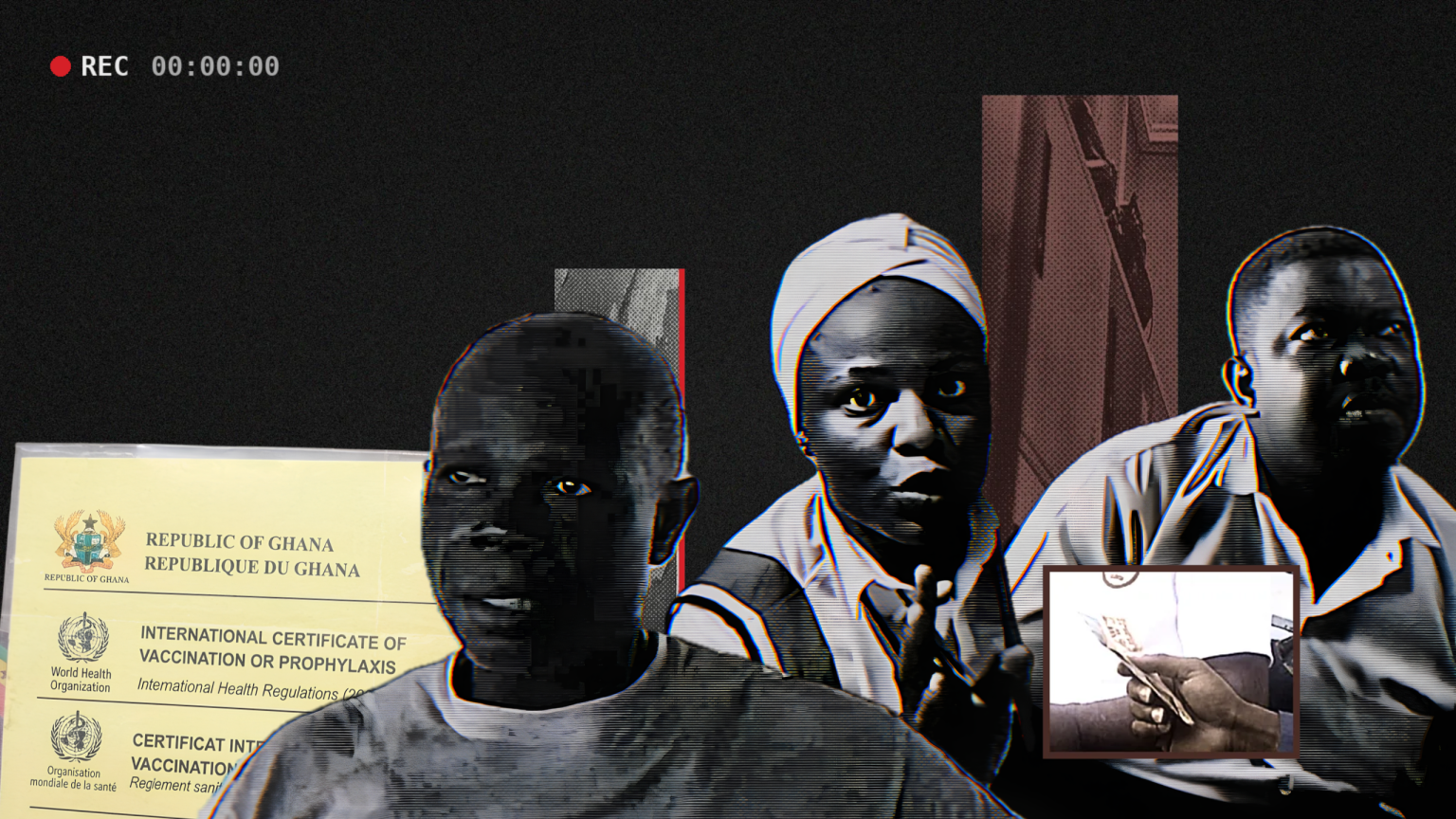
You can buy your way past one of Ghana’s most important public health safeguards in less than 30 minutes.
An investigation by The Fourth Estate has uncovered a network of health workers, security personnel, and border officials issuing yellow fever vaccination certificates without administering the vaccine, undermining a disease-control system designed to protect travelers and the wider public.
The findings expose serious weaknesses in Ghana’s vaccination certification regime, allowing unvaccinated individuals to obtain internationally recognised yellow fever cards for cash while bypassing health checks entirely.
Yellow fever remains one of Africa’s most dangerous mosquito-borne diseases. In Ghana’s most recent outbreak of the disease in 2021/22, the Ghana Health Service recorded 202 suspected cases, 70 confirmed infections, and 35 deaths – a fatality rate of about 17%.
The disease, which is preventable through vaccination, can progress from mild symptoms to severe illness involving internal bleeding, organ failure, and death. Yet The Fourth Estate’s investigation found that the document intended to prove vaccination can often be obtained without receiving the vaccine itself.
The card-for-cash network
The Fourth Estate’s investigation began at Adabraka Polyclinic, one of the most popular international vaccination centres in Ghana.
Instead of encountering a healthcare worker, undercover reporters were approached by security personnel. Upon learning that the reporters wanted a yellow fever card, a security guard Alex Oppong offered a simple arrangement: pay GHS300 and provide a Ghana Card. No vaccination would be required, he said.
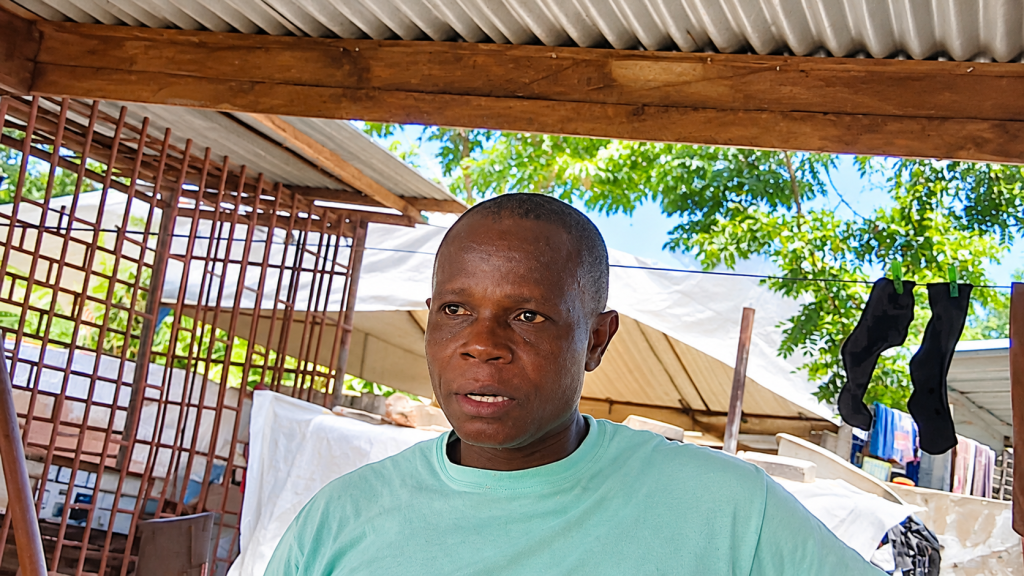
To reassure reporters, he introduced them to another client who had allegedly obtained a card through the same process. Other security guards also vouched for the authenticity of the documents he was providing.
Within 30 minutes, Oppong returned with an officially stamped yellow fever card from the International Vaccination Centre in Accra. But where had the card come from? Unsatisfied with simply obtaining the card, the reporters decided to trace its origin.
Initially, Oppong had told the Fourth Estate that the cards were issued at the Adabraka Polyclinic. But after monitoring his movements, the trail led to a residential property at Asylum Down, near the headquarters of the New Patriotic Party (NPP).
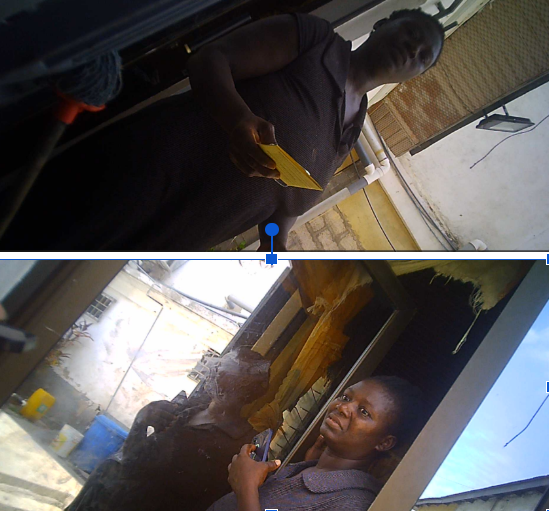
Inside, reporters met Mavis Serwaa, who identified herself as a midwife at Amanfrom Health Centre in Pokuase.
yellow fever
Visible through an open doorway were stacks of yellow fever vaccination cards spread across a table. Without suggesting vaccination, checking immunisation records, or asking any medical questions, she offered a yellow fever card for GHS150.
The transaction suggested that the earlier GHS300 fee charged by Oppong included a personal commission of GHS150.

Serwaa later disclosed that her husband, Stephen Kwame Agbezorli Dzisenu, a disease control officer at the Mamprobi Hospital, could also provide yellow fever cards without administering vaccines.
Investigators later met Dzisenu at the Asylum Down residence. He followed the same process, charging GHS150 for a yellow fever card without vaccination and without carrying out the basic checks normally associated with the certification process.
The practice was not confined to a residential operation. At the Port Health Centre at Accra International Airport, undercover reporters approached a disease control officer seeking a yellow fever card.
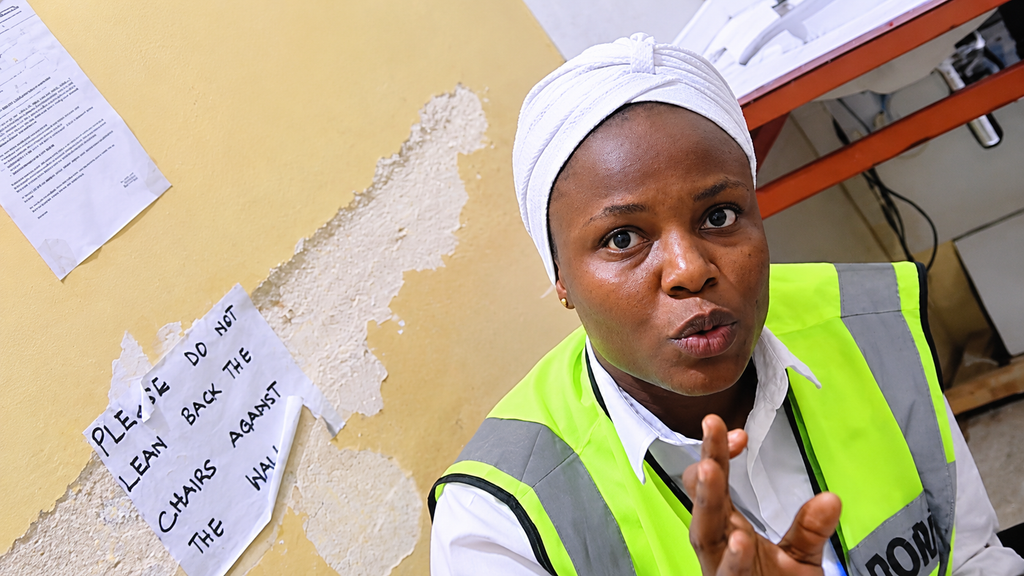
Because yellow fever certificates become valid only after 10 days, she offered two options: a backdated card valid immediately for GHS300, or a card bearing the current date for GHS100.
Reporters chose the second option.
Within minutes, an officially stamped yellow fever vaccination card was issued without any vaccine being administered.
Fraud beyond the clinic
The investigation found troubling weaknesses at two land borders too. At the Elubo border crossing in the Western Region, reporters presented a yellow fever card obtained without vaccination. A disease control officer briefly examined the document and returned it. That was all. Within minutes, the reporters crossed into neighbouring Côte d’Ivoire.
In a separate test, another journalist crossed the same border without any yellow fever card and was still allowed to pass.
Investigators also managed to obtain a yellow fever card at the Elubo border for an individual who was not physically present, relying solely on personal details displayed on a mobile phone.


At the Aflao border in the Volta Region, the findings were equally troubling. When reporters admitted they did not possess a yellow fever card, officials suggested they “pour libation” – a coded request for a bribe.

A Disease control officer who requested we “Pour Libation” at the Aflao border.

After paying GHC 20, they were allowed through. No documentation was produced. No vaccination was verified. Further investigations at Aflao resulted in two additional yellow fever cards being obtained at GHC 100 each without receiving the vaccine.
A public health system at risk
The findings suggest that weaknesses in the system extend beyond certificate issuance and into the very checkpoints designed to prevent unvaccinated travelers from crossing international borders.
The implications extend far beyond travel documentation. Yellow fever vaccination cards exist to prevent the cross-border transmission of a disease that can spread rapidly when vaccination coverage falls.
When certificates can be purchased without vaccination, health authorities lose a critical tool used to monitor and contain outbreaks.
The Fourth Estate contacted the Ghana Health Service for an official response to the findings, including questions regarding the issuance and oversight of yellow fever vaccination certificates. Despite repeated attempts and a formal interview request, no response had been received by the time of publication.
The author, Derrick M. Nimako, is a 2026 Fellow of the Next Generation Investigative Journalism Fellowship – Cohort 8 at the Media Foundation for West Africa.
Become a member of The Fourth Estate community
For 5 years, we've investigated matters of public interest and helped hold power to account.
Now we're launching our Membership Programme, a community of people who believe independent journalism is worth sustaining, and want to help us do more. Join us as a member, and bring a friend along.
Join the community now


Comments
No comments yet. Be the first to share your thoughts on this story.