
The Director-General of the National Lottery Authority (NLA), Mohammed Abdul-Salam, says Ghana stands to generate over GHC 2 billion annually from the lottery sector if the reforms ordered by President John Dramani Mahama are fully implemented.
Mr Abdul-Salam says a key part of the directive involves integrating all private lotto operators into a centralized system managed by the NLA to monitor lotto sales.
“We would see how much sales you have made, how much wins you have paid, and how much you have paid for services, and [what] the 20% share to the NLA should be, even before you come with your statement to prove it,” Mr Salam said about the proposed system. “As a regulator with an independent revenue assurance [mechanism,] we would have had it [lotto sales] first-hand. And we would have programmed punitive measures if you were to report false data.”
Speaking to The Fourth Estate following the NLA’s recent presentation of a GH¢10 million dividend to the Ministry of Finance, the first since 2018, the Director-General said the authority had requested commitment authorisation from the ministry to install a revenue assurance system that would eliminate paper-based lottery sales.
“When we have the central view, whether you are doing USSD, you are doing online, you are doing POS [Point of sale] machine, you will have to plug in, once our regulatory hand is on you. So that at the end of the day, what they [private lotto operators including KGL] are mentioning will be peanuts,” he said.
Last year, The Fourth Estate scrutinised the NLA’s deal with KGL Technologies, which allows the private company to operate the authority’s 5/90 lottery online and via USSD. The investigation flagged the agreement as short-changing the state. It also revealed that while KGL disclosed that it generated more than GH¢3 billion as revenue in 2024, it only paid GHC 157.6 million in revenue share to the state for its licenses in Ghana, Nigeria and Côte d’Ivoire. The company also claimed it paid GHC 87 million in taxes to the Ghana Revenue Authority (GRA). However, in response to The Fourth Estate’s RTI request on taxes KGL had paid, the data showed that the company paid GHC 66.9 million in taxes in 2024.
President Mahama, however, sided with The Fourth Estate’s investigations and directed the creation of a committee by the Ministry of Finance and the Attorney-General’s office to review the NLA-KGL contract.
At the end of its investigations, the committee reached a damning conclusion that the deal was not financially advantageous to the country.
President Mahama then ordered a renegotiation of the deal alongside far-reaching reforms to protect livelihoods in the lottery sector and address the concerns of coupon-based vendors. But the renegotiation of the deal is yet to be concluded.
Critics of The Fourth Estate have defended the NLA-KGL deal, arguing that KGL’s operations served as a critical financial lifeline for the NLA by contributing GHC173 million to the regulator in 2025 alone. That figure, they noted, far exceeded the nearly 44.9 million cedis contributed by some 29 private lotto operators combined.
On that claim, the NLA Director-General told The Fourth Estate that private lotto operators paid 20 percent of their revenue share to the NLA, adding that “in the case of the private lotteries, there’s [also] commission payment of 25% beyond the wins payment.”
Comparing the setup to KGL’s model, he said, “the USSD has no commission payment, and that alone is 25% savings.”
While Mr. Abdul-Salam declined to comment on whether the NLA currently conducts weekly account reconciliations, investigations by The Fourth Estate revealed that none were being conducted as of last year. The release of our findings prompted the authority to demand sales data from KGL and mobile network operators.
During the dividend presentation, Finance Minister Dr. Cassiel Ato Forson commended the NLA for getting back on its feet. However, he noted that the authority could perform even better if freed from its lopsided agreement with KGL, adding that the government would announce a renegotiated deal in a few days.
Mr Abdul-Salam says the current arrangement with KGL falls short of global best practice. In countries such as South Africa, he explained, private lotto operators bid to run state lotteries, but the revenue-sharing arrangements are not heavily skewed in favour of the private operators.
He said the NLA would ensure that the systemic challenges that prevented the NLA from raising revenue for the state as stipulated in the Lotto Act are removed.
Become a member of The Fourth Estate community
For 5 years, we've investigated matters of public interest and helped hold power to account.
Now we're launching our Membership Programme, a community of people who believe independent journalism is worth sustaining, and want to help us do more. Join us as a member, and bring a friend along.
Join the community now
Terrible NLA-KGL Deal: Government indulges in merry-go-round over release of interministerial committee report
Renegotiation of Terrible NLA-KGL deal: Defying the President’s order or just a tactical ‘Go Slow’ process?
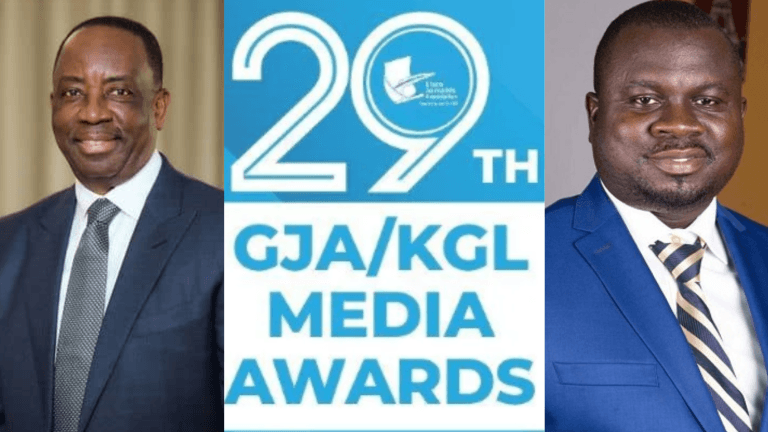
The Fourth Estate’s Journalists withdraw from GJA/KGL Media Awards
The terrible NLA-KGL Deal: How KGL makes millions in profits while NLA makes zeros
Comments
No comments yet. Be the first to share your thoughts on this story.